Letting Go
The Unlikely Pilgrimage of Harold FryLetting Go is the governing principle of Harold Fry's pilgrimage, the discipline that turns an ordinary retired man's impulsive walk into an act of faith. It is both a physical practice—the systematic shedding of possessions, comforts, and conveniences—and a spiritual one, the release of grief, guilt, and the fixed identity that had imprisoned Harold for two decades. The concept first appears as a practical necessity and deepens into the very condition of his mission: only by letting go can Harold reach Queenie Hennessy in time, and only by letting go can he become the man who deserves to save her.
The Physical Discipline of Shedding
Harold's renunciation begins almost immediately after he leaves Kingsbridge. Walking the single-track lanes towards South Brent, he realizes how vulnerable he is without his mobile phone, a single figure exposed to the world, and yet the feeling of freedom, of pushing into the unknown, is so exhilarating he has to smile. He is in the world by himself and nothing can get in the way or ask him to mow the lawn. This early exhilaration hardens into a deliberate practice. In Cheltenham, Harold donates his washing powder to a student going into a laundrette, offers his wind-up torch to a woman from Prestbury who cannot find her key, gives his plasters and antiseptic cream to the mother of a distressed child with a bleeding knee, and hands his comb to the child by way of distraction. He gives the guide to Britain to a bewildered German couple lost near Cleeve Hill and, since he knows the plant dictionary by heart, suggests they might like that too. He rewraps the gifts for Queenie—the pot of honey, the rose quartz, the glittering paperweight, the Roman key ring, and the wool hat—and parcels up the recent souvenirs for Maureen, taking them to a post office. Two days later, Maureen receives a parcel containing a new selection of gifts as well as Harold's wallet, watch, and a postcard showing a woolly Cotswold sheep. He keeps only the compass and the rucksack, because they are not his to give away.
The act of giving is not indiscriminate charity but a precise economy of need. Harold never takes more than he needs and gently refuses lifts, walking equipment, or extra packages of food. He accepts a free kebab from a roadside vendor whose mother is in remission from cancer, offering in return the bottle of spa water from Bath. The kindness he receives teaches him that receiving is as much a gift as giving, requiring both courage and humility. He thinks of the peace he found lying in the sleeping bag in a barn, and suddenly he knows what he must do to get to Berwick.
The Inner Release
Letting Go is not merely about objects but about the self that clings to them. Harold explains this to Maureen during a telephone call, his eyes shining and his steady smile fixed: he is no better than anyone else, anybody can do what he is doing, but a person has to let go of the things they think they need, like cash cards and phones and maps. The lesson had not been clear at the beginning, but now it is. He has learned that when a person becomes estranged from the things they know and is a passer-by, strange things take on a new significance, and it seems important to allow himself to be true to the instincts that make him Harold, as opposed to anyone else. He keeps to the roads because, despite the odd fast car, he feels safer there. He has no mobile phone, no planned route, no road map—but he has a different map, one in his mind, made up of all the people and places he has passed. He sticks to his yachting shoes because, despite the wear and tear, they are his.
This inner release unlocks the past. In walking, Harold unleashes the twenty years he spent seeking to avoid, and now it chatters and plays through his head with a wild energy that is its own. He no longer sees distance in terms of miles; he measures it with his remembering. Passing allotments, he sees Maureen in the front garden of Fossebridge Road, wearing an old shirt of his, her hair tied back against the wind and her face smutched with dirt, digging in French-bean plants. He sees a bird's broken egg and recalls with splintering tenderness the fragility of David's head when he was born. He hears the hollow cackle of a crow and is suddenly lying in his bed as a teenager, overwhelmed with loneliness. The memories he had suppressed surface freely, and in surfacing they lose their power to paralyze him.
The Lesson of the Walk
Letting Go becomes the content of Harold's encounters with strangers. He walks with a tax inspector who is a Druid and has not worn shoes for ten years, a young woman on the trail of her real father, a priest who confesses to tweeting during mass, people training for a marathon, an Italian man with a singing parrot, a white witch from Glastonbury, a homeless man who drank away his house, four bikers looking for the M5, and a mother of six who confides she has no idea life could be so solitary. He judges no one. He learns that it is the smallness of people that fills him with wonder and tenderness, and the loneliness of that too. The world is made up of people putting one foot in front of the other, and a life might appear ordinary simply because the person living it has done so for a long time. He can no longer pass a stranger without acknowledging the truth that everyone is the same and also unique, and that this is the dilemma of being human.
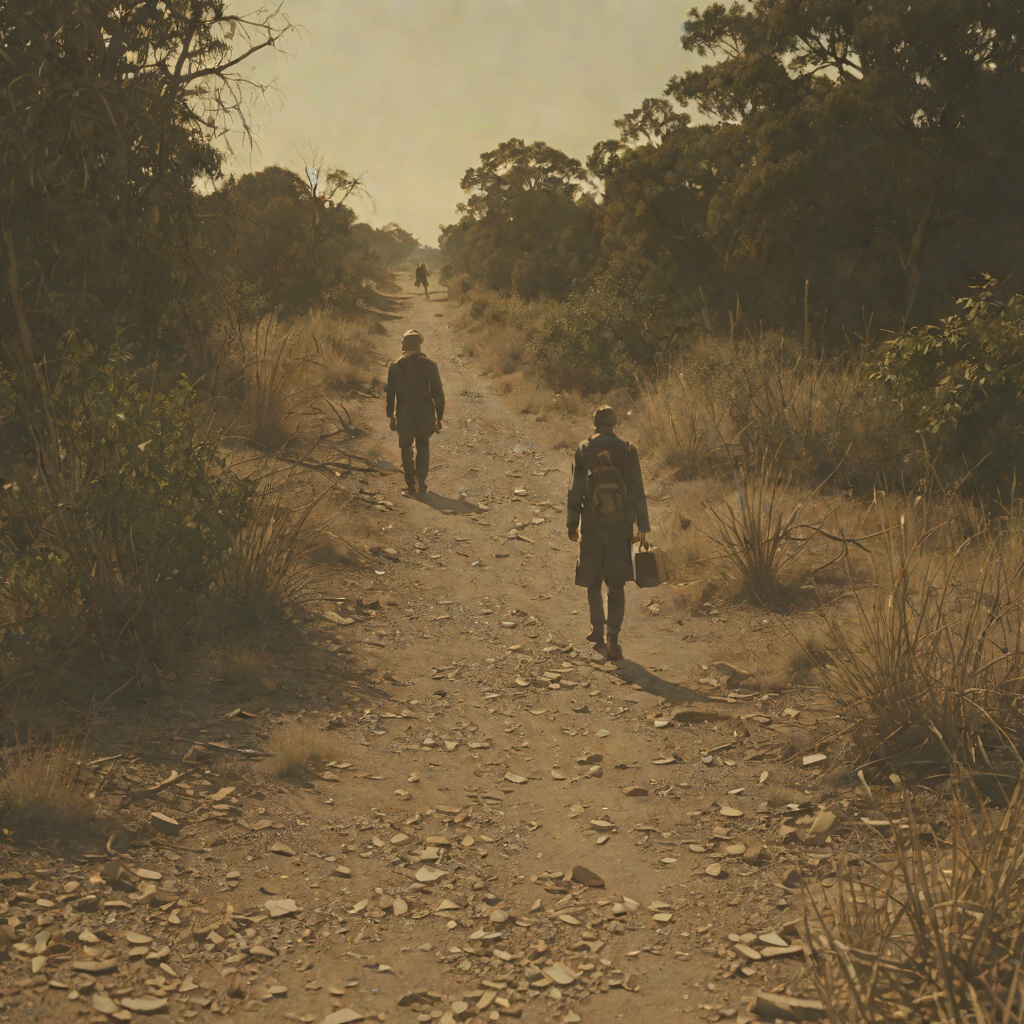
He walks so surely it is as if all his life he had been waiting to get up from his chair. He takes the A-roads, B-roads, lanes, and tracks, the compass quivering northwards, going by day or by night as the mood takes him, mile after mile. If the blisters are bad, he binds them with duct tape. He sleeps when the need comes and then returns to his feet. He walks under the stars and the tender light of the moon when it hangs like an eyelash and the tree trunks shine like bones. The pale Cotswold stone becomes the red brick of Warwickshire, and the land flattens into middle England. He reaches his hand to his mouth to brush away a fly and feels a beard growing in thick tufts. Queenie will live. He knows it.
The Cost and the Reward
The deepest letting go is the release of guilt, and it comes at the greatest cost. In his confession letter to the garage girl, Harold reveals what he had carried for twenty years: his son David hanged himself in the garden shed with rope tied to one of the hooks used for garden tools, and it was Harold who discovered him. He had been drinking, keeping bottles in paper bags under his desk, and when he was really out of it one night he dismantled the garden shed. Even that was not enough, so he broke into the brewery and did something terrible. Queenie knew it had to be him and took the blame; she was fired on the spot and disappeared. Harold let her go. He let her take the blame. But he gave up drinking. The confession is itself an act of letting go—the release of the secret that had defined his marriage and his silence.
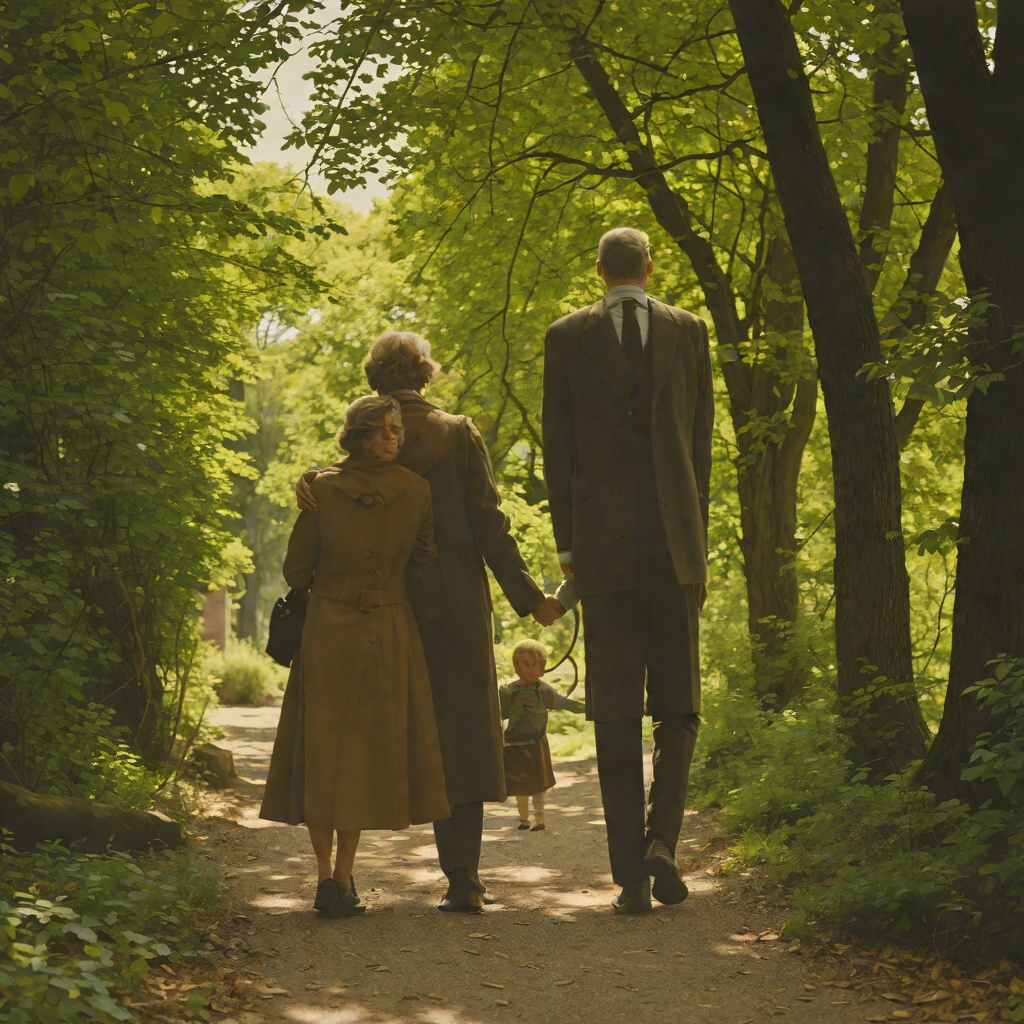
Maureen, too, must let go, and her release is the proof of Harold's transformation. She tells him on the phone that she has moved out of the spare room and returned to the main bedroom, the larger and more pleasant of the two, at the front of the house with the wide view over Kingsbridge. When they finally meet, she holds him tight until the grief passes. He is tall, and stiff, and her own. She gropes for his face with her mouth and kisses his salty wet cheeks. She tells him he got up and did something, and if trying to find a way when a person does not even know they can get there is not a small miracle, then she does not know what is. She cups his face in her palms, so close now that his features lose distinction and all she can see is the feeling she has for him. 'I love you, Harold Fry,' she whispers. 'That is what you did.' The letting go that began with a washing powder and a wind-up torch ends with the recovery of a love that had been buried for twenty years, and the quiet knowledge that the man who learned to release everything had, in the end, found the one thing worth keeping.