Listening to Strangers
The Unlikely Pilgrimage of Harold FryListening to Strangers is the central ethical and spiritual practice of Harold Fry's pilgrimage in The Unlikely Pilgrimage of Harold Fry. As Harold walks from Kingsbridge to Berwick-upon-Tweed, he transforms from a man who has spent twenty years avoiding the past into a passer-by who is open to the world, listening to the stories of the people he meets and carrying a little of them with him. This practice of open, non-judgmental listening becomes the mechanism of his atonement, the way he reconnects with his own buried memories, and the foundation of his understanding that everyone is both the same and unique.
The Practice of Listening
Harold's listening is not a passive act but a deliberate discipline he develops as he walks. He tells the story about Queenie and the garage girl, and asks strangers if they would be so good as to help; in return, he listens. He might be offered a sandwich, a bottle of water, or a fresh set of plasters, but he never takes more than he needs, and gently refuses lifts, walking equipment, or extra packages of food. The people he meets and the places he passes are all steps in his journey, and he keeps a place inside his heart for each of them. This reciprocity — telling his own story and then listening to another's — becomes the rhythm of his days on the road.
The practice is rooted in a profound insight Harold reaches early in his journey. He understands that in walking to atone for the mistakes he has made, it is also his journey to accept the strangeness of others. As a passer-by, he is in a place where everything, not only the land, is open. People would feel free to talk, and he is free to listen. He had neglected so many things, that he owed this small piece of generosity to Queenie and the past. This realization transforms listening from a casual encounter into an act of reparation.
The Strangers He Meets
Harold's encounters with strangers are varied and often revelatory. He meets a silver-haired gentleman in a café who confesses that he licks his partner's trainers as part of what they do, and is distressed to discover a small hole at the toe, wanting to buy a new pair without causing offense. Harold, moved and humbled, passes his paper napkin and advises, "I think I would buy him new trainers." The two men sit in silence until a lightness fills Harold and he offers a smile. The gentleman thanks him, saying, "I don't suppose our paths will cross again but I am glad we met. I am glad we talked." They shake hands and part, leaving the remains of the teacake behind.
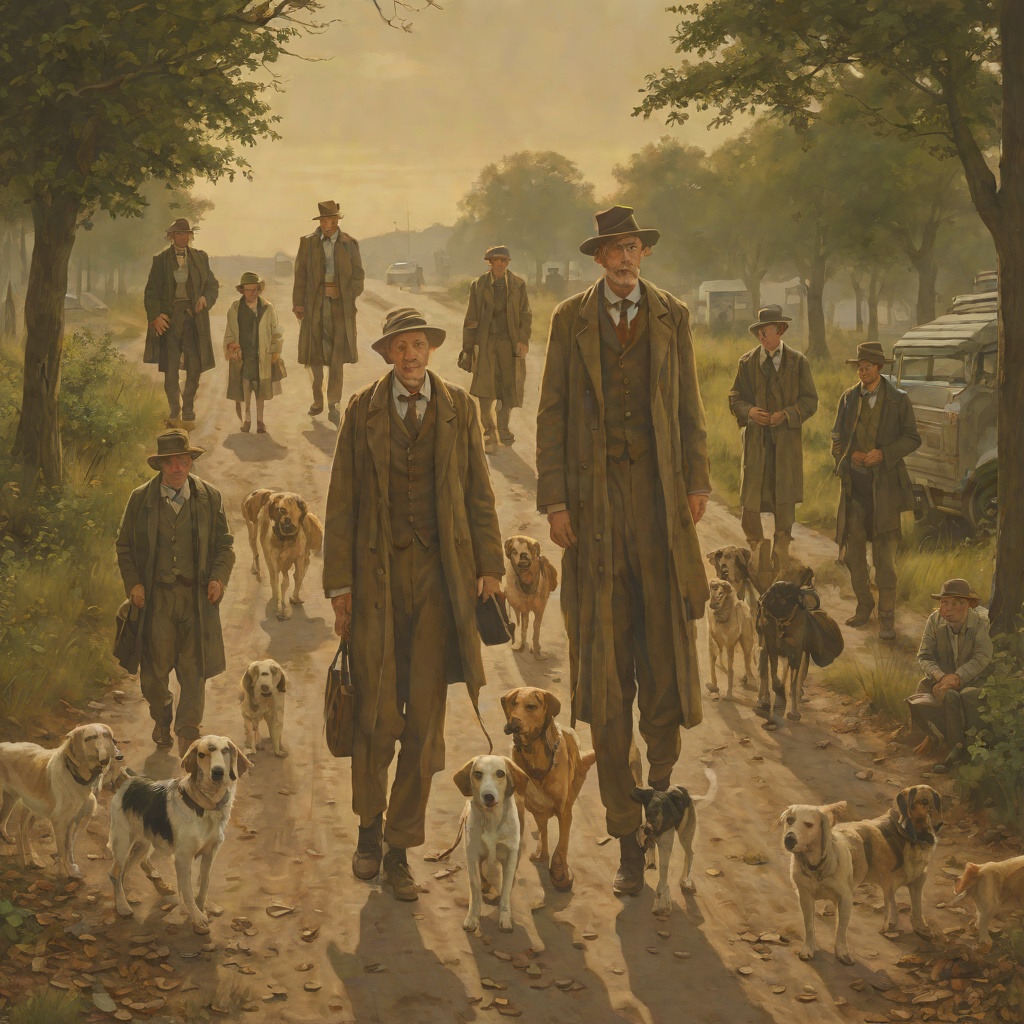
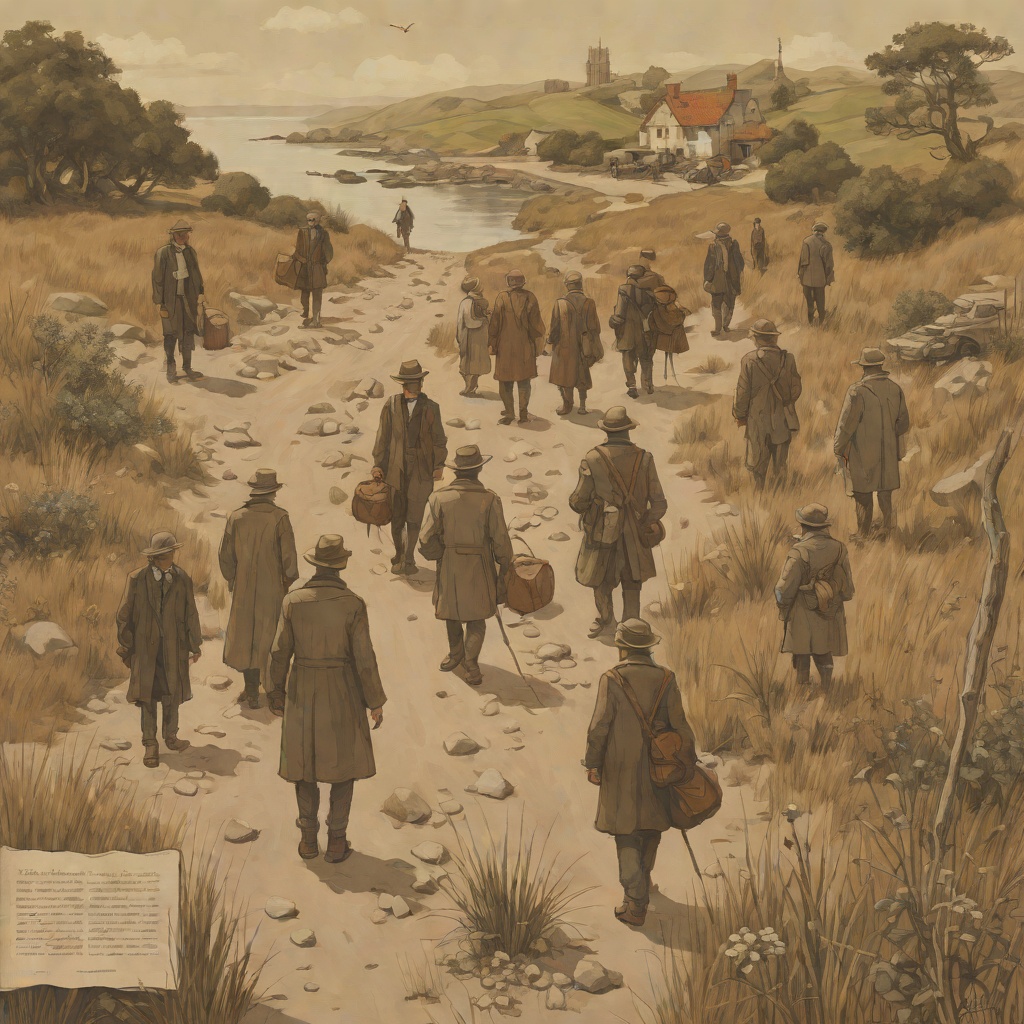
He passes office workers, dog walkers, shoppers, children going to school, mothers and buggies, and hikers like himself, as well as several tourist parties. He meets a tax inspector who is a Druid and has not worn a pair of shoes for ten years. He talks with a young woman on the trail of her real father, with a priest who confesses to tweeting during mass, as well as several people in training for a marathon, and an Italian man with a singing parrot. He spends an afternoon with a white witch from Glastonbury, and a homeless man who has drunk away his house, as well as four bikers looking for the M5, and a mother of six who confides she has no idea life could be so solitary. Harold walks with these strangers and listens, judging no one, although as the days wear on and time and places begin to melt, he cannot remember if the tax inspector wore no shoes or had a parrot on his shoulder.
The Meaning of Listening
Through this practice, Harold learns that it is the smallness of people that fills him with wonder and tenderness, and the loneliness of that too. The world is made up of people putting one foot in front of the other; and a life might appear ordinary simply because the person living it has done so for a long time. Harold can no longer pass a stranger without acknowledging the truth that everyone is the same, and also unique; and that this is the dilemma of being human. This understanding dissolves the isolation he has felt for decades and replaces it with a sense of connection to the vast web of human experience.
Listening also becomes a form of self-knowledge. In walking, Harold unleashes the past that he has spent twenty years seeking to avoid, and now it chatters and plays through his head with a wild energy that is its own. He no longer sees distance in terms of miles; he measures it with his remembering. The stories of strangers trigger his own memories — of Maureen digging in the front garden, of the fragility of David's head when he was born, of his mother leaving with her suitcase and silk scarf. Listening to others opens the channel to his own buried life.
Listening as Atonement
Harold's listening is inseparable from his quest for atonement. In his confession letter to the garage girl, he reveals the full story of his son's death: David hanged himself in the garden shed with rope tied to one of the hooks used for garden tools, and it was Harold who discovered him. He had been drinking, keeping bottles in paper bags under his desk, and when he was really out of it one night, he dismantled the garden shed, then broke into the brewery and did something terrible. Queenie knew it had to be him and took the blame; she was fired on the spot and disappeared. Harold let her go, let her take the blame, but gave up drinking. This confession, written to a stranger he met at a garage, is the culmination of his practice of openness — the story he has carried in silence for twenty years finally spoken aloud.
The act of listening to strangers and being listened to in return is what makes this confession possible. Harold's journey teaches him that people carry an appalling weight inside, and that the superhuman effort it takes sometimes to be normal is a form of loneliness. By listening to others, he earns the right to be heard himself, and in being heard, he begins to let go of the past.
The Enduring Significance
Listening to Strangers is not merely a technique Harold adopts but a way of being in the world that he carries with him to the end of his journey. Walking along the seafront in the dark with Maureen after Queenie's death, he watches a ship travelling the horizon and thinks, "So many stories. So many people we don't know." He is sure that Queenie will remain with him, and David too, along with Napier, Joan, and his father with those aunts; but there will be no more fighting them, and no more anguish for the past. They are part of the air he walks through, just as all the travellers he has met are part of it. He sees that people would make the decisions they wish to make, and some of them would hurt both themselves and those who loved them, and some would pass unnoticed, while others would bring joy. This acceptance, born of listening to strangers, is the quiet wisdom Harold carries home.