Maureen's confession to Rex
The Unlikely Pilgrimage of Harold FryMaureen Fry's confession to her neighbour Rex is the quiet hinge on which the second half of the novel turns. For weeks after Harold Fry walked out of their home at 13 Fossebridge Road in Kingsbridge, Maureen had maintained the fiction that he was simply at home, hiding the truth of his extraordinary pilgrimage from the one person who lived close enough to notice. The confession, when it finally comes, is not a dramatic public revelation but a halting, tearful admission over the garden fence, and it cracks open the shell of loneliness and grief in which Maureen has encased herself since the death of her son David. It is the first step she takes back toward the living, and it is prompted, tellingly, not by her own resolve but by the imagined voice of her dead son.
The Burden of the Lie
Maureen's deception had been weighing on her long before she spoke. After her conversation with the locum, she sank into a further decline, thinking with shame of the visit Queenie Hennessy had paid her twenty years ago and wishing she had been kinder. Without Harold, the endless passage of days flowed one into the other, and she watched them with apathy, not knowing how to fill them. She would decide to strip the beds only to realize there was no point, since there was no one to witness her slamming down the wash basket or complaining that she could manage perfectly well without help. She opened the road map on the kitchen table, but every time she looked at it, trying to picture Harold's journey, she felt her loneliness more keenly. Inside her stretched such an emptiness, it was as if she were invisible. She heated a small tin of tomato soup and then poured it down the sink, sitting at the kitchen table with her face pressed in her hands, thinking that it was not a life if lived without love.
The lie itself had been a small, reflexive thing at first. When Rex asked how Harold was, she said he was good, and the words came easily. But the deception had curdled into something corrosive. She had bleached and annihilated every waking moment of the last twenty years, anything rather than feel, anything rather than meet Harold's eye and say the unspeakable. The confession to Rex was therefore not merely the correction of a falsehood; it was the first time in twenty years that Maureen allowed herself to speak the truth about her life to another person.
David's Prompting
It was David's idea that she should confess. He told her one morning that he had been thinking about her situation and felt it would do her good to talk. She laughed and protested she hardly knew the man, but David pointed out that Rex was her neighbour; of course they knew each other. 'That doesn't mean we talk,' she said. 'They'd only been here six months when his wife died. Besides, I don't need to talk to other people. I have you, love.' David said that while of course this was true, it might do Rex some good if Maureen came clean. She couldn't keep hiding the truth for ever. She was about to say she missed him, when he told her she should do it right away.
The irony is sharp: David, who in life had been the source of the family's deepest wound, becomes in death the agent of his mother's first tentative healing. Maureen's relationship with her dead son is one of the novel's most haunting threads. She keeps his room exactly as it was the day he died, and she talks to him as if he were still present. That she receives the push toward confession from this imagined voice suggests how thoroughly her inner life has been given over to the past, and how the first movement out of that past must also come through it.
The Confession at the Fence
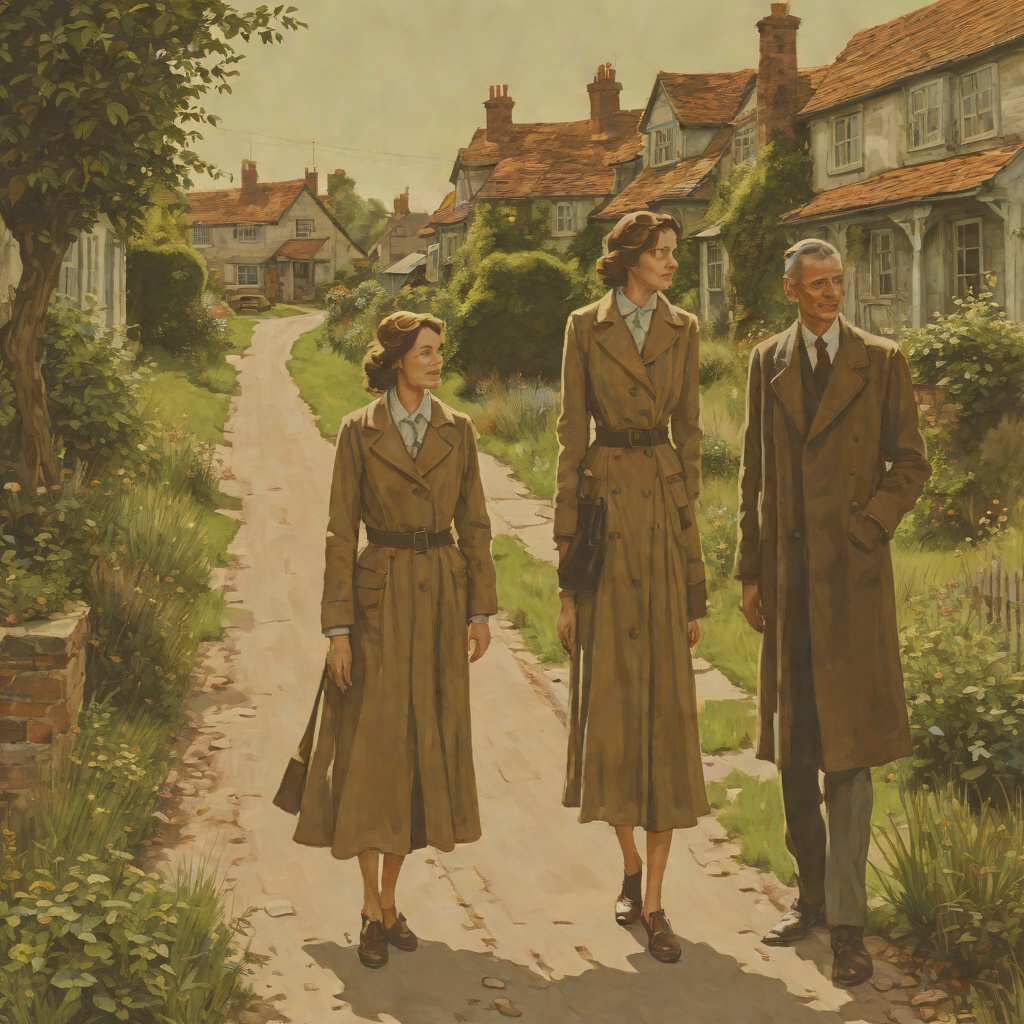
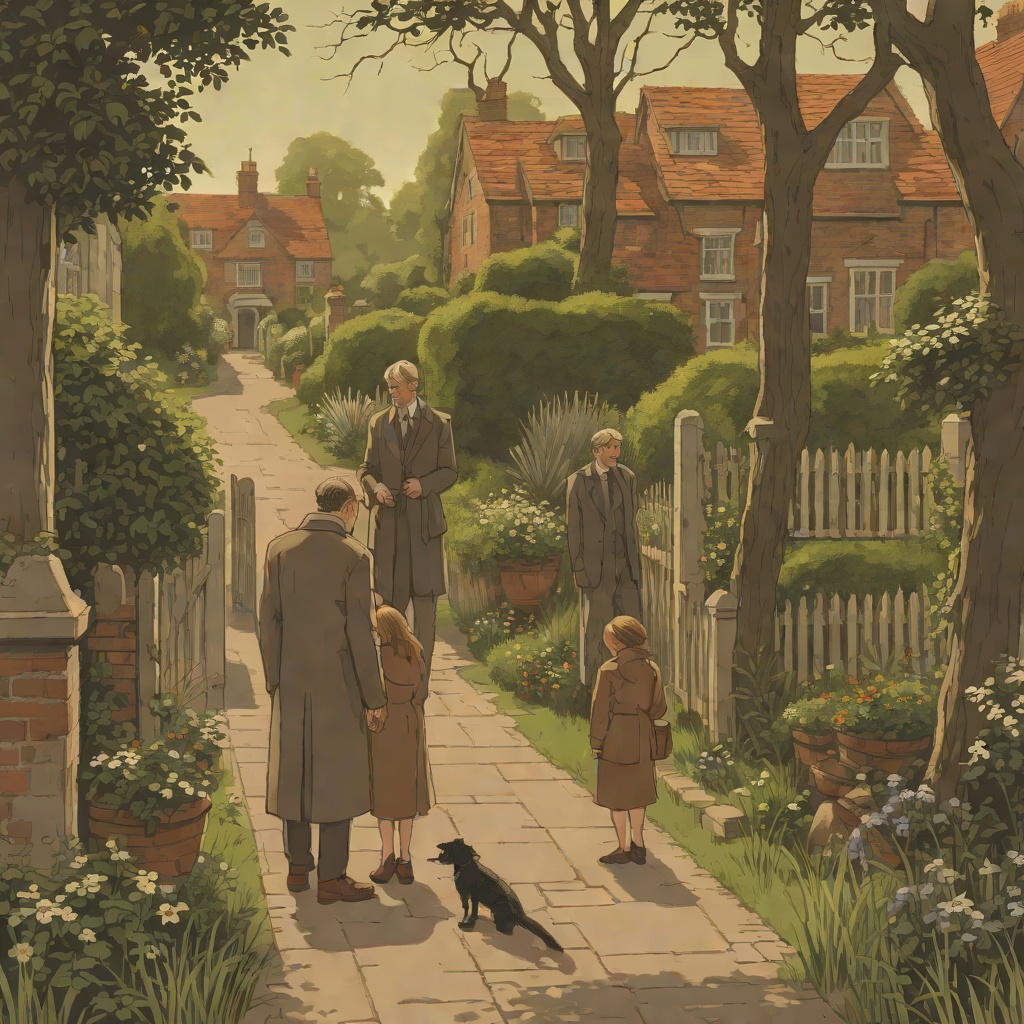
Maureen found Rex in his garden, where he was trimming the borders of the grass with a blade in the shape of a half-moon. She stood at the fence that divided their gardens, slightly lopsided because of the slope, and asked in an airy way how he was getting along. 'Keeping busy. That's the best you can hope for. How's Harold?' he asked. 'He's good,' she said, her legs trembling, her fingers feeling light. She drew a new breath, like starting a fresh paragraph. 'The fact is, Rex, Harold isn't at home. I've been lying. I'm sorry.' She smothered her lips with her fingertips, forbidding further words. She couldn't look.
In the beating silence, she heard the lawn edger being laid on the grass. She felt Rex's presence as he drew close. There was a smell of mint toothpaste as he said softly, 'Did you think I didn't realize something was up?' The question is almost gentle, and it reveals that Rex had known all along, or at least suspected. He held out his hand and placed it on her shoulder. It was the first time anyone had touched her in a very long time, and the relief was so intense that grief came shuddering up through her body, and tears slanted her cheeks. She had thrown away everything. 'Why don't you come over, and I'll put the kettle on?' he said.
Tea and the Unburdening
Maureen had not stepped inside Rex's house since Elizabeth's funeral. In the intervening months, she had imagined there would be a felting of dust and a general level of mess, because these were not things men noticed, especially when mourning. But to her astonishment the surfaces shone. Potted cacti stood at intervals along the windowsill, so regular it was as if he had measured them with a ruler. There was no pile of unopened letters, no muddy steps on the mushroom carpet. It even looked as if Rex had bought himself a length of plastic protector and laid it down as a path from the front door. In the sitting room, so quiet and undisturbed that Maureen felt her presence was an intrusion, she glanced at the framed photographs of Elizabeth, a tall woman with a bovine jaw, a gravelly laugh and the distracted look of a guest at a cocktail party. Maureen had never said this to anyone except David, but she had always felt a little overpowered by Elizabeth, and wasn't even sure she liked her.
Once she started, it surprised Maureen how much she had to say about Harold's walk. She told Rex about Queenie's letter, and his sudden decision to leave. She told him about the visit to the locum, and her shame. 'I'm frightened he won't come back,' she said at last. 'Of course he'll come back,' Rex said, his voice slightly milky at the consonants, coming with such simplicity that she was immediately reassured. Of course Harold would come back. She felt a sudden lightness and wanted to laugh. Rex passed her a cup of delicate china, set on a saucer that matched. She pictured Harold making coffee, the mug full to the brim so that you couldn't lift it without spilling it first and scalding your hand. Even that seemed funny. She said, 'At first I thought it might be a mid-life crisis. Only, being Harold, he's doing it rather late.' Rex laughed, a little politely, she felt, but at least the ice was broken. He offered her a plate of party cream biscuits and a napkin. She took a biscuit. She hadn't realized how hungry she was.
The scene is remarkable for its ordinariness. There is no grand gesture, no dramatic reconciliation, only tea, biscuits, and a neighbour's patient kindness. But for Maureen, starved of human contact and locked in a twenty-year mourning, this small domestic ritual is a lifeline. The confession does not solve her grief, but it breaks the seal of her silence, and it gives her, for the first time in years, someone to talk to.
The Beginning of Return
The confession to Rex is the first of several steps by which Maureen begins to re-enter the world. It is followed by her journey to Darlington to meet Harold, and eventually by her reconciliation with him at Berwick-upon-Tweed. The scene at the fence thus stands as the turning point in Maureen's own quiet pilgrimage, a journey that runs parallel to Harold's physical one. Where Harold walks the roads of England, Maureen walks the shorter, harder distance from isolation back to connection. The confession is her first step, and it is made possible not by her own strength but by the kindness of a neighbour who had known all along that something was wrong and had waited, patiently, for her to be ready to speak.
Rex's role in this is quietly crucial. He does not press, does not accuse, does not even express surprise. He simply receives her confession, touches her shoulder, and offers her tea. In doing so, he gives Maureen permission to feel again, and the grief that comes shuddering up through her body is the grief she has been suppressing for twenty years. The confession is thus not merely the correction of a lie; it is the first honest thing Maureen has said to anyone since her son died, and it opens the door to everything that follows.