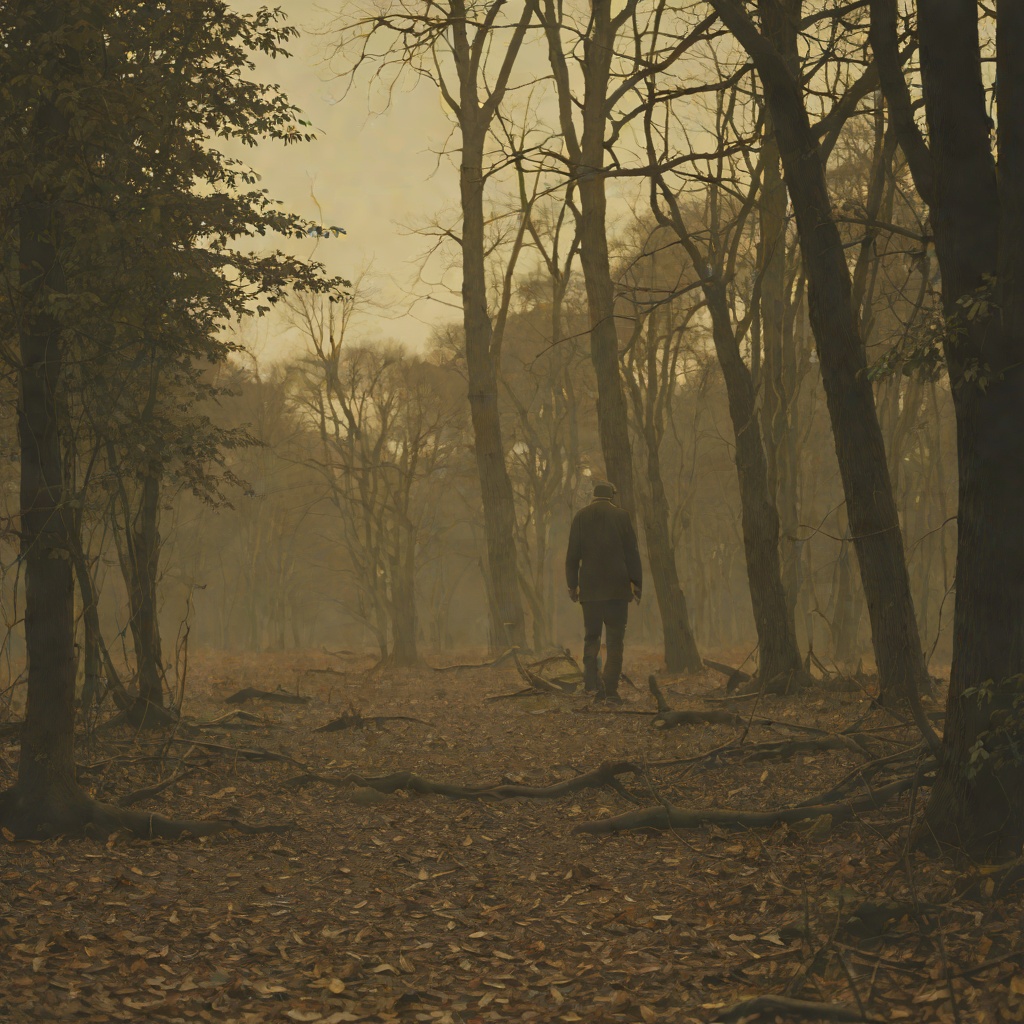
Memory and Forgetting
The Unlikely Pilgrimage of Harold FryMemory and Forgetting forms the psychological bedrock of Rachel Joyce's novel, the hidden machinery that turns a retired man's walk to post a letter into a pilgrimage of atonement. Harold Fry's journey from Kingsbridge to Berwick-upon-Tweed is measured not in miles but in recollections; as he walks, the past he has spent twenty years avoiding surges back with a wild energy that is its own. Yet the novel is equally haunted by the opposite force: the terror of forgetting, which reaches its cruelest peak when Harold cannot remember the name of his own dead son. The interplay between these two poles — the involuntary return of memory and the dread of its permanent loss — drives Harold forward, shapes his encounters, and ultimately makes possible his reconciliation with Maureen and with himself.
The Walk as a Trigger for Memory
Harold's decision to walk is itself a memory unlocked. Standing in a phone box at one end of England, picturing Queenie dozing at the other, he sees the land between them — roads, fields, rivers, woods, moors, peaks and valleys, and so many people — and the decision comes in the same moment as the idea, with no deliberation, no reasoning. The walk begins as an act of faith, but it quickly becomes an act of excavation. Once back on the open land, Harold finds that his thoughts, which had stopped in the city, run freely again; pictures play through his mind, and he no longer sees distance in terms of miles but measures it with his remembering. The rhythm of walking, the steady one-foot-in-front-of-the-other motion, unleashes what he has sought to avoid for two decades, and the past chatters and plays through his head with a wild energy that is its own.
The physical act of walking is inseparable from this mental unearthing. Early in his journey, Harold inspects his feet with quiet pride, noting the soft pale toes, the tenderness around the nails, the possible blister forming at the top of his heel — a body newly awakened to sensation. This attention to his own flesh mirrors the attention he begins to pay to his own history. The vulnerability he feels as a single figure without his mobile phone, the exhilaration of being in the world by himself with nothing to ask him to mow the lawn, opens a space in which memory can surface. England opens beneath his feet, and the feeling of freedom, of pushing into the unknown, is so exhilarating he has to smile.
The Return of the Repressed
As Harold walks, the memories he has buried return with increasing force, often triggered by the landscape itself. Passing allotments, he sees Maureen in the front garden of Fossebridge Road, wearing an old shirt of his, her hair tied back against the wind and her face smutched with dirt, digging in French-bean plants. A bird's broken egg recalls with splintering tenderness the fragility of David's head when he was born. The hollow cackle of a crow in the silence transports him back to his teenage bed, overwhelmed with loneliness. These are not orderly recollections but involuntary surges, the past breaking through the present unbidden.
The most feared memory arrives on the outskirts of Taunton, where the houses are packed together and studded with satellite dishes, the blossom of a cherry tree scattered like wet paper across the pavement. A memory surges into his mind, one of those Harold most fears and is normally so good at repressing. He tries to think about Queenie, but even that will not work. He shoots his elbows out sideways to go faster and drives his feet against the paving stones with such fury he has not the breathing to keep up, but nothing will hide him from the memory of an afternoon twenty years ago when it had all come to an end. He can see his hand reaching for the wooden door, feel the warmth of the sun on his shoulders, smell the mouldering, heated-up air, hear the stillness of a silence that was not what it should be. The memory is so overwhelming that his calf explodes as if the skin-side of the muscle had been sliced open, and he collapses to the ground — the body registering what the mind cannot contain.
The Terror of Forgetting
The novel's darkest passages concern not the return of memory but its failure. In a hotel, faced with the manageress and a kind man with his hand on his sleeve, Harold's heart plummets as if he has stepped over a wall and is tumbling through emptiness. He cannot remember his son's name. The horror, the confusion, the remorse raging inside him are invisible to the people around him, who have no idea of what he is experiencing. This moment of forgetting is the culmination of twenty years of suppression, the price of having buried David's death so deeply that even his name has been lost.
Harold's confession letter to the garage girl reveals the full extent of what he has tried to forget. He writes that twenty years ago he buried his son, that it is not something a father should have to do, that he wanted to know the man David would become and still does. He describes finding David hanged in the garden shed, tied with rope to one of the hooks used for garden tools, so full of alcohol and pills that the coroner said it must have taken a long time to tie the noose. Harold lifted him down, but there was no life; he was too late. The memory of the time it took David to tie the noose is one he wishes they had not told him. This letter is itself an act of remembering, a deliberate excavation of the trauma he has carried in silence.
The fear of forgetting extends beyond David to encompass his entire life. After reaching St Bernadine's Hospice and seeing Queenie, Harold tells Maureen that as he walked he has been remembering so much — things he did not know he had forgotten, things about David, and her and him, even his mother. Some of the memories have been hard, but most have been beautiful. And he is frightened, frightened that one day, maybe soon, he will lose them again, and this time it will be for ever. He does not want to forget David's head when he was a baby, or the way he slept when Maureen sang. He cannot bear the thought that he might look at her face one day and not even know her. The pilgrimage, which began as an act of faith that Queenie would live as long as he walked, becomes also a desperate attempt to hold onto the past before it slips away entirely.
Memory, Identity, and the Ordinary
The walk transforms Harold's relationship to memory and to himself. He learns that it is the smallness of people that fills him with wonder and tenderness, and the loneliness of that too. The world is made up of people putting one foot in front of the other; a life might appear ordinary simply because the person living it has done so for a long time. He can no longer pass a stranger without acknowledging the truth that everyone is the same, and also unique, and that this is the dilemma of being human. This recognition is itself a form of memory — a remembering of the shared human condition that his isolation had obscured.
Harold's shedding of possessions becomes a physical enactment of this new relationship to memory. In Cheltenham, he donates his washing powder to a student, offers his wind-up torch to a woman who cannot find her key, gives his plasters and antiseptic cream to the mother of a distressed child, hands his guide to Britain to a bewildered German couple, and rewraps the gifts for Queenie. He keeps only the compass and the rucksack, because they are not his to give away. The objects he carries — the yachting shoes, the plastic bag, the gifts for Queenie — are containers of memory and intention, and his gradual divestment of them marks a letting go that is also a form of remembering what truly matters.
The memories that surface during the walk are not merely personal but constitutive of identity. Harold's visit to the funeral director's, when Maureen went in alone to say goodbye to David, returns to him in vivid detail: the red rose, the teddy bear, the pillow she had packed to go beneath David's head, the low sun torching his eye as he drove, the sunglasses they both wore and that Maureen did not take off even at home. He sat outside with his head in his hands, waiting his turn, until a passer-by offered a cigarette and Harold took it, although he had not smoked since the days on the buses. His fingers shook so hard the passer-by used three matches to light it. These details, recovered through walking, are the raw material of a life reclaimed from oblivion.
The Reconciliation of Memory and Forgetting
By the end of the novel, memory and forgetting are no longer opposed but intertwined. Harold's breakdown in the Berwick café, where he cannot remember his son's name, is the nadir of his journey — the moment when the cost of suppression becomes unbearable. But it is also the turning point. The confession letter to the garage girl, the act of telling the full story, is a form of remembering that makes healing possible. When Harold finally tells Maureen of his fear of losing his memories again, she reaches her left hand around his and holds it tight. She looks at the darkness of his fingers on his lap, the blue ridges of his veins, and despite the strangeness of the last weeks, she knows this hand so well. Even without looking she knows it. She keeps hold as he weeps.
The novel's final movement suggests that memory is not a fixed possession but a living process, sustained by attention and love. Harold's fear that he will lose his memories again, this time for ever, is met not with a promise that he will not, but with Maureen's hand in his. The walk has given him back his past, and with it the possibility of a future. The memories he has recovered — of David's head when he was a baby, of the way he slept when Maureen sang — are now held between them, a shared scrapbook that neither will let go. Memory and forgetting, the novel suggests, are not opposites but partners: it is only by walking through the terror of forgetting that Harold can finally remember what matters most.