New Beginning
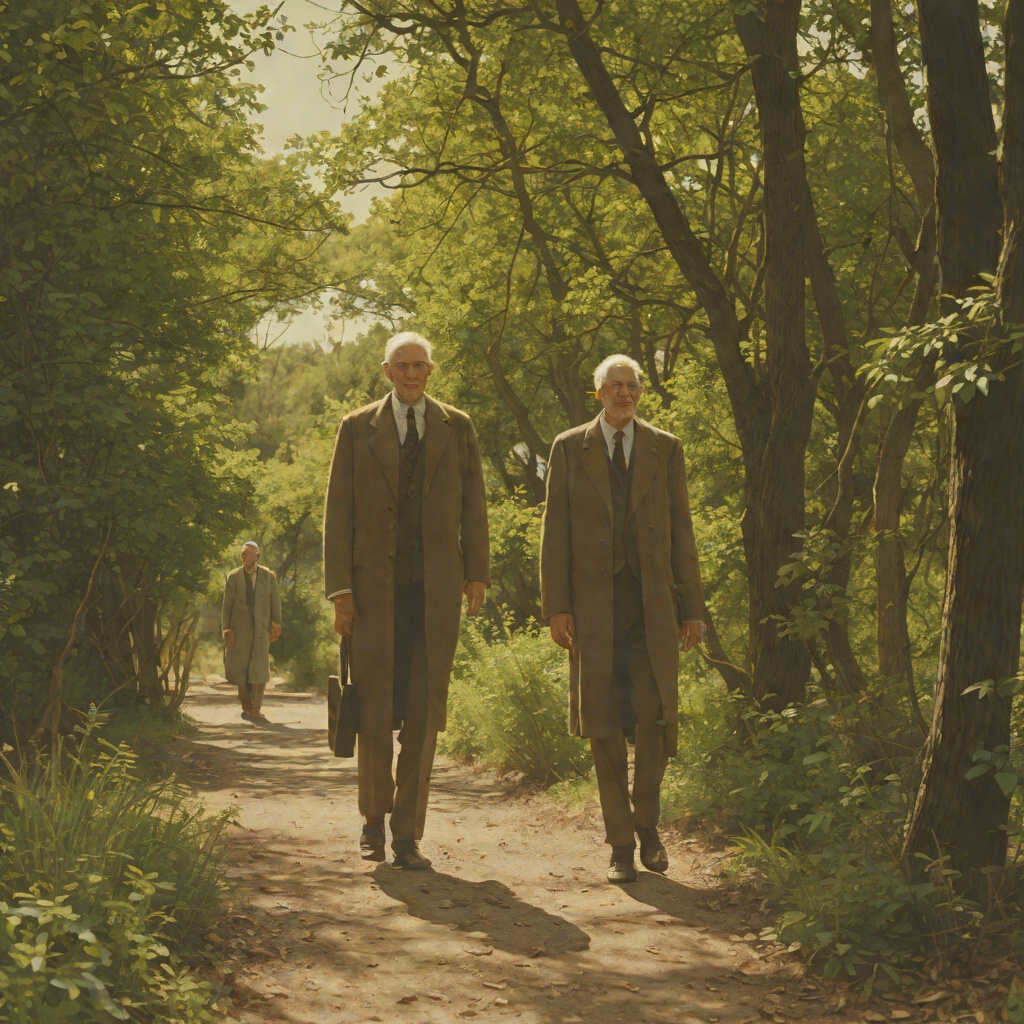
The Unlikely Pilgrimage of Harold FryNew Beginning is the novel’s central image of renewal through movement, memory, and changed relationships. It first appears in Harold Fry’s transformation from an anxious, vulnerable man leaving a small hotel into someone who understands himself as walking toward Queenie Hennessy rather than merely going to post a letter. It later becomes a harder achievement: Harold must carry the past into the open, while Maureen Fry begins to live actively after years of preserving the rooms, routines, and grief associated with David Fry. A new beginning is therefore not erasure. It is the possibility of continuing after the old life has been broken.
From Departure to Rebirth
Harold’s first steps are physically precarious and emotionally uncertain. He is alone, without his mobile phone, aware that a fall or an attack might leave him unheard; even a cracking branch makes him hurry forward before he discovers that the threat is only a pigeon. Yet the same vulnerability gives the road its exhilaration. Freed from the car, the house, and the demand to return by nightfall, he experiences England as an unknown world opening beneath his feet. By the time he meets walkers on the road, he knows that he is no longer someone briefly out to post a letter. He is walking to Queenie Hennessy, and the journey has made him different from the man who left Kingsbridge and from the man who arrived at the hotel. His beginning again is first expressed as a change in identity.
The physical body makes this renewal difficult rather than symbolic or effortless. Harold inspects his feet with cautious pride, noticing tenderness around the nails, pain in the joints, and a possible blister forming at his heel. Later his heel stings, his back aches, his soles burn, his fingers throb, and his legs buckle without warning. The road thus tests the fantasy that a decisive idea can instantly produce a new self. His progress depends on plasters, rest, stretching, fresh water, and attention to injury. The beginning becomes credible precisely because it is worked out through pain and practical discipline.
Memory as the Material of Change
Walking releases what Harold has spent twenty years trying to avoid. In Exeter, his thoughts have stopped; on open land, memories begin to chatter with wild energy. Distance ceases to be measured only in miles and becomes a measure of remembering. The forward movement of his body gives the buried past a route back into consciousness: Maureen appears gardening at Fossebridge Road, David’s vulnerability returns through the image of a broken bird’s egg, and a crow’s call carries Harold back to the loneliness of adolescence.
This movement toward a new life is repeatedly interrupted by traumatic return. Near Taunton, Harold tries to think of Queenie Hennessy, but an older memory overwhelms him: the afternoon when David Fry’s death brought everything to an end. His physical reaction is violent. He drives his feet against the paving stones, tries to outrun the memory, shouts into the rain, and then collapses when his calf suddenly gives way. The body becomes the place where an unspoken past announces itself. The journey does not leave trauma behind; it makes trauma impossible to keep entirely repressed.
Harold’s letter to the garage girl marks a further change because he finally gives the loss a coherent account. He tells her that David Fry hanged himself in the garden shed after struggling with depression and addiction, and that Harold was the person who found him too late. He describes Maureen’s inability to leave the house, her installation of net curtains to keep neighbours from prying, and her continuing sense that David was still with her. He also admits his own drinking, his destruction of the shed, and the terrible act that led Queenie Hennessy to take the blame and lose her job. The new beginning depends on testimony: Harold does not merely remember David; he speaks the truth of what happened and recognizes his own responsibility within it.
Maureen Fry’s Separate Beginning
Harold’s departure creates space for Maureen Fry to change in her own way. At first she expects that Harold’s absence will allow her and David Fry to become closer, but she discovers that Harold is often not listening and that she is becoming uncomfortable when speaking to her son. She stops tidying Harold’s bedroom and stops imagining that he will return. This is not a simple rejection of Harold or David; it is the painful recognition that preserving the past has prevented her from inhabiting the present.
Her turning point comes after the trip to Slapton Sands. She returns home exhausted, enters the master bedroom fully dressed, and wakes with a sense that an unspecified weight of pain has lifted. Harold’s pillow still smells of Pears soap and him, but the room no longer functions only as a monument to absence. She moves her clothes from the spare room back into the wardrobe beside Harold’s, pays the unopened household bills, checks that Harold’s health care is current, takes the car to the garage, and ties an old silk scarf around her hair as she did in earlier days. These actions are modest, but their ordinariness is their force: renewal begins through bills, tyres, clothing, and domestic decisions rather than through a single dramatic revelation.
Maureen’s new challenge is to attempt one unfamiliar thing every day. Her response contrasts with Harold’s long walk while remaining structurally related to it. He changes by leaving the enclosed world of the house; she changes by re-entering daily life and reclaiming choices within it. Their trajectories no longer mean the same thing, and neither can simply return to the marriage as it was. New Beginning therefore includes separation from an old arrangement as well as the hope of a different relationship.
The Road as a New Social World
Once Harold accepts help without treating it as weakness, the journey becomes a new form of social existence. Martina gives him walking socks, blue duct tape, an empty rucksack, and her partner’s brass compass, then kisses his cheek and tells him to go well. Harold leaves a postcard in thanks, but he understands that the gift cannot be reduced to payment. Receiving shelter and care requires courage and humility, just as offering them does. The compass becomes both practical equipment and a sign that his route is sustained by relationships with people he will not possess or permanently retain.
Harold gradually learns to meet strangers without reducing them to obstacles or categories. He walks with office workers, dog walkers, shoppers, schoolchildren, hikers, a tax inspector who is a Druid, a woman searching for her real father, a priest who tweets during mass, marathon trainees, an Italian man with a singing parrot, a white witch, a homeless man, bikers, and a mother of six who confesses that life can be solitary. He listens rather than judges. The encounters reveal a world composed of people all putting one foot in front of the other, each life apparently ordinary only because it has been lived for a long time. His beginning is thus ethical as well as personal: he becomes capable of acknowledging the equal strangeness and sameness of other people.
After a night in a barn, Harold continues sleeping outdoors, washing in public lavatories, fountains, and streams, and rinsing his clothes where no one is watching. He feels himself outside the settled world of houses, cars, regular meals, and nightly companionship, yet he does not condemn that world. The road places him in a threshold state between ordinary social structures and a temporary community of walkers, hosts, strangers, and fellow sufferers. In that space, identity is less fixed, and generosity can cross boundaries that the old domestic life kept closed.
What a Beginning Cannot Undo
Harold’s later rhythm is confident: the compass points north, the blisters are managed with duct tape, sleep follows need, and he walks under stars, moonlight, wind, rain, and sun. He no longer knows how far he has travelled, only that he is going forward. The land changes from pale Cotswold stone to Warwickshire’s red brick, while the beard on his face records the duration of the transformation. He believes Queenie Hennessy will live, and the belief gives his movement its immediate purpose.
Yet the new beginning does not promise restoration. Harold’s memories of David remain painful, and the image of Maureen at David’s funeral returns with particular force: she brings a red rose, a teddy bear, and a pillow for the coffin, while Harold has nothing to give. He waits outside the funeral director’s, accepts a cigarette despite having stopped smoking, and is physically overcome by the smoke and the smell of decay before hearing Maureen’s animal-like sob. The scene explains why renewal must be understood as altered continuation rather than recovery of innocence. David cannot be brought back, the years of silence cannot be unwritten, and Harold and Maureen cannot simply resume their former lives.
The novel’s New Beginning lies instead in the decision to move while remembering, to tell what had been hidden, to accept help, and to let another person’s grief exist without controlling it. Harold’s walk changes the meaning of his past without abolishing it; Maureen’s return to the master bedroom changes the house without making David’s absence less real. Their lives begin again in different directions, joined by the possibility that truth, attention, and sustained action can create a future out of what remains.