Small Miracle
The Unlikely Pilgrimage of Harold FrySmall Miracle is the novel's central concept of faith: the belief that Harold Fry's walking will keep Queenie Hennessy alive, and that ordinary human action can transcend rational explanation. It is the idea that transforms a retired man's impulsive walk to post a letter into a pilgrimage, and it is ultimately affirmed by Maureen as the very thing Harold did in getting up and walking. The concept is the novel's answer to the question of whether a single, seemingly insignificant act can carry redemptive power, and it is tested, doubted, and finally embraced across the entire span of Harold's journey from Kingsbridge to Berwick-upon-Tweed.
The Birth of the Idea
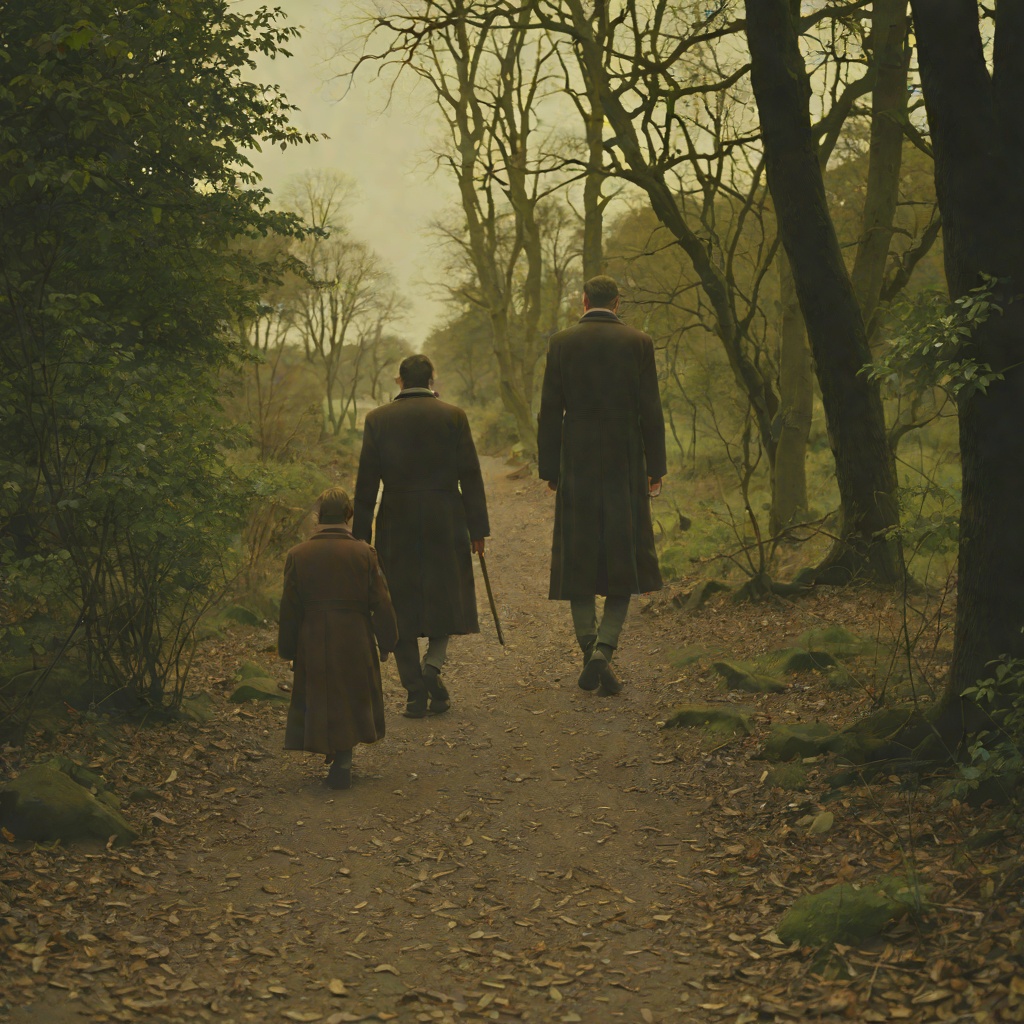
The miracle is born in a phone box, not in a church. Standing at one end of England, having just learned that Queenie is asleep and cannot take his call, Harold pictures her dozing at the other end of the country, with all the roads, fields, rivers, woods, moors, peaks and valleys, and so many people in between. The decision comes in the same moment as the idea, with no deliberation and no reasoning. He is laughing at the simplicity of it. He tells the voice on the line that Harold Fry is on his way, that all Queenie has to do is wait, because he is going to save her. "I will keep walking and she must keep living," he says. The miracle is thus framed not as divine intervention but as a contract between two people, a pact of mutual endurance that requires faith on both sides.
The Fragility of Faith
Harold's faith is never secure. It is a fragile thing, as he himself knows. When he phones Maureen from Loddiswell, she is utterly thrown by his certainty, and her skepticism is a direct assault on his resolve. She reminds him that he is sixty-five, that he only ever walks to get to the car, that he has left his mobile phone, and that he has no idea where he will sleep. She tells him she would like to see him get past Dartmoor. The laughter stops, and his voice sounds stripped away, but he insists that it is not enough to post a letter. "Please. I need to do this, Maureen." The fragility of his faith is also physical: inspecting his feet in a hotel room, he finds them soft and pale, tender around the nails, with a possible blister forming, and he is quietly proud that they are not worse, performing the same slow, thorough inspection of his right foot before declaring, "Not bad." The miracle must survive both his wife's disbelief and the plain evidence of his own aging body.
The Testing of Faith
The walk itself becomes a series of trials that threaten to break the miracle. On the outskirts of Taunton, a memory he most fears surges into his mind, one he is normally so good at repressing. He tries to think about Queenie, but even that will not work. He shoots his elbows out sideways to go faster and drives his feet against the paving stones with such fury he cannot breathe, but nothing hides him from the memory of an afternoon twenty years ago when it all came to an end. He shouts "No" at the rain, and then his calf explodes as if the skin-side of the muscle has been sliced open, and he collapses to the ground. The miracle is tested by the past, by physical pain, and by the sheer impossibility of the distance. Yet it is also renewed. After phoning the hospice from Nailsworth, the violent doubt he felt before is gone. He has escaped a great danger. There are miracles after all, he thinks; if he had got on a train or in a car, he would be on his way, believing he was right, but all the time it would be wrong. He had nearly given up, but something else had happened and he kept going. He would not try to give up again.
The Practice of Faith
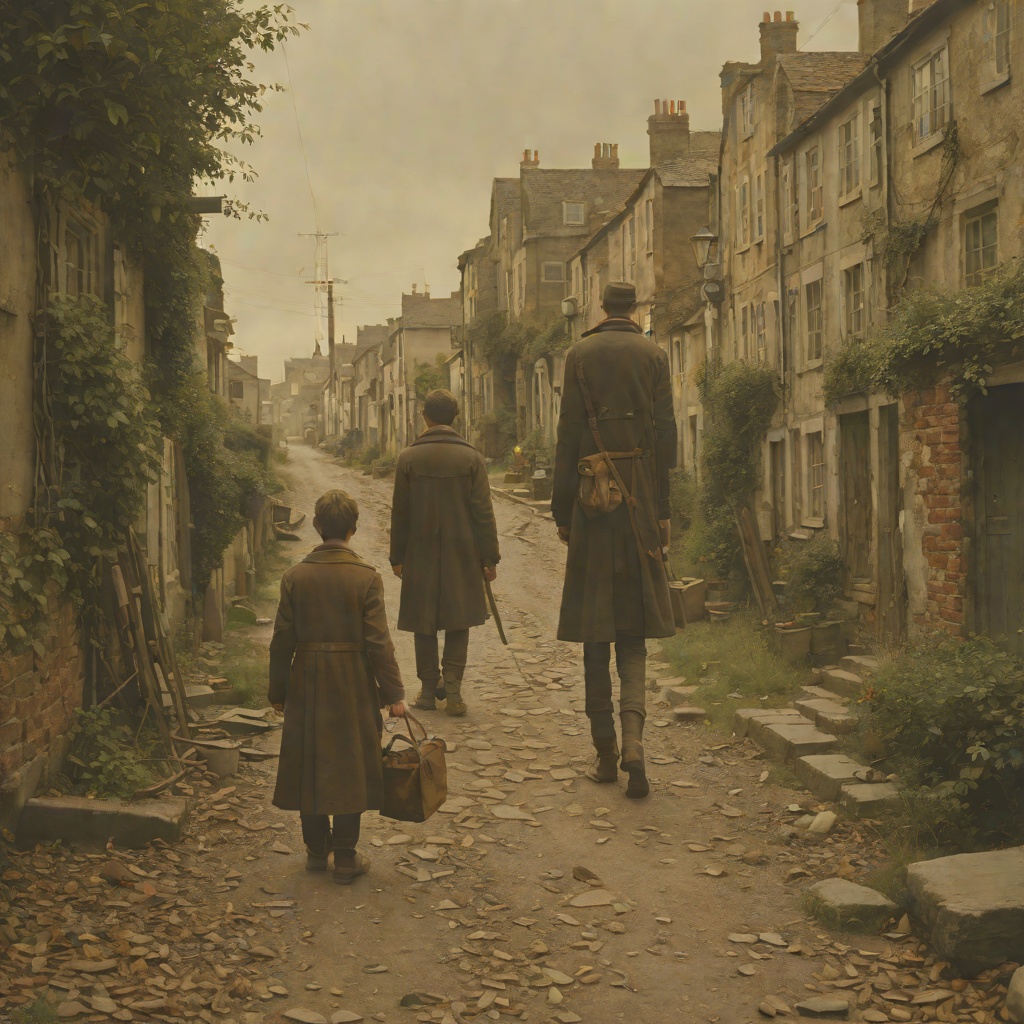
Faith, for Harold, becomes a practice of radical openness to strangers. He learns that it is the smallness of people that fills him with wonder and tenderness, and the loneliness of that too. The world is made up of people putting one foot in front of the other, and a life might appear ordinary simply because the person living it has done so for a long time. He can no longer pass a stranger without acknowledging the truth that everyone is the same, and also unique, and that this is the dilemma of being human. This faith is enacted in concrete acts of giving. In Cheltenham, he donates his washing powder to a student going into a laundrette, offers his wind-up torch to a woman from Prestbury who cannot find her key, gives his plasters and antiseptic cream to the mother of a distressed child with a bleeding knee, and hands his comb to the child by way of distraction. He gives the guide to Britain to a bewildered German couple lost near Cleeve Hill, and suggests the plant dictionary too, since he knows it by heart. He keeps the compass and the rucksack because they are not his to give away, a recognition that some gifts are borrowed and must be honored. The miracle is sustained by this endless exchange of small kindnesses, each one a step in the journey.
The Affirmation of the Miracle
The miracle is finally named by Maureen, not by Harold. In the hospice garden at St Bernadine's, after Harold has seen Queenie and the grief of a lifetime has broken over him, Maureen holds him tight until the grief passes. She kisses his salty wet cheeks and tells him, "You got up, and you did something. And if trying to find a way when you don't even know you can get there isn't a small miracle, then I don't know what is." The definition is precise: the miracle is not that Queenie lived, nor that Harold arrived in time, but that he got up and did something, trying to find a way when he did not even know he could get there. The miracle is the act of walking itself, the refusal to sit still in the face of death. Maureen's affirmation completes the arc that began in the phone box, transforming Harold's private conviction into a shared truth, and it is sealed by her whispered declaration, "I love you, Harold Fry. That is what you did." The small miracle is not a supernatural event but the ordinary, extraordinary decision to act, and to keep acting, one foot in front of the other.