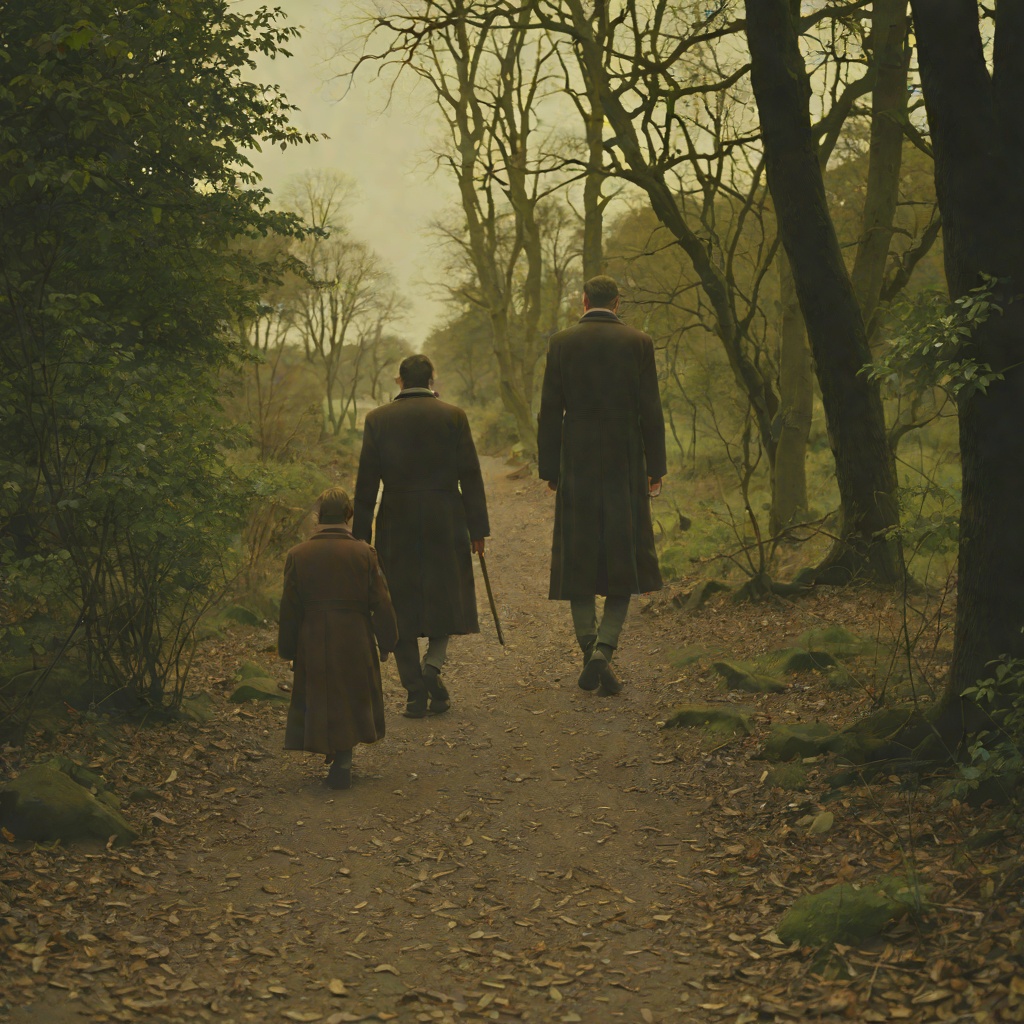
the garden shed
The Unlikely Pilgrimage of Harold FryThe garden shed behind the house on Fossebridge Road is the unmarked grave of the Fry family's happiness. It is the place where David Fry, the brilliant son whose depression and addiction had already hollowed out his parents' lives, hanged himself with rope tied to one of the hooks Harold used for garden tools. The shed is not merely a setting but the physical embodiment of the catastrophe that fractures the novel's present: it is where Harold discovers his son's body, where he later dismantles the structure in a drunken frenzy, and where the memory of that discovery returns to him with unbearable force during his pilgrimage. The shed's hooks, its coils of twine and rope, and its smell of fertilizer are the concrete details that bind Harold's ordinary domestic past to the horror that ended it.
The Shed Before the Catastrophe
In its earlier life, the shed was a place of modest, unremarkable domesticity. Behind the house there had been a potting shed that smelt of fertilizer, with high hooks for hanging tools, and coils of twine and rope. It belonged to the same vanished world as the vegetable beds, the ornamental pond, the chutneys Maureen made every summer, and the goldfish David kept. These things, like the shed's innocent purpose, were long since gone by the time Harold begins his walk. The shed's transformation from a repository of gardening tools to the site of David's death is the novel's most brutal demonstration of how the ordinary can be overtaken by the catastrophic. The very hooks that once held Harold's tools became the anchor for the rope that killed his son.
The Suicide and Its Discovery
Harold's confession letter to the garage girl, written near the end of his pilgrimage, provides the fullest account of what happened in the shed. David hanged himself with some rope, tied to one of the hooks Harold used for garden tools. The coroner's verdict was suicide, but the details were almost unbearable: David was so full of alcohol and pills that it must have taken a long time to tie the noose. Harold was the one who discovered him. He prayed, despite not being a religious man, saying, "Dear God, please let him be OK. I will do anything." He lifted David down, but there was no life. He was too late. The memory of that afternoon, twenty years before the novel's present, is one Harold most fears and normally represses. It surges back into his mind as he walks through the outskirts of Taunton, a memory he cannot escape no matter how furiously he drives his feet against the paving stones. He can see his hand reaching for the wooden door, feel the warmth of the sun on his shoulders, smell the mouldering, heated-up air, and hear the stillness of a silence that was not what it should be. The shed's door, its sun-warmed wood, and its stifling air are the sensory details that make the memory inescapable.
The Aftermath: Dismantling and Drinking
In the wake of David's death, the shed became the focus of Harold's grief and his drinking. He started drinking to keep himself steady before the coroner's report, keeping bottles in paper bags under his desk at the brewery. When he was really out of it one night, he dismantled the garden shed. The act was a desperate, physical attempt to undo what had happened, to tear down the structure that contained his son's death. But even that was not enough. The dismantling of the shed led directly to the novel's other great secret: Harold broke into the brewery and did something terrible, and Queenie Hennessy, knowing it had to be him, took the blame and was fired on the spot. The shed's destruction is thus the hinge between David's suicide and Queenie's sacrifice, the act that sets in motion the chain of guilt, silence, and unspoken gratitude that Harold's entire pilgrimage is meant to address. The shed, in being torn apart, paradoxically became the origin of the walk that would define Harold's final years.
The Shed's Return in Memory
The shed does not stay buried. During his walk, Harold is haunted by the memory of the afternoon he drove Maureen to the funeral director's to see David one last time in the coffin. Maureen had packed a few things: a red rose, a teddy bear, and a pillow to go beneath his head. In the car, she asked Harold what he was going to give, knowing he had nothing. The sun shone very low, torching his eye as he drove. At the funeral director's, Maureen said she wanted to say goodbye to David alone, and Harold sat outside with his head in his hands, waiting his turn, until a passer-by stopped to offer a cigarette. His fingers shook so hard on the cigarette that the passer-by used three matches to light it. The thick nicotine caught in his throat, and as he stood and bent over a rubbish bin, he was met with the bitter stench of decay. Then, from behind him, the air was pierced with a harsh, deep sobbing cry, so animal in its intensity he was struck still. The shed is not named in this memory, but it is its absent center: the place where David died, the reason for the coffin, the source of Maureen's animal grief. The shed's presence in Harold's mind is so powerful that it overwhelms even his attempts to think about Queenie, the ostensible purpose of his walk.
The Shed as Symbol and Burden
The garden shed accumulates meaning as the novel progresses, becoming the novel's most potent symbol of unprocessed trauma. It is the place where Harold's failure as a father is made concrete, where his son's depression and addiction ended in a death that Harold could not prevent. It is also the place where Harold's own collapse began, the dismantling of the shed marking the point at which his grief turned to destruction and, ultimately, to Queenie's sacrifice. The shed's hooks, once tools of domestic order, became instruments of death; the rope that hung from them was the same kind of coil that had once been stored there for gardening. The shed thus embodies the novel's central irony: the ordinary objects of a peaceful life can become the means of its destruction. When Harold finally writes his confession to the garage girl, the shed is the anchor of his story, the fixed point around which his guilt, his drinking, his estrangement from Maureen, and his debt to Queenie all revolve. It is the place he must leave behind, both physically and emotionally, if his walk is to mean anything at all.