Amanda Fenning
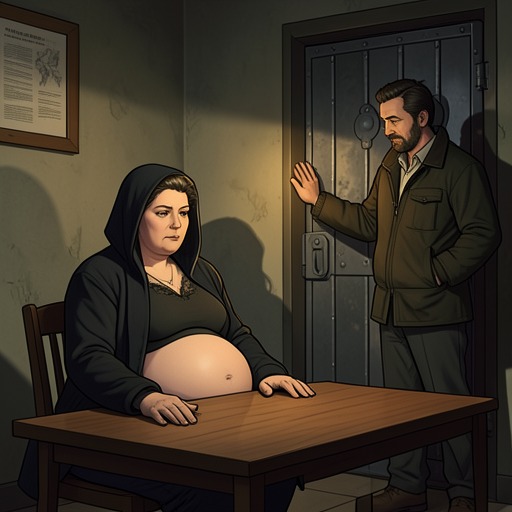
The Vampire Prince’s BrideAmanda Fenning is a Wolf whose defining conflict is not a lack of feeling but the cost of withholding it. At her high-school graduation, she moves through a sun-struck crowd of human classmates while struggling with the heightened senses of her Wolf nature and the nausea of an undisclosed pregnancy. Jace, the Alpha’s son and her boyfriend, is nearby, yet Amanda remains emotionally isolated from him. She has delayed telling him for nearly two weeks, repeatedly placing college applications, final examinations, and graduation preparations ahead of the revelation that would change both their lives.
Identity and Introduction
Amanda’s public position is unusually divided. She is one of the few Wolves sent to a public school rather than raised entirely on the packlands, which makes her feel like an outsider among human classmates. Her natural shyness and withdrawal deepen that separation, while her Wolf senses make the graduation crowd physically overwhelming: the smell of bodies heated by the sun and heavy black gowns, together with the noise of the gathering, presses painfully upon her. The supernatural ability that marks her as different is therefore not presented simply as power. It is also an unwanted sensory burden that reinforces her difficulty entering ordinary social life.
Her pregnancy makes that alienation more dangerous. Amanda knows that Jace, as the Alpha’s son, is expected to meet many people and carry the pressure of a public future. She fears adding another obligation to him, particularly one that might redirect his education and ambitions. Even when she passes human classmates, she consciously avoids protecting her stomach with her hands, treating the concealment of her body as part of the concealment of her identity. The unborn child is present in every movement, but Amanda refuses to let the crowd read what she is carrying.
Separation and Secret Parenthood
Jace breaks up with Amanda around graduation, and she does not fight him. When she later considers whether he would stay if he knew she was pregnant, the question exposes the painful bargain behind her silence: revealing the child might preserve their relationship, but it might also make Jace abandon the future he was expected to pursue. Amanda imagines following him to Harvard and never letting him go, yet she also believes that telling him could cause him to give up his dreams and remain in their town. Her silence is therefore simultaneously protective, fearful, and self-denying.
After the breakup, Amanda raises Logan without Jace’s knowledge. Other than occasionally seeing Jace from a distance in town, she does not see him again for years. The early period after Logan’s birth is especially difficult because she repeatedly wants to call Jace and tell him about their son. She begins dating another man soon after the separation, but never feels more than mild attraction to him, suggesting that the emotional attachment to Jace has not been replaced. Time does not erase the secret; instead, it makes disclosure more frightening, until merely imagining the confession is enough to bring on palpitations.
Amanda’s concealment also shapes Logan’s childhood. Logan hopes to meet Jace and imagines that he might give him money for new books for the packland library. Amanda sees that Logan resembles her own father in human form, which allows her to hope that Jace will not immediately recognize himself in the boy. Yet Logan’s personality is strikingly like Jace’s: bold, confident, and inclined to become the leader of whatever group surrounds him. When Logan shifts, his Wolf looks exactly like Jace’s. The resemblance makes the secret increasingly unstable, because the son carries visible evidence of the father even when Amanda tries to keep their histories separate.
Disclosure and Emotional Conflict
Amanda eventually tells Jace the truth directly: Logan is his son, conceived just before graduation. The disclosure is not softened by an elaborate explanation, and Jace’s controlled response makes the moment more threatening rather than less. Amanda recognizes that his perfectly even voice once signaled that he was close to losing control, and she anticipates that his anger may wound more deeply through words than through shouting. She refuses to continue the conversation while Logan is present because she will not allow the child to become an audience to their unresolved conflict.
Jace interprets the secrecy as possible punishment for his earlier breakup, but Amanda rejects that reading. Her explanation is grounded in sacrifice rather than revenge: she believed that the pregnancy would persuade him to give up Harvard and the life he ultimately built as a billionaire lawyer. She admits that she wanted to follow him and keep him from leaving, but she chose to let him pursue the future she thought he deserved. The revelation thus changes the meaning of their separation. Amanda’s silence caused real harm by denying Jace knowledge of his child, yet it also originated in her attempt to preserve his freedom and ambitions.
The emotional logic of Amanda’s behavior is an attachment pattern built from pursuit and restraint. She loves Jace from the first time she sees him, but when he withdraws, she does not pursue him openly; she converts longing into caretaking, secrecy, and endurance. She protects the child, protects Jace’s career, and protects herself from the possibility that he would reject both her and Logan. Her avoidance is not emotional emptiness. It is love disciplined into silence until the silence becomes another source of injury.
Reconciliation and Family Consequences
Amanda’s story moves toward reconciliation when she finally states that she has loved Jace from the beginning. Her earlier failure to fight for the relationship is reinterpreted as an attempt to do what she believed was best for him, not evidence that the bond was weak. The relationship’s repair depends on bringing the hidden child into the open and allowing the former couple to confront the years shaped by the secret.
Logan is the central consequence of every choice Amanda makes. He is not merely proof of the past or a device that reunites his parents; he is a living link between Amanda’s protective silence and Jace’s inherited leadership. His resemblance to Jace, his confident personality, and his matching Wolf form make the concealed parentage impossible to treat as a purely private matter. Amanda’s eventual disclosure therefore restores more than romantic honesty. It gives Logan access to the father whose absence has silently structured his life.
Amanda’s ending is defined by integration rather than by the erasure of what she did. She remains responsible for withholding Logan from Jace, while Jace must confront the consequences of leaving without knowing what Amanda carried. The resolution acknowledges both truths: her secrecy deprived him of fatherhood, and her decision was motivated by a genuine fear that his dreams would be sacrificed for the child. Their reconciliation becomes meaningful because it does not depend on pretending that the separation was harmless.
Narrative Significance
Amanda embodies the tension between Wolf identity, human social isolation, and the reproductive expectations attached to pack lineage. Her pregnancy is concealed in a human graduation setting, while Logan’s later Wolf traits reveal that supernatural inheritance cannot remain entirely private. The story repeatedly places Amanda between worlds: she attends human school but belongs to the Wolves; she wants the intimacy of family but relies on secrecy; she loves Jace but lets him go; she raises Logan independently while preserving the image of a future in which Jace can still become who he was meant to be.
Her significance lies in the way maternal protection becomes both virtue and wound. Amanda’s care is active and costly, but it is also shaped by fear, and fear turns a loving decision into a long-term deception. The eventual confession allows the hidden family structure to be acknowledged, transforming the secret that isolated Amanda into the truth that can reconnect her, Jace, and Logan. In that sense, Amanda’s arc is not simply about pregnancy or reunion. It is about learning that protecting another person’s future without giving that person the truth can become another form of control, and that love must eventually move from private sacrifice into shared responsibility.