Anti-Shifter Hysteria
The Vampire Prince’s BrideAnti-Shifter Hysteria is the ideology and social panic that casts shifters as inherently dangerous, untrustworthy, or less than fully human. In the novel, it supplies the emotional justification for the Shifter Registry, workplace exclusion, threats, assassination attempts, and physical violence. Its most devastating effect is not only what anti-shifter groups do to shifters, but what prolonged persecution can make shifters believe about themselves: that their animal sides are diseases, demons, or defects that must be hidden or cut away.
Historical and Ideological Roots
The hostility has a long historical memory. During the European colonialization period, shifters were treated as devil-worshipping witches and were slaughtered wholesale: burned at the stake, hanged, and hunted down. The novel contrasts that history with a changing international climate, noting that countries such as China have condemned the treatment of shifters in America. The election of Seth Fischer, only the third shifter to serve as an American senator and already longer-serving than his two predecessors, becomes evidence that public attitudes are not fixed.
Yet the older beliefs remain active beneath the language of modern policy. Seth had once been used as the poster boy for an anti-shifter group before publicly revealing that he was a shifter. His transformation into a golden retriever made him more acceptable to the public than a tiger, deer, or fox might have been, exposing how much apparent tolerance depends on whether a shifter’s animal form fits human ideas of harmlessness. The prejudice therefore operates through both open hatred and selective comfort: a predator is imagined as threatening, while a familiar companion animal can be made into a reassuring political symbol.
The ideology also feeds on false biological assumptions. Nobody knows what determines a shifter’s animal form, although the text identifies a genetic disposition toward shifting, a tendency for shifter children to have shifter parents, and a tendency for children of predator shifters to become predators themselves. Because research remains limited, anti-shifter groups fill the gap with stereotypes. Their most popular false claim is that shifters can choose whether they possess an animal side at all because shifting itself is voluntary. That distinction erases the involuntary fact of shifter identity and makes persecution appear to be a response to personal choice rather than discrimination against an inherited condition.
Law, Work, and Institutional Exclusion
The proposed Shifter Registry is presented as a protective measure, but Ana Medina recognizes it as a step toward a Shifter Detainment Act. She helps Seth Fischer refine his parliamentary speech because the registry threatens to strip American citizens of rights under the appearance of public safety. Seth must oppose it without allowing his opponents to recast his argument as an attack on a weaker version of their position; the political struggle is therefore also a struggle over who gets to define the problem.
Employment law makes the contradiction especially stark. Shifters are not legally barred from becoming police officers, but the Self-Preservation Act allows employers to fire anyone they consider a threat to safety. Since shifters are routinely classified as threats merely for being shifters, formal permission to work offers little real protection. Known shifters consequently struggle to obtain or retain jobs and are then condemned as lazy people seeking government handouts. Anti-Shifter Hysteria creates the exclusion and then uses the consequences of exclusion as supposed evidence against the excluded group.
The same logic reaches beyond formal institutions. Hate mail and threats against Seth increase as he campaigns against the registry. His staff are treated as targets because their alliance with a shifter can itself be framed as dangerous. When Ana’s car is destroyed, the attack functions as a warning to non-shifters: anyone who supports shifters may be punished. The movement thus attempts to isolate shifters by making solidarity costly, transforming political association into a security risk.
Violence and the Politics of Spectacle
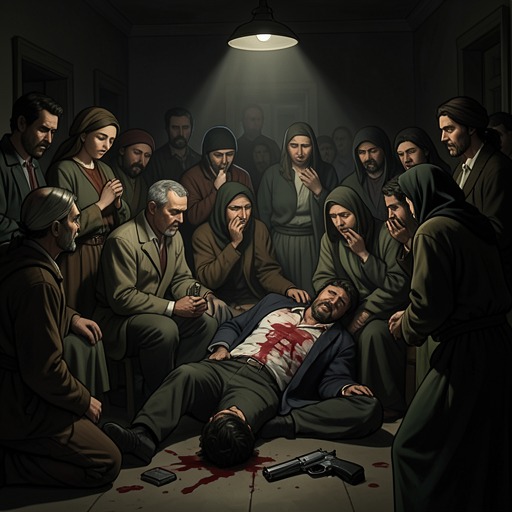
The hysteria escalates from propaganda to coordinated violence. The safe house sheltering Ana Medina and Joseph Baker is attacked, Buck Harmon is killed, and evidence suggests that a police officer inside betrayed the group. Joseph concludes that the officer could not have acted alone and that a superior within the institution may also belong to the anti-shifter network. Because Joseph was seen shifting during the escape, the conspirators can attempt to blame the attack on a shifter and turn the victim into the suspect.
The threat against Senator Seth Fischer is even more calculated. Joseph believes the kidnappers took him alive in order to make an example of him. He recalls the older practice of torturing shifters into revealing their animal forms, killing them, skinning them, and displaying their hides as warnings. The anti-shifter violence of the present does not simply seek to eliminate individuals; it seeks to produce a public spectacle that will frighten other shifters into silence.
That strategy culminates in Crystal Scott’s hostage broadcast. Crystal denounces shifters as “untrustworthy, vile creatures” who should not be allowed to walk freely in public, and she presents Joseph’s Bear identity as proof that a detective controlled by instinct cannot protect ordinary people. She also claims that a human mate has no meaningful choice once a shifter’s pheromones draw the person toward a permanent bond. Her rhetoric converts intimacy into coercion and identity into criminal evidence, presenting every shifter relationship as a potential assault on human autonomy.
Crystal then shoots Seth and insists that the Shifter Registry is necessary to protect humans from shifters. Joseph shifts to protect the wounded senator and Ana, defeating Crystal’s armed guards in his animal form. The scene makes the propaganda’s promised protection visibly monstrous: the supposed defenders of humanity create the hostage crisis, shoot the elected official, and leave dead bodies across the warehouse floor.
Internalized Shame and Psychological Damage
Anti-Shifter Hysteria is most destructive when it becomes an internal voice. Crystal is herself a shifter, but she has suppressed her animal side so completely that she describes it as a demon and wants to cut it out before it can hurt anyone. Joseph tells her that her condition is the result of suppressing her shifter identity and refusing to acknowledge her “Beast.” Her breakdown reveals the psychological cost of a culture that teaches shifters to despise the part of themselves that makes them shifters.
The novel repeatedly links the social and mental dimensions. Seth explains that when shifters are forced to hide, shamed into believing something is wrong with them, or driven to remove their own identity, their mental health suffers. Crystal’s collapse is therefore not treated as proof that shifters are naturally unstable. It is presented as evidence of what sustained stigma can produce. Her anti-shifter convictions are not merely a public performance: she believes that she and other shifters do not deserve freedom, showing how persecution can be reproduced by the people it harms.
This pattern of internalized hierarchy appears elsewhere in supernatural family life. Mayumi May’s hostility toward Lola is tied to the belief that magical ability marks a difference within the family: witch genes skip a generation, Lola inherits the witch gene, and Mayumi does not. Mayumi’s own predictive ability has contributed to her success, but she refuses to acknowledge it, while treating Lola’s identity as a source of shame and exclusion. The family conflict is not identical to anti-shifter politics, but it echoes the same structure in which inherited difference becomes a reason to conceal, demean, or control a person.
Resistance and Narrative Significance
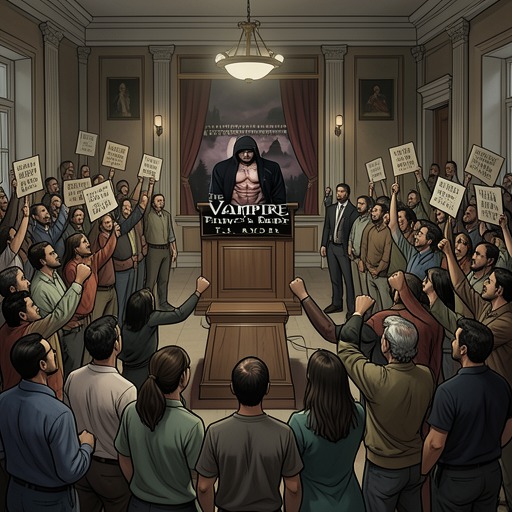
The answer to Anti-Shifter Hysteria is organized visibility rather than further concealment. Seth turns the tragedy at the warehouse into a public argument for legal reform, insisting that shifters should not have to hide or suppress themselves. He calls for shifters to stand openly in their identities and challenges the meaning of freedom under discriminatory law. His speech transforms the defeated broadcast into a competing public narrative: Crystal’s violence is not evidence that shifters require registration, but evidence that enforced shame damages lives.
Ana Medina’s response shows the movement spreading beyond shifter self-advocacy. She is not a shifter, yet she has long opposed the registry because she believes that “People are people.” After witnessing the warehouse deaths and Crystal’s collapse, her commitment intensifies. She returns to work with Seth and researches anti-shifter organizations for use in his arguments. Shifter-rights groups become more vocal after the broadcast, even though Ana recognizes that opponents may try to use Crystal’s tragedy as an excuse for stricter control.
Joseph Baker’s change is equally important. He has concealed his shifter identity from his coworkers, partly because the law offers no reliable protection and partly because his instincts push him toward solitary control. After Buck’s death and the confrontation with Crystal, he resolves to stop hiding. His relationship with Ana becomes a source of solidarity rather than a tool for the hysteria’s claim that shifter bonds are inherently coercive. Their shared recognition that they are mates stands against the ideology that treats cross-species intimacy as proof of danger.
The concept’s larger significance lies in its circular structure. Anti-Shifter Hysteria creates laws that permit exclusion, exclusion produces economic and psychological damage, and those consequences are then cited as evidence that shifters are defective or dangerous. The novel breaks that circle by placing the human cost of the ideology in full view: threatened political reformers, compromised police institutions, murdered allies, wounded leaders, frightened families, and a shifter driven to declare war on her own animal nature. Against that machinery, public speech, research, interracial solidarity, and unapologetic self-recognition become forms of resistance. The struggle over shifter rights is therefore also a struggle over whether difference will be treated as a social identity deserving protection or as a pretext for surveillance and control.