Assassination of Camlo
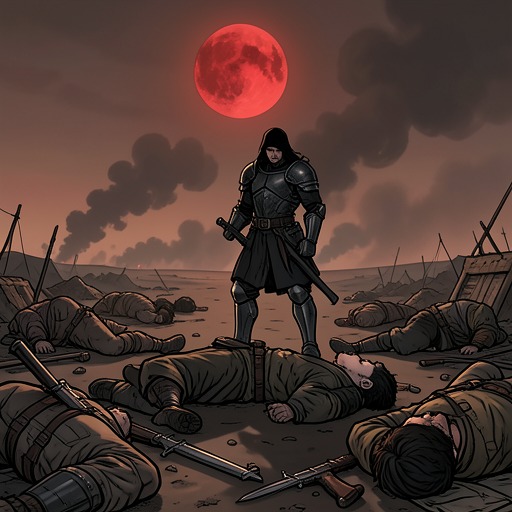
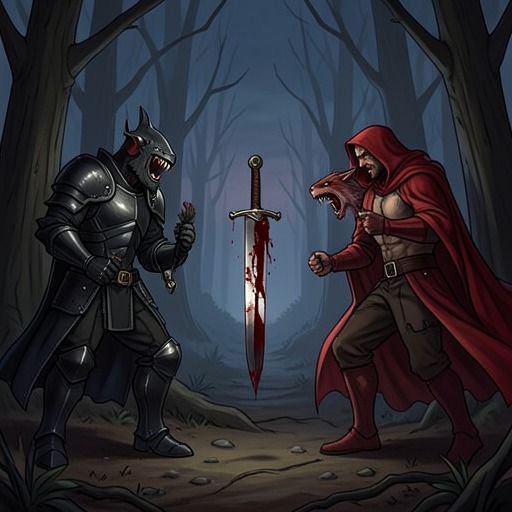
The Vampire Prince’s BrideThe Assassination of Camlo is a palace murder that transforms a distant insurgency into an immediate threat to the vampire kingdom. Camlo, the king’s heir, is killed by a cheetah shifter who infiltrates the palace during a coordinated attack on Lord Virgil’s estates. The death removes the expected successor, exposes the vulnerability of the royal stronghold, and places Darius’s recent promotion—and his responsibility for suppressing the Rebeluna—under sudden suspicion.
Causes and Political Background
The assassination occurs several days after Darius receives his promotion, while he is taking a private night with his wife, Cleo. That domestic interlude is violently interrupted when the door bursts open and Gordon arrives with grim news. The contrast is decisive: Darius has just been elevated within the military hierarchy, yet the kingdom’s most protected space has been breached at the moment when his authority should be proving its value.
The attack is linked to a broader assault rather than treated as an isolated killing. Gordon reports that Rebeluna forces—or at least forces suspected of being connected to Rebeluna—have launched a full-scale attack on Lord Virgil’s estates. The king sends troops to assist Lord Virgil, creating the opening through which the cheetah shifter enters the palace. The deployment therefore functions as a distraction: the kingdom’s defenses are drawn outward while the true target remains inside the royal seat.
The Palace Infiltration and Killing
The immediate report is stark: a cheetah shifter breaks into the palace and assassinates Camlo. The intruder is caught while attempting to reach the queen’s chambers, but Camlo has already been killed. The sequence makes the palace breach especially alarming. The assassin is not merely attacking a battlefield position or an exposed estate; she penetrates the royal compound, kills the king’s heir, and continues toward the queen’s rooms before being intercepted.
Darius’s first response is disbelief and alarm. He questions how a shifter could enter the palace despite its heavy fortifications and guards, then demands to know what happened. The limited information makes the danger harder to contain. The assassin has been captured, but the attack’s organizers, purpose, and full extent remain unclear, while the attempted movement toward the queen’s chambers suggests that Camlo may not have been the only intended target.
Darius’s Crisis of Responsibility
Camlo’s death immediately becomes a test of Darius’s legitimacy. Darius recognizes that the killing may destroy his promotion because the king will ask why the military commander responsible for stopping the rebels did not know about the plot. The question is not only whether Darius personally ordered adequate defenses; it is whether his failure to anticipate the attack amounts to negligence at the highest level of government.
The uncertainty briefly produces a morally uncomfortable possibility. Camlo’s death opens Darius’s prospects in the succession because the king’s heir is gone, and Darius understands that the tragedy could improve his own position. Yet that potential advantage is inseparable from culpability. If Rebeluna arranged the assassination, then Darius has failed in the very duty for which he was promoted. His private admission that the event could ruin him broadens the consequence beyond personal grief: the assassination threatens the stability of the royal family, the credibility of the military, and Darius’s future within the kingdom.
Military Response and Aftermath
Although the evidence is incomplete, Darius decides that he must assume Rebeluna is directly responsible. He rejects the safer strategy of trying to prove that he was innocent of negligence. Instead, he resolves to intensify the campaign, avenge Camlo, and drive Rebeluna out of the vampire kingdom. The assassination thus converts uncertainty into policy: suspicion becomes the basis for open retaliation.
Darius orders three squads to prepare for an immediate operation against Rebeluna. His response is both strategic and personal. He wants to identify or punish the force behind the palace attack, but he also needs to recover the authority endangered by the killing. The command to bring Rebeluna down “once and for all” marks a sharp escalation from containment toward decisive suppression.
Narrative Significance
The event is presented through ordinary chronological narration, but its dramatic structure depends on a sudden value shift. Darius and Cleo begin in a moment of marital intimacy and apparent safety; the bursting door changes that security into vulnerability, while the news of Camlo’s death changes Darius’s promotion from an achievement into a liability. The scene’s interruption is therefore not decorative. It exposes how quickly private stability can be overturned by political violence.
The assassination also establishes a recurring pattern in the wider narrative: ceremonies and institutions promise order, yet hidden breaches reveal how fragile that order is. Elsewhere, a hovering temple platform carries Cheryl from sacred grounds toward a palace where she discovers two prospective kings rather than one; at the Kinai Rookery, Kenner discloses that Joining occurs every twenty-five years for Unjoined people between twenty and thirty while beastlings hatch; and Harrod’s final night at the den places a full-moon trial before the entire wolf community. Against those scenes of public succession, initiation, and recognition, Camlo’s death is an anti-ceremony—a transfer of power made possible not by ritual but by murder. Its immediate result is Darius’s mobilization, while its deeper effect is to make succession, security, and loyalty inseparable from the continuing war with Rebeluna.