Gallery financial crisis
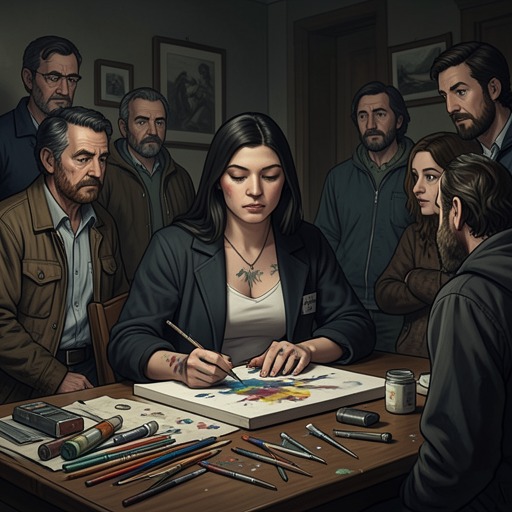
The Vampire Prince’s BrideGallery financial crisis is the precarious economic condition surrounding Piper Diamond’s art gallery in Uphoria, Alberta. The gallery is not merely a workplace: it is the institution through which Piper lives as an artist, witch, and owner. Because its continued operation is uncertain, the crisis places her creative identity and material security under the same threat, making financial survival inseparable from the question of what kind of life she wants to preserve.
Origins and Conditions
The crisis is presented as recurrent rather than temporary. Piper explains that the gallery is “in the red again” and that she is unsure how she will make rent. The phrase “again” is crucial: even when the business reaches the point of breaking even, another setback pushes it back into debt. The gallery therefore exists in a cycle of fragile recovery and renewed insolvency, with no stable margin protecting it from the next expense or disruption.
That instability also competes with Piper’s personal life. While Uphoria is consumed by Werewolf League hockey, Piper is absorbed in books and financial concerns rather than the season’s excitement. Her mate, Baxter, tries to draw her away from the work, but Piper’s attention remains fixed on the gallery’s accounts and immediate obligations. The crisis is thus shown not only through its balance-sheet language but through the way it occupies her time, interrupts rest, and limits her ability to respond freely to intimacy or pleasure.
Commercial Threat and Artistic Independence
The gallery’s financial weakness makes Piper vulnerable to Thor Wragge, a warlock who wants to buy the business. His proposed future would turn Piper’s artistic ambitions into cheap reproductions, converting a space associated with original work and personal aspiration into a commercial operation. The danger is therefore double-edged: losing the gallery would mean losing her livelihood, while accepting Thor’s intervention would preserve the business only by compromising what the gallery represents.
This conflict gives the financial crisis a cultural and ethical dimension. Piper is not choosing between two equally neutral business arrangements. She must weigh economic survival against artistic control, and the pressure of debt creates the conditions in which another person can attempt to redefine her work for profit. The gallery’s vulnerability becomes a struggle over cultural value: Piper’s vision is threatened by a model that treats art as something cheaply reproducible.
Escalation Through External Attacks
The crisis worsens when the gallery becomes a target for vandals and burglars. These attacks add direct physical danger and material damage to the existing financial strain. A business already unable to maintain reliable solvency has even less capacity to absorb theft, repairs, disruption, or lost trade, so the break-ins intensify the cycle Piper is trying to escape.
The attacks also make the gallery’s condition dramatically visible. Debt can remain abstract when described through rent and accounts; vandalism turns the threat into an assault on the actual place where Piper works and exhibits art. The gallery is simultaneously a financial liability, a creative refuge, and a contested space. As those functions collide, Piper is forced to decide what she truly wants from life rather than treating the business problem as an isolated bookkeeping difficulty.
Effects on Piper’s Choices
Piper’s financial anxiety directly shapes her interaction with Baxter. While Baxter urges her to leave her chair and allow herself a distraction after a game, Piper returns to the gallery’s worsening finances. Her reluctance is not simple disinterest in Baxter or in hockey. The unpaid rent and recurring debt make leisure feel dangerous because every moment away from the gallery seems to compete with the work of keeping it alive.
The crisis also complicates the possible relationship with Patrick Giles. Patrick wants Piper and Baxter to form a trois amour, while Baxter is willing to let Patrick join them, but Piper is uncertain that she can commit to another Werewolf. Her hesitation develops alongside the gallery emergency: she is being asked to imagine an expanded emotional future while the institution sustaining her present life may collapse. The contrast between romantic possibility and economic insecurity gives her decision about intimacy a practical weight absent from a purely romantic triangle.
Narrative Significance
The gallery financial crisis binds together the story’s artistic, economic, romantic, and supernatural pressures. Piper’s identity as a gallery owner and artist cannot be separated from the rent she may not be able to pay, the buyer who would cheapen her work, or the vandals and burglars who threaten the premises. The recurring movement from breaking even back into debt establishes instability as the condition under which she must make every major choice.
Its decisive significance lies in forcing Piper to define success for herself. Keeping the gallery open matters, but the crisis asks whether survival without artistic independence would count as victory. By placing the gallery between Piper’s creative ideals and the commercial pressure represented by Thor Wragge, the narrative turns insolvency into a test of autonomy: the future of the business becomes a measure of whether Piper can protect both the material space of her work and the meaning that work has for her.