Hidden supernatural identity
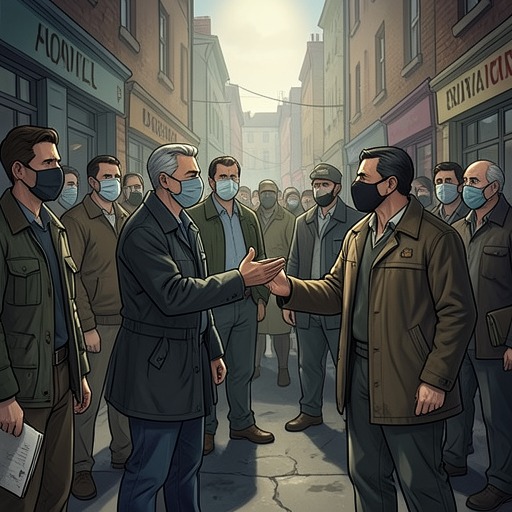
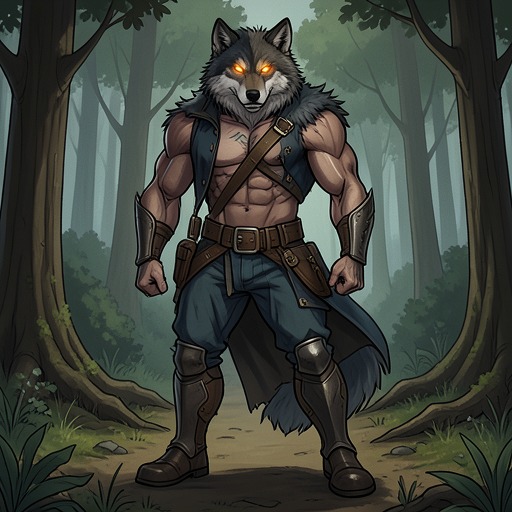
The Vampire Prince’s BrideHidden supernatural identity is a recurring social condition in which a Shifter or other supernatural person presents as ordinary while concealing a nonhuman body, lineage, or power. The concealment is not merely a private preference. It is a survival practice shaped by the danger that human institutions and individuals may treat an unknown supernatural nature as proof of threat. Across the novel, hidden identity produces both protection and isolation: it permits supernatural characters to work, lead communities, love, and pursue justice in human society, yet forces them to manage every relationship as a possible exposure.
Definition and Social Conditions
Hidden supernatural identity depends on a split between public appearance and concealed reality. Cain Samson is publicly recognizable as a successful, wealthy, handsome hockey player, but Michele senses that he is “something else.” His supernatural nature is registered first through her unusual ability to perceive auras and smell smoke around him, while everyone else sees only a physically impressive human. The contrast establishes the central mechanism of secrecy: ordinary people encounter a convincing surface, whereas someone with supernatural perception can detect the concealed difference.
The same structure governs Sara’s situation. She disguises her human identity among alien species with a full-skin, deep-blue tattoo and golden bionic eyes, but her DNA would expose her under a deep scan. Humanity is rare in the wider interspecies world, and human beings are treated as valuable commodities: some are held in private collections, while others are dissected by research companies. Her disguise therefore conceals not only ancestry but also a marketable biological status. The secret protects her from immediate identification in a society that has learned to regard humans as objects of research, possession, or trade.
Secrecy as Stigma Management
Maximillian Barnes explains the practical cost of disclosure most directly. He uses his wealth to cover up what he is, because public knowledge could make people afraid of him, drive away partners, spread the secret further, or prompt a government to decide that he is dangerous merely for existing. His secrecy is selective rather than absolute: Vanessa and members of his mother’s family know, while everyone else is excluded. Money offers him resources, but it cannot remove the underlying vulnerability. Wealth can conceal evidence and defend a reputation; it cannot guarantee that another person will respond to his nature without fear.
Max’s disclosure to Scarlett therefore changes their relationship before it gives him security. He identifies himself as a weregorilla and emphasizes that shifting is voluntary, rejecting the assumption that a nonhuman body is automatically monstrous. He then distinguishes himself from an ordinary gorilla and admits that he does not fully understand his own heritage because his mother was a Shifter and his human father refused to discuss her origins. His mother promised to explain the family history when he turned eighteen, but she died before doing so. The hidden identity consequently contains an inherited gap in knowledge: Max is concealing a secret he cannot entirely interpret himself.
The revelation also exposes the emotional price of being kept outside someone’s trusted circle. Max had not intended to tell Scarlett, and his decision disappoints her because she realizes that he had not trusted her with a terrifying secret. Their impending separation in seven months makes his caution seem rational, but it also makes intimacy feel provisional. The scene moves from concealment to disclosure without resolving the danger that created the concealment; knowledge produces closeness and hurt at the same time.
Public Life and Supernatural Leadership
For Oskar Freyson, hidden identity operates on a larger institutional scale. He is a billionaire, a Shifter Alpha, and an FBI agent, yet his public position does not erase local hostility. In Blackcliff, he considers developing the town into a year-round tourist destination with mountain trails, fishing, and a ski hill, but the locals resist progress, possibly because he is a Shifter. He recognizes that racism remains widespread, especially in small towns, and plans to use a public-relations team to win local support. His economic power and professional status allow him to enter the town openly, but his supernatural identity remains a liability that must be managed politically.
Oskar also experiences secrecy as bodily restraint. His hidden form is a great bald eagle, and after shifting only twice since arriving in Blackcliff, he feels the animal pressing beneath his skin and wanting release. He longs to soar over the valley and fish from the air, but shifting outdoors could make him a target for a hunter. The concealed identity is therefore not just a secret in conversation; it is a physical life forced inward. The public human body becomes a protective covering that prevents expression of the self beneath it.
His authority complicates the usual image of a hidden supernatural person as powerless. Oskar leads the Shifters who rely on him, directs his companies, and works within an FBI team, but institutional command does not grant him freedom from concealment. He resents orders and insists that his first duty is to the Shifters, particularly after Cindy’s death. His supernatural leadership gives him obligations that exceed his official position, while his official position requires him to suppress or compartmentalize those obligations. The result is a divided public identity: billionaire, agent, Alpha, and grieving relative, each role both revealing and disguising the others.
Disclosure, Trust, and Exposure
The novel repeatedly makes disclosure a test of whether a relationship can survive knowledge. Max’s confession to Scarlett is voluntary but reluctant, shaped by the expectation that fear will end intimacy. Bianca’s encounter with another supernatural identity follows a different pattern. After witnessing what she has seen, she asks what the man is, but cannot bring herself to name the answer. His quiet response confirms that she already knows, turning the exchange into a scene of recognition without full verbalization. The secret has crossed the boundary between hidden and perceived, yet language still hesitates before it.
Oskar’s case investigation shows how secrecy can also structure justice. He believes David Fezioni helped kidnap Cindy, Oskar’s cousin’s fiancée, and paid the ransom despite FBI policy, only to receive her body. When the deputy director ordered him to abandon the investigation, Oskar continued pursuing it because he considered Cindy part of the Shifter community for which he was responsible. His connection to the case is treated as compromising, while his supernatural status remains part of the wider social context in which Shifters are already distrusted. He is barred from the investigation but seeks cooperation with Melody because she has connections to the case and appears intelligent. The hidden identity of the supernatural investigator thus intersects with the hidden motives of a murder inquiry: both require watching, withholding, and deciding whom to trust.
Melody’s discovery of Cindy’s history also illustrates how secrecy circulates through controlled disclosure. The information reaches her with an explicit demand that she tell no one: Cindy was abducted for ransom, Oskar exhausted himself trying to recover her, and he suspected Fezioni without possessing proof. Oskar’s secrecy is not presented as simple deception; it is a burden produced by grief, institutional obstruction, and the need to protect a supernatural community. Yet the same secrecy makes him appear suspicious, demonstrating the paradox at the center of the concept: concealment can prevent persecution, but it can also create the appearance of guilt or duplicity.
Narrative Significance
Hidden supernatural identity links personal romance, bodily autonomy, political discrimination, and criminal investigation. Cain’s concealed nature is detected through Michele’s aura-sensing gift; Sara’s is endangered by genetic scanning; Max’s is protected by wealth and selective trust; Oskar’s is constrained by hunters, local prejudice, and institutional authority; Bianca confronts a truth she recognizes but cannot say aloud. These variations prevent secrecy from functioning as a single plot device. It is sensory, biological, economic, emotional, and political at once.
The concept also creates a persistent opposition between visibility and safety. To be seen may mean being accepted, loved, or finally understood, but it may equally mean being hunted, studied, abandoned, or classified as a threat. The characters therefore do not move simply from false identity to authentic identity. They calculate when disclosure is possible, who has earned the truth, what institutions might do with it, and whether intimacy can withstand the revelation. Hidden supernatural identity becomes the novel’s language for living under stigma: a protective mask that preserves life while making genuine recognition difficult to achieve.