Human–Stlozyn hybridization
The Vampire Prince’s BrideHuman–Stlozyn hybridization is the confirmed capacity of humans and Stlozyn to conceive healthy, viable children. In the narrative, it is not merely a biological curiosity: because the Stlozyn suffer an infertility disease that damages their genetic material, a human–Stlozyn pregnancy becomes both a personal relationship and a possible answer to a species-wide crisis. The hybrid child also exposes the instability of categories such as human and alien, natural and engineered, and inherited identity and chosen kinship.
Biological Basis and Discovery
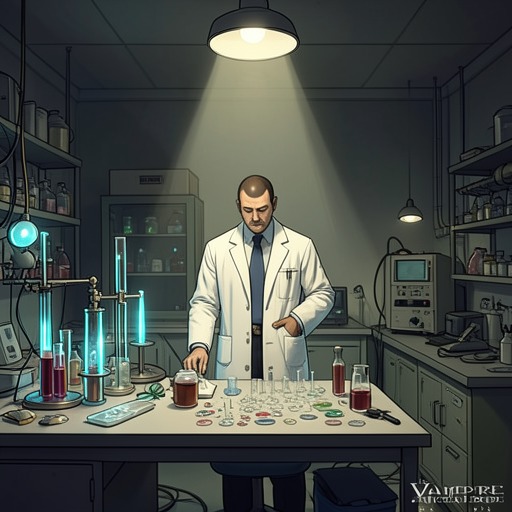
Human–Stlozyn hybridization first appears through Shay’s explanation of the infertility crisis affecting his people. The disease infects Stlozyn genetic material and threatens to make their culture disappear within a few generations. Shay, who is a scientist, believes that human DNA may contain the key to a cure, making human biology a source of medical hope rather than merely an alien contrast.
The discovery becomes personal when Shay confirms that Gemma’s pregnancy is his. His own experience with the disease should have left his genetic material too weak for him to father children, yet the information obtained through an infolink establishes two decisive facts: the embryo is Shay’s, and it is developing normally. Gemma is in the third month of pregnancy, and neither she nor the child is suffering unexpected health effects. The pregnancy therefore demonstrates not only that human and Stlozyn bodies can reproduce together, but also that a Stlozyn individual affected by the infertility disease may still produce a healthy child under circumstances the surrounding society does not understand.
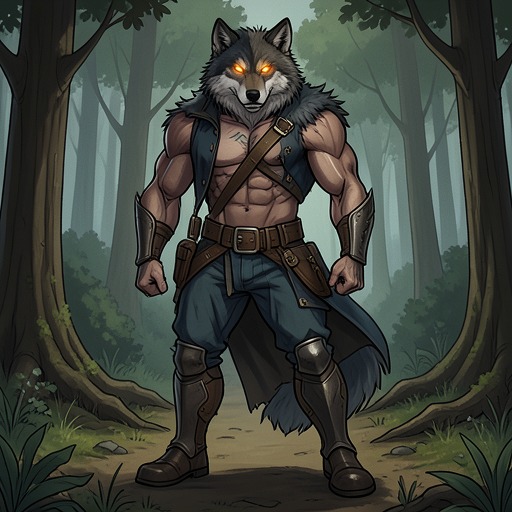
Shay explains the apparent contradiction through reproductive compatibility. Humans and Stlozyn are sufficiently close biologically to interbreed and produce viable young; in his formulation, they are technically the same species but different subspecies. Stlozyn ancestors were human beings taken from Earth several hundred years earlier. Their descendants were not wholly redesigned, although certain genes were made more pronounced and additional DNA strands were inserted into their genetic code. Those changes account for the physical differences between Shay’s scaled body and Gemma’s skin, while also enabling Stlozyn shape-shifting. Hybridization thus emerges from a history of divergence within a shared human origin, rather than from an encounter between wholly unrelated forms of life.
The Hybrid Child
The pregnancy gives visible form to the biological connection Shay describes. Medical scanning produces a three-dimensional image of Gemma’s uterus and reveals an embryo that does not yet resemble an ordinary human infant. Its early appearance is described as a disturbing mixture of a tadpole and a dinosaur, an image that makes the pregnancy feel alien even while confirming its viability. The scan translates an invisible genetic process into a technological picture, allowing the characters to confront the child as both medical fact and unfamiliar possibility.
The birth resolves that estrangement without erasing the child’s mixed inheritance. The infant is identified as a little dragoness. Soft blue-and-green scales cover parts of her body, while her eyes, ears, and small bow-shaped mouth resemble Gemma. Her physical form makes hybridization legible: Stlozyn traits are not a symbolic addition to an otherwise human child, but part of a body in which the two lineages coexist. At the same time, the resemblance to Gemma prevents the child from being treated as wholly alien. The newborn is simultaneously recognizable and strange, carrying the visual evidence of a relationship that earlier seemed impossible.
Social and Political Stakes
The hybrid pregnancy carries consequences beyond Shay and Gemma’s household. The Stlozyn infertility disease threatens the continuation of an entire people, and scientists on Shay’s home world believe that Gemma’s baby may hold the key to eliminating the disease. This belief places the pregnancy under political and scientific pressure. Gemma is taken to Shay’s home planet despite being unhappy about the abduction, while the child’s body becomes a contested object of knowledge and possible research. The story therefore links cross-species reproduction to questions of consent, custody, scientific authority, and the ownership of reproductive futures.
The narrative also distinguishes between the existence of hybridization and the right to control it. Shay’s love for Gemma and his joy at learning that the baby is his do not erase the coercive circumstances surrounding her removal from Earth. His disclosure of his alien identity is presented as an attempt to tell Gemma the truth, but the larger social structure treats her pregnancy as valuable evidence and the unborn child as a possible cure. Human–Stlozyn hybridization consequently operates through a tension between intimacy and instrumentalization: the same child can be cherished as a daughter, interpreted as proof of shared biology, and pursued as a biological resource.
Boundaries, Technology, and Identity
The concept is reinforced by the book’s wider treatment of bodies that cross established boundaries. Darilth’s Draco’s Eye recognizes Ella as his destined mate through a silver band with a large blue stone that changes size around her wrist. Sara can remove one of her bionic eyes and use it as a stun grenade, turning an organ into concealed technology. Lisa’s pregnancy is examined through nodules that build a three-dimensional holographic image of her body and embryo. These cases do not establish additional mechanisms of human–Stlozyn hybridization, but they place it within a broader world where flesh, technology, species, and inheritance are repeatedly combined rather than kept separate.
In that context, Shay’s account of Stlozyn ancestry challenges the assumption that visible difference proves absolute biological distance. Scales, shape-shifting, and alien social identity initially make Shay appear radically nonhuman to Gemma. The pregnancy reverses that impression. Reproductive compatibility becomes the strongest evidence that the boundary is historically produced and genetically porous. The hybrid child does not simply unite two opposed worlds; she reveals that the opposition was incomplete from the beginning.
Narrative Significance
Human–Stlozyn hybridization functions as a science-fictional novum with immediate emotional and civilizational consequences. It converts a private pregnancy into a possible cure for a population-level infertility crisis, while also transforming an alien romance into an argument about common ancestry. The child’s healthy development and dragon-like appearance make the theory concrete, giving the Stlozyn future a body and a face.
The concept also mediates several recurring oppositions: human and alien, natural and modified, individual love and collective survival, and maternal agency and scientific demand. The hybrid infant offers a possible reconciliation, but not a simple resolution. Her existence proves that the species boundary can be crossed; it does not settle who may decide how that crossing is used. Human–Stlozyn hybridization is therefore both a promise of continuity and a source of conflict, carrying the hope of healing while exposing the dangers of treating a woman and her child as solutions before recognizing them as persons.