Human–animal duality
The Vampire Prince’s BrideHuman–animal duality names the tension between a person’s social, moral identity and the animal nature carried within the body. The book treats that tension not as a simple opposition between human virtue and animal violence, but as a contested boundary: the supposedly civilized can become cruel, while the nonhuman form can reveal loyalty, vulnerability, or a capacity to protect. Oliver’s gorilla shifting provides the clearest sustained example, while debates about scientific ethics, inherited witchcraft, trauma, and love extend the same question across species and generations.
The Shapeshifting Body
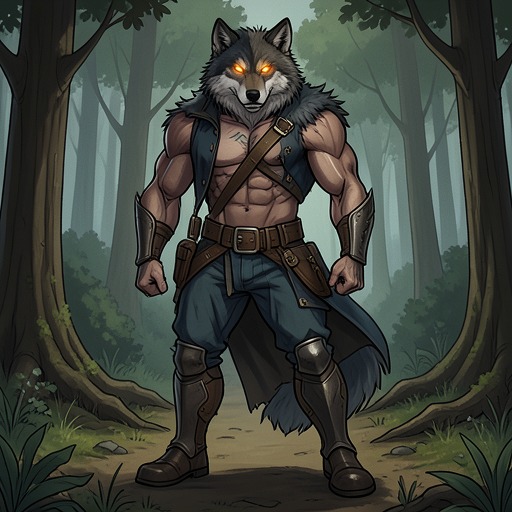
Oliver’s transformation makes human–animal duality visible as a physical condition rather than an abstract metaphor. Mack discovers him half-crouched and moving on bent legs, supporting himself on his knuckles while he howls, tears roots from the ground, throws foliage into the air, and beats his chest. He runs on all fours with the barrel-chested form of a silverback, so that his body and actions appear unmistakably gorilla-like. The scene unsettles Mack because the man she knows and the animal form before her occupy the same body, neither fully canceling the other.
Oliver explains that he usually controls the transformation, but perceived threat can trigger it without his consent. Because he sometimes experiences situations as threatening when no danger is intended, the change can place him in an attack state in which he cannot control the impulse to kill. The condition began at puberty. Before then he had been socially awkward but otherwise ordinary; afterward, his unusual strength caused accidental injuries, and the transformations followed. He hid the condition from his parents and searched for his birth parents in the hope that they might explain what he was, but he never found evidence of his origins. His animality is therefore also an inheritance without a known genealogy, a bodily fact that precedes his understanding of himself.
Fear, Violence, and Personhood
Oliver interprets the violence of his gorilla form as proof that he does not belong among people. After defending Mack from armed men, he focuses not on the protection he provided but on the deaths he caused, insisting that he is an animal and too dangerous to be around humans. The language converts a specific act of defensive violence into a total judgment about identity. His fear is not merely of losing control; it is of becoming morally unintelligible to the people whose acceptance gives his human life meaning.
Mack rejects that judgment by refusing the premise that animality and personhood are opposites. She argues that everyone is an animal and that his nonhuman appearance does not change the man she knows. More specifically, she distinguishes the incident from the pattern of his relationship with her: he has never hurt her, while their shared life includes playing on the indoor jungle gym, hiding in the atrium, and having sex in the theater room. Her defense relocates moral responsibility from appearance to conduct. Oliver’s gorilla form is frightening, but the context of the transformation matters: he was protecting Mack from people who would have killed them if given the chance.
Mack’s acceptance does not erase the danger or establish that Oliver can always master it. Instead, it holds two facts together: his body can become violently uncontrollable, and he remains a person deserving love and judgment on more than that capacity. When Oliver calls himself a freak, Mack tells him that the transformation does not alter who he is and promises to stay as long as he wants her there. Her physical reassurance and emotional certainty counter his self-contempt, turning intimacy into a space in which the divided self can be acknowledged without being abandoned.
Animality Beyond Oliver
The same boundary appears in the debate surrounding Gemma’s pregnancy and the Stlozyn infertility crisis. Shay refuses to let scientists experiment on Gemma or her unborn child, even though human DNA might help vaccinate uninfected Stlozyn people and perhaps reverse the infertility devastating their population. Niqæsh argues that fetal DNA would be more potent and that the community is running out of time. Shay answers that experimenting on beings unable to understand or consent would violate the most sacred ethics of science itself. Here the question is not whether an animal form can be human, but whether a desperate society will treat developing life as a biological resource rather than as a subject with claims of its own.
That conflict gives the duality concept an institutional dimension. Scientific urgency threatens to reduce bodies to usable material, while Shay’s objection insists that vulnerability does not remove personhood. The fetus and Gemma are not presented merely as instruments for saving a population; their inability to consent becomes the central ethical limit. Human–animal duality therefore intersects with the book’s wider concern about species, reproduction, and power: the category of the person is endangered whenever authorities define a living body only by what it can produce.
Inheritance, Difference, and the Family
Inherited difference also shapes the conflict between Lola and Mayumi May. Their family descends from witches, but the magical genes skip a generation. Lola inherits the ability to practice magic, while Mayumi May does not; instead, the non-magical generation receives the ability to predict the future. Mayumi May’s success as an actor, former top model, philanthropist, social elite, and trophy wife is connected to that predictive ability, though she refuses to acknowledge it. Her resentment toward Lola arises from a difference neither of them chose, yet she makes that difference a reason to exclude her daughter.
The family conflict shows how inherited capacities can become social hierarchies. Mayumi May keeps Lola away from household parties, leaves her upbringing largely to a live-in nanny, and uses clothing and body size to reinforce her daughter’s exclusion. Lola possesses the family’s witchly inheritance but not her mother’s size-zero body, and she grows up in the shadow of a mother who is publicly admired while privately withholding affection. The animal-like or magical side of a lineage is not the only form of otherness the book examines; physical, genetic, and supernatural differences all become grounds on which families decide who belongs.
The later discussion of Mayumi May’s withdrawal adds another layer. She had foreseen something involving Lola, possibly a stroke of good luck or a baby, but refused to explain what she saw and retreated further into herself. The prophecy does not excuse her neglect. Lola’s companion states plainly that Mayumi May has been arrogant, vain, and a bad mother. The contrast matters because inherited perception, like inherited magic or animal transformation, does not determine ethical behavior. What a person receives from the body or bloodline remains less important than what that person does with it.
Emotional and Ethical Integration
The book repeatedly joins bodily intensity to moral recognition. Oliver’s transformation begins in threat and moves through howling, chest-beating, rigid posture, and the impulse to attack; Mack responds through touch, anger, and a promise of continued presence. His self-condemnation is therefore answered not by an abstract theory of humanity but by an embodied relationship that remembers every ordinary moment alongside the violent one. The human and animal aspects of Oliver are held together through attachment rather than solved through disappearance of the animal side.
A comparable logic appears in Max’s confession to Scarlett Brenan. He describes the burden of having killed before, including during his time in the Marines, as carrying a backpack of bricks. Love gives that burden meaning because the people he loves make carrying it worthwhile. His confession occurs while Scarlett is pregnant, but he insists that his love is not caused merely by the pregnancy. The passage links violence, responsibility, reproduction, and devotion without presenting love as a magical cleansing of guilt. The past remains heavy; intimacy makes endurance possible.
Human–animal duality consequently functions as both a character problem and a structural principle. It governs Oliver’s fear of his gorilla form, Mack’s refusal to equate animality with monstrosity, Shay’s defense of vulnerable life against scientific instrumentalization, and Lola’s experience of inherited magical difference within a cruel family order. Across these stories, the most dangerous division is not always between human and animal. It is the division imposed by those who decide that a body’s appearance, ancestry, reproductive capacity, or uncontrolled nature makes its owner less worthy of consent, kinship, or love.