Lincoln Medical Centre
The Vampire Prince’s BrideLincoln Medical Centre is a New York hospital that functions as both a public institution of everyday care and a threshold into the book’s hidden supernatural world. Its crowded wards, reception desk, inventory systems, restricted corridors, and clinical technologies place ordinary human vulnerability alongside secrets involving aliens, shifters, vampires, and human bodies treated as rare medical or biological resources.
Setting and Everyday Operations
Lincoln Medical Centre is housed in an imposing red-brick building whose glass doors open onto the weekend rush: drunk teenagers, women in labor, concerned parents, and police officers moving through the emergency department. The hospital is therefore presented first as a place of routine crisis rather than as an exotic or isolated setting. Its public face is crowded, practical, and recognizably institutional.
The reception area provides the clearest view of its ordinary social life. Penny Morgan answers calls from the front desk, talks with arriving families, and directs visitors toward the appropriate corridors. Lola encounters Penny there during a weekend shift, where the receptionist’s sympathy over grief becomes an awkward reversal: Penny intends to comfort Lola but ends up crying while Lola comforts her. The moment gives the hospital a human texture built from staff relationships, emotional labor, and small workplace rituals rather than from medical procedures alone.
Behind the reception desk, Lola works in inventory. Her duties include checking stocks, ordering medicines and equipment, claiming warranties, and arranging replacements, while tablets update much of the system automatically. The job keeps her occupied and gives her a practical role within the hospital’s machinery. The contrast between automated logistics and the unpredictable people entering through the doors underscores the institution’s attempt to impose order on illness, injury, birth, grief, and crime.
Clinical and Institutional Function
The hospital’s medical environment is connected to the book’s wider concern with bodies that institutions classify, examine, or attempt to control. In one extraterrestrial setting, Sara wakes in uniform and immediately uses the absence of provocative clothing as evidence that she has not been prepared for a slave auction. Elsewhere, Lisa is examined with equipment that detects a lifeform attached to her uterine wall and altering her hormones. Gemma is abducted because her cross-species pregnancy is believed to hold the key to curing the Stlozyn disease, while researchers and authorities debate the legitimacy of extracting biological material from her and her unborn child.
These parallel medical situations clarify what Lincoln Medical Centre represents by contrast. A hospital can be a place of treatment, but the surrounding narrative repeatedly shows how scanning, diagnosis, research, and bodily classification can become coercive when the subject cannot refuse. The hospital’s ordinary emergency work exists beside a broader world in which human DNA is rare, human bodies are collected or dissected, and pregnancy may be valued primarily as research material. Lincoln Medical Centre is not itself identified as participating in those abuses, but its clinical setting gains thematic weight from this repeated contrast between care and institutional control.
The hospital also belongs to a society where supernatural identities must be hidden. Cain Samson appears to everyone else as a wealthy, successful hockey player, while Michelle Handsworth senses that he is something other than human through an aura and the smell of smoke. Max tells Scarlett that his ability to turn into a gorilla has kept him from forming an openly acknowledged relationship because disclosure could provoke fear, abandonment, or government persecution. In Bianca’s case, the question of what her companion is becomes almost impossible to say aloud. Lincoln Medical Centre consequently stands within a world where a medical or public encounter may expose a concealed species identity as readily as it may reveal an illness.
The Basement and Hidden Threat
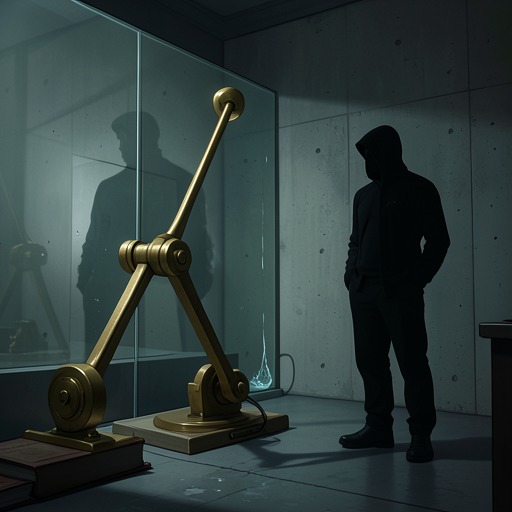
The hospital’s most ominous space is its restricted basement. After two in the morning, when the bustle of the upper floors begins to subside, Lola notices a pale man in a hoodie wandering without purpose. His clothing and evasive movements make him seem out of place, and he repeatedly looks around before turning corners. Lola follows him while pretending to study a clipboard, using the hospital’s routine procedures as cover for an unofficial investigation.
The pursuit leads through a staircase and then an elevator descending directly to the basement. Lola avoids entering the same elevator with him, waits for the next one, and continues after the nurse and wheelchair patient leave. The basement corridor is unlike the accessible reception area: its doors remain locked, entry requires passes, and a sign states, “No Visitors — Only Staff Allowed.” The man finally stands with his back to Lola before a glass door. The scene turns the hospital from a place of visible public service into a layered institution with restricted knowledge and concealed activity.
The contrast between the welcoming front desk and the locked lower corridor is structurally important. Upstairs, Penny directs people, staff manage supplies, and patients arrive in recognizable emergencies. Below, movement is controlled by authorization, observation, and secrecy. Lola’s decision to follow the stranger makes the hospital a site of agency as well as danger: she uses her familiarity with its routines to move toward what the institution has marked as inaccessible.
Associated People and Narrative Significance
Lola is the character most directly associated with Lincoln Medical Centre in the supplied evidence. She works in inventory, calls the hospital when she wants to offer help, travels there by bus, and moves through the reception area with enough confidence to pursue a suspicious visitor. Her knowledge is practical rather than officially investigative, yet it allows her to notice patterns that ordinary staff might overlook.
Penny Morgan represents the hospital’s interpersonal and custodial face. She is a receptionist, a widow, and a colleague who brings muffins and photographs of her grandson to work. Her grief and excessive sympathy create friction with Lola, but they also show how the hospital’s staff carry private histories into a public workplace. Lola’s irritation does not erase the underlying fact that Penny’s position depends on emotional contact with strangers and coworkers.
The hospital is also linked to the broader medical institutions that appear elsewhere in the narrative, including St. Dymphna’s Hospital for the Mentally Unwell, the Human–Vampire Relations Bureau’s treatment of living blood donors, and the Science Board’s proposed fetal research. These institutions differ in purpose and species context, but together they establish a recurring institutional pattern: bodies become legible through tests, records, uniforms, restricted rooms, and official categories. Lincoln Medical Centre supplies the most familiar human version of that pattern.
Its decisive narrative function is to make hidden danger emerge from ordinary infrastructure. The red-brick building, glass doors, reception desk, inventory tablets, elevator, access passes, and basement sign are not decorative details; they map the movement from public visibility to controlled secrecy. Lincoln Medical Centre therefore operates as a medical workplace, an emergency refuge, and a suspense setting where the line between care and concealed exploitation remains deliberately unstable.