Mack–Oliver relationship
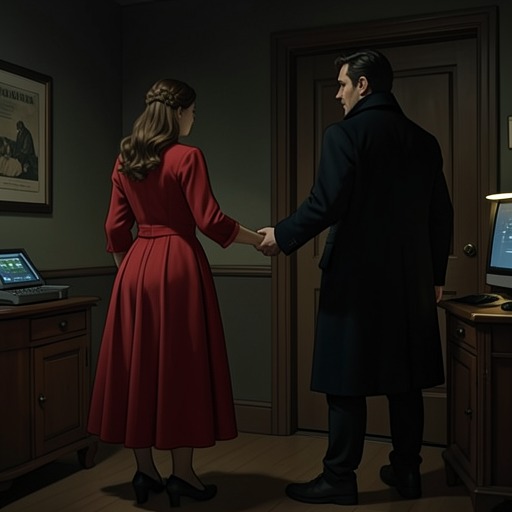
The Vampire Prince’s BrideMack–Oliver relationship is the central emotional bond formed between Mack and Oliver Bishop after Mack enters Oliver’s home under the official pretext of becoming his caretaker. What begins as an arrangement shaped by misunderstanding and practical necessity becomes a relationship defined by reciprocal recognition: Mack sees beyond Oliver’s unusual body and social difficulties, while Oliver learns that Mack’s presence is not temporary or conditional. Their eventual life together links romantic commitment with a new domestic and professional future centered on the care of animals.
Identity and Initial Arrangement
Mack first approaches Oliver through the language of employment rather than romance. The United States marshals’ request had described the position as requiring someone experienced with exotic animals, so she reasonably asks whether Oliver keeps a menagerie and whether that is what she is expected to look after. Oliver rejects the premise that animals should live in cages, even large ones, and Mack realizes that the caretaker position is connected to Oliver himself rather than to a collection of confined creatures. This opening places their relationship inside a structure of supervision and service, but it also immediately establishes the ethical principle that will later govern their intimacy: Oliver resists treating living beings as possessions.
Mack’s arrival gives Oliver companionship in a life marked by social isolation. He explains that he has social difficulties, is poor at reading attraction, and deliberately restrained himself because he did not want to make Mack uncomfortable or drive her away. His caution is not evidence of indifference. He tells her that from the first moment he saw her he had been struggling to control his attraction, yet he overcompensated because preserving her choice to remain mattered more to him than satisfying his desire. The relationship therefore begins with a tension between powerful physical attraction and deliberate self-restraint.
From Grief to Mutual Vulnerability
Their intimacy deepens through disclosures about loss. While discussing adolescence and conflict with parents, Oliver recalls the moment when his adoptive family’s history was disrupted and explains that he has searched for his birth parents since infancy, although he was left at a hospital and no security footage identified the person who abandoned him. Mack responds physically before offering a theory or solution: she places a hand on his chest, feels his pounding heart, and embraces him while telling him that what happened was not his fault. Oliver initially remains rigid, then returns the embrace, lowers his forehead to her shoulder, and trembles as he admits that he misses the parents he lost.
The scene changes their relationship from caretaker and difficult charge into reciprocal emotional shelter. Mack is not merely managing Oliver’s household or accommodating his habits; she becomes someone before whom he can expose grief that has shaped his identity. His body, which later becomes a source of fear and secrecy, is first presented in the embrace as a site of vulnerability. The connection is conveyed through touch, heartbeat, and physical closeness before either character can fully organize it in words.
Their first sexual encounter produces another moment of vulnerability rather than uncomplicated confidence. Mack has little experience discussing sex and apologizes for making Oliver uncomfortable, while Oliver admits that she made him extremely uncomfortable and then acknowledges that his restraint had concealed genuine interest. He describes her as fun and sexy and asks whether she feels the same way toward him. Mack’s attempt to remain composed gives way to breathlessness and desire. The exchange turns an apparent mismatch—her assumption that he is childlike and therefore not interested, against his hidden adult attraction—into mutual understanding.
Acceptance of Oliver’s Shifter Identity
The decisive test arrives when Mack learns about Oliver’s gorilla shifting. Oliver calls himself a freak and fears that revealing his nature will make her leave. Mack rejects the idea that the revelation changes the man she knows. She tells him that his gorilla-shifting ability does not alter who he is and that he would remain the same man whether she knew about it or not. Her response is significant because it is not simply tolerance of a secret condition; she explicitly separates Oliver’s identity from the supernatural aspect he treats as disqualifying.
Mack then makes her choice unmistakable. She promises that she is not going to leave and says that she will stay as long as Oliver wants her there. The promise reverses the insecurity underlying their relationship. Oliver had tried to avoid pressuring her because he expected that his social difficulties or supernatural identity might make her withdraw; Mack instead moves toward him. When he asks whether her smile means she will stay, she answers yes, and their kiss gives physical form to that commitment.
Their bond is characterized by a repeated movement toward one another. Oliver fears rejection and conceals desire; Mack initially misreads his reserve and worries about losing control of the situation. Once each understands the other’s position, however, the relationship replaces defensive performance with direct affirmation. Mack’s acceptance does not erase difference. It makes difference compatible with love, allowing Oliver to be recognized as an adult, a desirable man, and a person whose shifter nature does not exhaust his identity.
Crisis, Survival, and Commitment
The relationship is tested when Oliver is shot multiple times and falls from a building. Mack sees him return through a window, clinging to the exterior wall with his giant, nimble hands. Relief overwhelms her, and she embraces him while sobbing that she thought he was dead and would never see him again. Oliver pushes her away gently but firmly and points to the impossibility of his survival: an ordinary person could not endure the gunshots and fall, yet he has no scar. His supernatural resilience, previously concealed as a source of shame, becomes impossible to separate from the danger surrounding him.
Oliver’s response is not triumph but withdrawal. He tells Mack that he should be dead and later says that he cannot have children, offering another reason she might choose to abandon him. Mack answers with a direct declaration of love and refuses to treat infertility as grounds for ending the relationship. Oliver recognizes the pattern of her behavior, noting that he had feared she would run away but had been wrong because she ran toward him. That contrast—flight expected, approach enacted—becomes the clearest summary of their emotional trajectory.
Mack explains her attachment in terms of recognition rather than rescue. Oliver is the most unique and wonderful man she has known, and he allows her to be herself; she is happy with him and believes that he is happy with her. The relationship therefore survives not because danger or difference disappears, but because both characters define its value through the freedom to remain fully themselves. Oliver’s strength and vulnerability, and Mack’s independence and tenderness, are held together rather than forced into conventional roles.
Shared Future and Narrative Significance
The epilogue confirms that Mack’s promise becomes a durable life rather than a temporary declaration. Florida gradually becomes home, and Mack abandons clothing intended to hide her body, choosing tank tops and short shorts instead. At the countryside retreat Oliver purchased near Orlando, she can dress with even fewer constraints, although their business limits visits to weekends. The detail presents domestic intimacy as an environment in which Mack no longer performs concealment for other people’s expectations.
Oliver’s purchase of several acres outside Orlando enables Mack to establish an animal rescue shelter. She carries a basket of kittens back to their mother after weighing them, and the shelter at this stage is licensed for domestic animals while she works toward registration for wild animals. Their shared future thus extends the moral issue introduced at their first meeting: Oliver’s refusal to cage animals becomes compatible with Mack’s practical work of rescuing and caring for them. The couple’s home and enterprise transform a relationship that began under institutional supervision into an autonomous partnership.
Mack–Oliver relationship is consequently a romance of chosen visibility. It moves from a caretaker arrangement, through grief and sexual misunderstanding, to the revelation of Oliver’s gorilla-shifter identity and the threat of physical death. At each turn, the decisive action is not possession but continued choice. Mack stays, Oliver permits himself to be known, and the ending gives their mutual acceptance a concrete form in shared land, shared work, and a life organized around care rather than concealment.