Piper Diamond
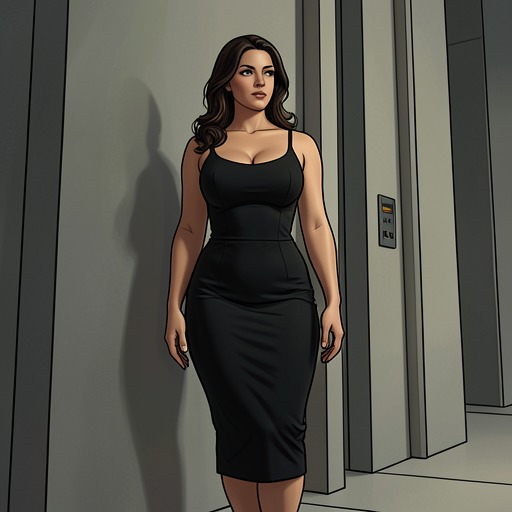
The Vampire Prince’s BridePiper Diamond is the central figure of Heat, Hockey and Two Werewolves, a curvy witch who works as both an artist and the owner of a gallery in Uphoria, Alberta. Her life is pulled between three pressures that initially seem unrelated: the Werewolf League’s overwhelming presence in her hometown, the fragile finances of the gallery she inherited from her mother, and the emotional permanence of her relationship with Baxter. When Patrick Giles, the home team’s center forward, seeks to join Piper and Baxter in a trois amour, Piper must decide not only whether she can accept another Werewolf as a mate, but what kind of future she is willing to defend.
Identity and Background
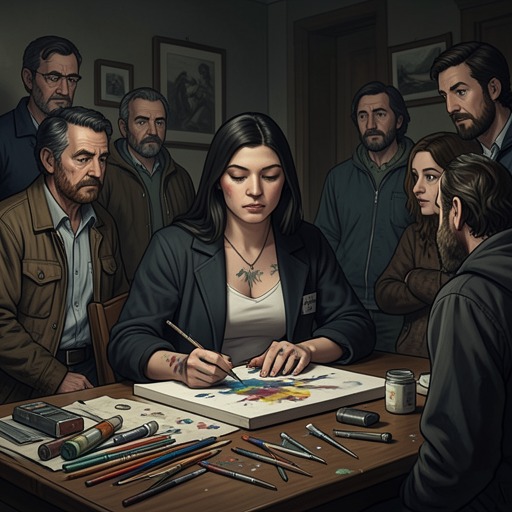
Piper’s identity is defined by the combination of witchcraft, artistic judgment, and inherited responsibility. She does not merely sell paintings; the gallery represents her mother’s collection, her own artistic ambitions, and the trust of artists who rely on her to display and sell their work. That inheritance gives her a cultural and emotional stake in the gallery’s survival, even as it leaves her burdened by debt. Her business is therefore both a livelihood and a promise to preserve something original in a town increasingly saturated by commercial spectacle.
Her opposition to Thor Wragge makes that commitment explicit. Wragge is a powerful warlock who owns a knockoff art souvenir shop directly across from Piper’s gallery. His basement operation uses magic to produce reproductions of famous works, including versions of the Mona Lisa and kits modeled on the Sistine Chapel. Although his business is technically legal because he does not claim the copies are originals, Piper sees it as a threat to artistic integrity: a commercial world in which recognizable images can be reproduced endlessly and sold without imagination. Her refusal to call him by his first name, and her pointed challenge, “Can I do something for you, Wragge?”, show how deliberately she maintains distance from a rival whose name and methods offend her sense of taste.
Piper’s relationship to Baxter began unexpectedly and became permanent before either of them understood the implications. They had not known each other before senior prom night, when they became hormone-fueled teenagers swept up in music and dancing. They have been mates ever since. The bond gives their relationship a physical ease and emotional history that Piper recognizes even when Baxter’s attention is diverted by hockey. His touch at the base of her neck can ease the tension in her spine, and his Wolf scent still stirs desire, but their partnership is also shaped by practical concerns, shared debts, and the difficult decisions surrounding the gallery.
Conflict Between Art and Commerce
The gallery’s financial crisis turns Piper’s artistic principles into an immediate material problem. Wragge wants to buy the business and transform it into an extension of his reproduction enterprise, threatening to turn her mother’s legacy and her own dream into “cheap reproductions.” Piper is not defending an abstract ideal from a safe distance: the gallery is already in trouble, and selling one painting for five thousand dollars would substantially improve her profits, reduce her debts, and perhaps help her replace or repair the car she and Baxter use. The offer forces her to measure the economic value of a beloved work against the larger value she attaches to the gallery as a whole.
The pressure intensifies when vandals and burglars target the gallery. Piper is at home with Baxter and Patrick when the security spells suddenly trip. She stiffens, swears, tears away from Baxter, and rushes for her coat, immediately shifting from intimate domestic life into emergency action. The alarm confirms that the gallery is not merely failing through bad finances; it is being actively threatened. The attack also makes her fear that the dream inherited from her mother may be ending. She imagines losing the building, the collection, and the confidence of the artists whose work has been entrusted to her.
After the destruction, Piper’s despair becomes a question of identity. She believes that the artists will no longer trust her because their work has been destroyed and that her dream of running a gallery is finished. Yet the scene does not leave her passive. Heart-heavy, she dries her eyes, goes into the kitchen, and accepts a slice of blueberry cheesecake, her favorite, from Patrick. The small act of eating and the presence of both Werewolves give her enough courage to announce that she has made a decision. Her crisis is thus rendered through concrete objects—the inherited collection, the damaged gallery, the security spells, the cheesecake—rather than through a purely internal declaration.
Love, Mating, and Choice
Hockey initially represents everything Piper wants to escape. During Werewolf League season, the sport permeates Uphoria, and even Baxter loses himself in it, eating, sleeping, and breathing hockey. Piper would rather stop hearing about hockey altogether. Nevertheless, she recognizes that attending games can distract her from the gallery’s financial problems, and she admits that the sex after an Uphoria victory, when Baxter is charged with adrenaline and excitement, is “mind-blowing.” Hockey therefore becomes both an irritation and a source of intimacy within her established relationship.
Patrick Giles changes the meaning of that unwanted sport. As the home team’s attractive center forward, he wants Piper and Baxter to accept him into their trois amour, a three-way mating group. Baxter is more than willing, and Patrick’s interest makes Piper’s attention to hockey rise sharply. Her response is not an automatic romantic surrender. Patrick’s attractiveness and Baxter’s acceptance do not erase her uncertainty about committing herself to another Werewolf. Because Piper and Baxter’s bond is lifelong, admitting a third partner would not be a casual experiment; it would alter the structure of a relationship that began before either mate understood how permanent Werewolf mating could be.
Piper also exercises control over the emotional timing of the decision. When Baxter and Patrick wait anxiously for her answer, she folds her arms and asks whether they actually want to hear her decision. Both Werewolves stiffen: Baxter becomes eager, while Patrick clenches his hands until his knuckles turn white. Piper had considered prolonging the suspense to torment Patrick, but sympathy overcomes the impulse. The moment reveals her capacity to balance power with compassion. She understands how much the decision matters to both men, yet she refuses to let their desire substitute for her own consent.
Crisis, Responsibility, and Resolve
Piper’s choices are constrained by more than romance. Baxter suggests selling the house, reducing the debts, and moving to live with her father so that she will not have to sell all of her mother’s collection. Piper rejects the plan as infeasible. The proposal would protect her financially but would also remove her from the gallery, the town, and the artistic responsibility that gives her life its shape. Her refusal indicates that she does not understand escape as the same thing as recovery. Leaving could make the numbers better while abandoning the meaning of what she has been trying to preserve.
This conflict places Piper between preservation and transformation. Wragge’s shop treats art as endlessly reproducible merchandise; the gallery attack threatens to destroy the original works altogether; and the financial crisis pressures Piper to convert individual paintings into immediate cash. Her problem is not simply whether to sell. It is whether she can keep ownership of the values that make her an artist while remaining economically and emotionally responsible for the consequences. The evidence presents her as someone who feels the weight of that contradiction rather than solving it through an easy moral pose.
Her reaction to the gallery’s security breach shows the practical side of her courage. She does not wait for someone else to investigate or remain sheltered by Baxter’s presence. She notices the danger, gets dressed, and moves toward the threatened site. Even at her lowest point, she returns to the kitchen and faces the two Werewolves rather than allowing grief to decide for her. Piper’s decisive quality lies less in fearlessness than in her willingness to act while frightened, indebted, and uncertain.
Narrative Significance
Piper’s story connects artistic authenticity, economic survival, and the freedom to define intimacy. Her conflict with Wragge gives the book a sharp contrast between original work and magical mass production, while the gallery crisis turns that contrast into a personal emergency. The paintings are simultaneously commercial assets, inherited objects, and evidence of a cultural world Piper believes deserves protection. Her financial calculations do not cancel her idealism; they demonstrate the cost of trying to live by it.
Her romantic arc follows the same pattern. Baxter’s long-established mate bond provides security, but Patrick’s arrival asks whether security must remain closed to change. Piper’s hesitation is not a rejection of desire. It is an insistence that desire become a choice rather than an obligation imposed by Baxter’s enthusiasm, Patrick’s longing, or the social excitement surrounding hockey. The moment in which she refuses to let the two Werewolves rush her answer mirrors her resistance to Wragge’s commercial pressure: in both cases, she claims the right to determine the terms.
Piper’s decisive significance is therefore the movement from being surrounded by other people’s appetites—to buy her gallery, to join her mating bond, to dominate the town’s attention through hockey—toward articulating what she wants for herself. The available account does not provide every later outcome of the gallery struggle, but it clearly establishes the turning point: after the attack and the collapse of her confidence, Piper dries her eyes, accepts support, and makes up her mind. Her strength is not the absence of competing desires; it is the ability to choose amid love, debt, inheritance, and loss.