Rebeluna
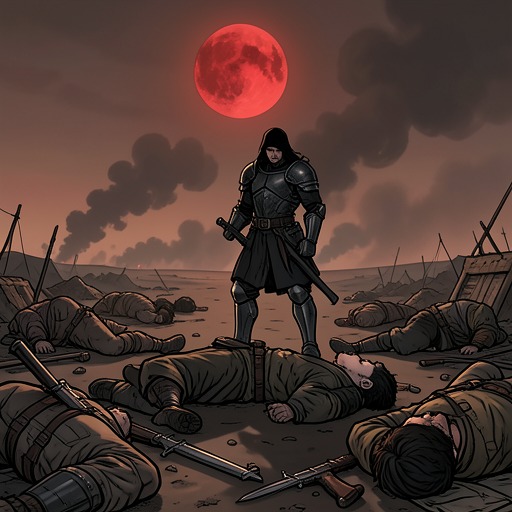
The Vampire Prince’s BrideRebeluna is the self-proclaimed shifter rebel movement that resists the vampire king through organized violence, clandestine recruitment, and attacks on vampire power. Although early incidents are dismissed as the work of undisciplined wolves, the group becomes the central political and military force in the shifter–vampire war. Its defeat does not merely end a series of raids: it removes the immediate threat to vampire territory, restores public order, and enables King Iosif to adopt Darius and name him heir.
Identity and Political Position
Rebeluna is composed of shifters from various clans who have united against vampire rule. The movement’s resistance is broad enough to make it responsible for more vampire deaths than any other group during the preceding decade. Its opposition is therefore not ordinary banditry. Rebeluna represents a sustained challenge to the legitimacy and security of the vampire monarchy, and its existence has become important enough that the king entrusts the investigation to Darius after Rebeluna assassinates the colonel previously charged with finding it.
The movement’s name initially carries more political weight than the individual incidents attributed to it. When reports describe wolves killing three dozen sheep and causing a shepherdess to disappear, Darius distinguishes between Rebeluna proper and minor predators who call themselves rebels without the courage to begin open rebellion. He considers Rebeluna organized and efficient, whereas the local attacks appear careless and limited. The distinction matters because Darius understands that a resistance movement can expand by absorbing precisely these marginal actors. In his assessment, such inexperienced rebels are potential cannon fodder for Rebeluna even when they are not yet members of it.
Escalation from Raids to War
The movement’s activity soon becomes more directly connected to vampire governance. A small envoy carrying Lord Virgil’s annual taxes is attacked, and Darius identifies the assault as consistent with Rebeluna’s methods. The envoy’s cargo is delivered in gold because Lord Virgil believes that arrangement safer, making the attack both a military action and a challenge to the circulation of royal authority. Rebeluna’s violence reaches beyond isolated encounters with patrols: it targets the material systems by which vampire rule is displayed and maintained.
Darius responds by sending teams to investigate suspected rebel activity, partly to find the missing shepherdess and partly to prevent human subjects from believing that shifters can abduct them without consequence. His concern is political as well as tactical. Unchecked attacks could produce unrest among humans, while a visibly weak response could make the monarchy appear unable to protect its population. Rebeluna thus operates on two fronts: against vampire forces in the field and against the confidence that allows the existing order to function.
The conflict widens when Darius learns that the shifters are no longer acting solely under Rebeluna’s local command. After nearly a week of attacks, the shifters withdraw abruptly, leaving Darius uneasy even as the pause permits his troops to reinforce their positions and replenish their blood supplies. He discovers that they are taking orders from a mysterious leader known as the Thunder. At that point, the conflict is explicitly larger than Rebeluna. The organization remains the visible resistance network, but the Thunder provides a higher level of command, turning scattered confrontations into a coordinated campaign against the vampire armies.
Captivity, Negotiation, and the Rebeluna Camp
Rebeluna’s fighters are capable of mounting an operation intended to kill Darius rather than merely harass his troops. During one such confrontation, Darius captures an eagle shifter. He offers to keep her imprisoned at his estate, where she would be comfortable and might eventually be released, instead of sending her to the palace. The offer is still coercive: she would remain a prisoner in exchange for identifying Rebeluna’s location. She refuses, insisting that she will not betray her brothers and sisters.
The prisoner’s refusal reveals Rebeluna as a community bound by more than tactical convenience. Darius expects that she will disclose nothing, and reports from the other teams soon confirm that the camp has been abandoned. He interprets the episode as an attempt to kill him rather than a conventional battle, while the empty camp demonstrates Rebeluna’s ability to move before vampire forces can surround it. The abandoned site also exposes the limits of royal intelligence: even after capturing a member, Darius cannot force the organization to reveal its structure or leadership.
The conflict reaches its decisive stage when Cleo tells Darius that the shifters holding them are Rebeluna’s leaders. She warns that defeating the bear Alpha will not guarantee their survival, because the other leaders will kill him afterward. Her information transforms the immediate fight into a negotiation with the movement’s command. Cleo urges Darius to drink from her so that he can escape, return to his men, and launch a full-scale assault. Her proposal treats Rebeluna as a military force that can be destroyed only through overwhelming action, not as a few isolated rebels who can be dispersed by a single victory.
Defeat and Withdrawal
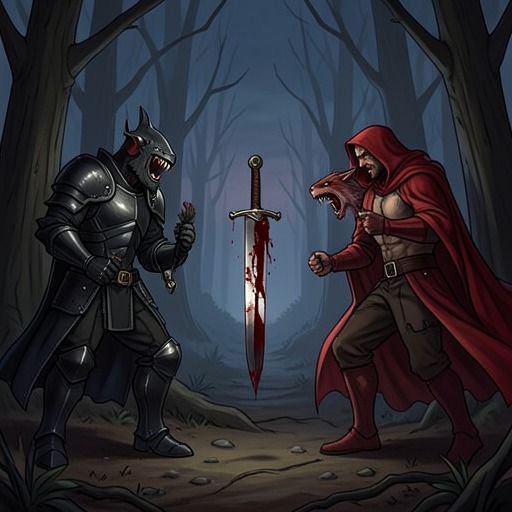
Darius defeats the bear Alpha, but the outcome is not simple extermination. Once the Alpha is beaten, another shifter of comparable size steps forward and declares that Darius may take his mate and leave. In return, Rebeluna will honor the promise that its Alpha made and withdraw from vampire territory. Darius accepts the terms. The remaining shifters do not challenge him as he reaches Cleo, lifts her into his arms, and leaves the camp.
The agreement establishes Rebeluna as an adversary capable of honoring a negotiated military settlement even after losing its immediate champion. Darius believes that the shifters will keep their word, and the war ends not through the total destruction of the movement but through its retreat. His regret that the conflict could not have ended without violence underscores the cost of Rebeluna’s resistance and the violence of the royal response. The settlement is therefore both a vampire victory and a negotiated recognition of the enemy’s collective discipline.
Consequences and Narrative Significance
After the Rebeluna pack keeps the Thunder’s terms, it retreats from vampire territory and takes the shifters fighting against the vampire armies with it. Shifter incidents virtually stop. The withdrawal gives King Iosif the public result he needs: he praises Darius for risking his life to drive the shifters out, and a three-day celebration follows. At its conclusion, Iosif declares Darius his new heir. Rebeluna’s military defeat consequently becomes the central proof of Darius’s fitness to rule.
Rebeluna also functions as the force that links local disorder to dynastic change. At first, its name is invoked to explain sheep killings, a missing shepherdess, and scattered reports of wolves. Later, its attacks threaten taxes, royal troops, and the stability of vampire territory. Finally, its withdrawal produces the peace that allows Darius to become a prince and future king. The organization’s direct appearances are limited, but its pressure shapes the entire early political arc: it turns Darius into an investigator, drives him into a dangerous confrontation, tests his willingness to negotiate, and makes his survival the foundation of royal succession.
The movement’s portrayal remains deliberately ambivalent. Rebeluna is associated with assassination, abduction, battlefield deaths, and attempts on Darius’s life, yet its fighters also display loyalty to one another and honor the terms made by their Alpha. The eagle prisoner’s refusal to betray her brothers and sisters presents solidarity from within the resistance, while the final withdrawal shows that Rebeluna is not merely a faceless mass of violent shifters. It is an organized opposition whose methods threaten the monarchy but whose discipline makes it a genuine political and military opponent. Its defeat closes the immediate war without erasing the underlying conflict between vampire authority and shifter autonomy.