Rothgar Council
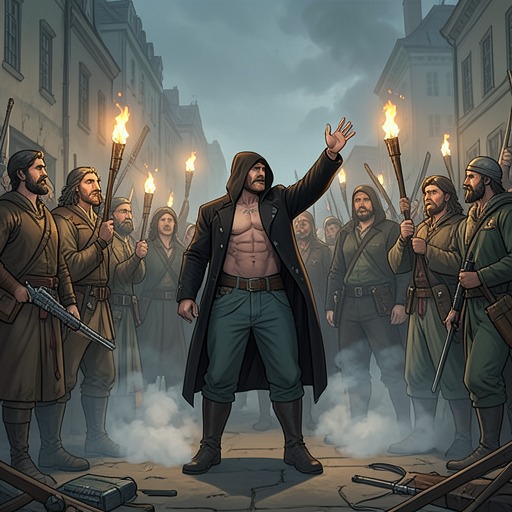
The Vampire Prince’s BrideThe Rothgar Council is the principal political authority surrounding the Rothgar throne, operating as the body that receives accusations, evaluates royal legitimacy, and authorizes the consequences of crimes within the ruling family. Although the monarchy remains centered on the king and his heirs, the council possesses enough authority to summon an heir from exile, determine whether a prince is responsible for regicide, and impose the ultimate punishment. Its role is therefore both governmental and judicial: it preserves the appearance of dynastic order while deciding which member of the royal family may lawfully inherit power.
Nature and Political Authority
The council functions within a hereditary court whose succession is already destabilized by exile, secret marriage, assassination, and the contested status of the Draco’s Eye. When Keralth reports that Darilth has married a human woman, the news threatens the political arrangement that had kept Darilth in exile and improved Keralth’s prospects of ascending the throne. The council is not presented as an independent force outside royal politics; its information and judgments can be shaped by the prince who temporarily controls the court. That vulnerability makes it a crucial instrument in the struggle for succession rather than a neutral background institution.
The council’s authority is nevertheless real. After King Rezelith III is found dead, its members plan to meet with Keralth to decide what should be done because the heir remains in exile. Keralth takes control of the immediate aftermath by preparing the funeral and declaring that the city will mourn the king, but the need to consult the council shows that even his assumption of power requires institutional recognition. The funeral thus becomes more than a family ritual: it is part of a transition in which the council must decide how the kingdom will be governed after the king’s death.
Manipulation After the King’s Murder
Keralth exploits the council’s dependence on court information. After the funeral, he assumes a temporary position at court and persuades the council to believe that Prince Darilth participated in the king’s assassination. Darilth is summoned from battle, not as a returning heir welcomed home, but as a suspect brought before an authority already primed to condemn him. Keralth then tells him that all the evidence indicates his responsibility and announces that the council has made its decision: Darilth will be tried for the murder of King Rezelith III.
The council’s initial judgment demonstrates how royal institutions can be captured by a determined claimant. Darilth insists that someone has been feeding the council lies and demands the opportunity to speak to its members himself, but Keralth immediately orders guards to arrest him and place him in shackles. The council’s decision is therefore presented through Keralth’s control of access and procedure. Its verdict appears lawful, yet the surrounding circumstances reveal that its process has been corrupted by a rival who benefits directly from the accusation.
The political stakes extend beyond the murder itself. Darilth’s secret marriage to Ella, a human woman, has already violated his father’s wishes and threatened Keralth’s succession strategy. Ella’s pregnancy makes the crisis still more dangerous, because her unborn child could alter the future of the dynasty, while Keralth regards the pregnancy as a serious problem. The council’s willingness to accept the case against Darilth places not only one prince but also his mate and potential heir under the pressure of a succession struggle.
Exposure of the Conspiracy
The council’s position changes when Merelith produces direct evidence of Keralth’s guilt. During the confrontation in the throne room, Darilth pins Keralth against a wall with the Lazarus at his throat, but he does not rely on force alone to settle the succession. Merelith holds up a small circular disc containing Keralth’s full confession and explains that the council is listening to it at that very moment. The device converts a private crime into a public institutional fact: the council hears the confession while the brothers face one another, allowing the political process to catch up with the violence already unfolding in the throne room.
Once Keralth’s deception is exposed, Darilth orders the guards to arrest him and send him to the Dark Moon. The council’s earlier judgment against Darilth is thereby overturned in substance, even before the later sentence is formally announced. The reversal shows that the council is not permanently committed to Keralth’s narrative; its decisions can be corrected when evidence is placed before it. At the same time, the delay reveals the cost of institutional manipulation: Darilth has already been imprisoned, Keralth has occupied the court, and the royal succession has been pushed toward civil violence before the truth is recognized.
Trial, Sentence, and Dynastic Restoration
During the journey to R13, Merelith reports that the council has reached a new decision. Keralth will be tried for murdering his father and for misusing his power against Darilth and Ella, his brother and mate. The charges expand the council’s judgment beyond the single act of assassination. Keralth is held responsible both for the death that created the succession crisis and for the abuse of authority through which he attempted to eliminate his rival and control the court.
The council ultimately sentences Keralth to death. The dagger used to stab King Rezelith III is recovered, and the assassin responsible for killing the guard and maid is identified, although the assassin kills himself before confessing. These material and circumstantial discoveries reinforce the confession already heard by the council and provide the basis for a final legal resolution. Keralth’s execution is scheduled for the following day, ending his attempt to convert temporary authority into permanent kingship.
The council’s restored judgment permits Darilth’s return to the throne, but the outcome is marked by loss rather than uncomplicated triumph. Darilth feels at peace after Keralth’s sentence, yet he mourns the fact that his father will not live to see his grandson. The council can punish the usurper and reestablish the succession, but it cannot repair the family destroyed by the assassination. Its legal action restores political order while leaving private grief as the permanent remainder of the crisis.
Institutional and Thematic Significance
The Rothgar Council embodies the tension between formal legitimacy and the people who control its information. It is powerful enough to authorize a trial and death sentence, but vulnerable enough to accept Keralth’s constructed case against an innocent heir. Its trajectory follows the larger movement from concealment to disclosure: first the council is made to hear a lie, then it is compelled to hear a confession, and finally it issues a punishment grounded in accumulated evidence.
The council also mediates the conflict between dynastic law and personal transformation. Darilth’s marriage to Ella and Ella’s pregnancy challenge the royal order in ways that Keralth treats as threats to be eliminated. Yet the council’s final action recognizes that the more immediate danger lies in Keralth’s murder and abuse of power. In this sense, the council becomes the institution through which the kingdom distinguishes forbidden personal defiance from political treason, even though that distinction is obscured during Keralth’s manipulation.
Its importance extends beyond the Rothgar succession plot. Other societies in the wider narrative use councils, temples, elders, or pack assemblies to regulate mating, inheritance, initiation, and communal belonging. Against that broader pattern, the Rothgar Council represents a courtly version of collective authority: less sacred than the Kinai Joining and less communal than a werewolf den, but still capable of transforming private events into public status. Its decisions determine who is treated as heir, criminal, exile, or ruler, making the council the mechanism through which family conflict becomes constitutional crisis.