Sara O’Neill
The Vampire Prince’s BrideSara O’Neill is a United Species Corps lieutenant, military pilot, and one of the rare surviving humans in a galaxy whose present-day species descended from humanity but no longer recognize humans as an ordinary living population. Her decisive significance lies in the way she refuses to let concealment become surrender: after being abducted from Earth and treated as a potentially valuable specimen, she repeatedly converts fear into action, first by rejecting the role imposed on her at the Fifth Cycle Festival, then by declaring her human identity, rescuing imprisoned humans, and ultimately serving as an ambassador between the United Species and Zon’s fleet.
Identity and Background
Sara first appears in command of a spacecraft descending toward an unfamiliar planet. The ship bucks under the pressure of atmospheric entry, and she must keep its nose streamlined or risk being lost among the ash orbiting the world. Even before the story explains her past, the scene establishes her as technically capable, disciplined under stress, and accustomed to making life-or-death decisions inside military systems.
Her body carries the visible evidence of a long life shaped by technology. She has bionic eyes, and her full-skin deep-blue tattoo and golden artificial eyes allow her to pass as Aphrosian, a species with which her appearance can be confused. The disguise is imperfect, however, because her DNA remains human. Her curvy, muscular build and thick waist are regarded as attractive by the societies around her, but Sara does not pursue the possibilities of becoming a model or actress. Military service is the life she knew before entering the stars and the life she still wants, making professional identity an anchor amid temporal displacement and species persecution.
Sara later explains that she was born on Earth in 1989 and would have been twenty-seven in the year she is describing if she had not been taken. She served in the Air Force as a pilot and loved flying over Earth, where land appeared below her in a patchwork of color. Spaceflight, by contrast, seems emotionally barren to her because of its surrounding blackness. Her history also includes a house fire at the age of twenty-three: when children were trapped inside, she went back into the burning house and saved them. The episode clarifies that her courage is not a sudden response to alien danger but a recurring pattern of choosing vulnerable lives over personal safety.
Abduction and the Fifth Cycle Festival
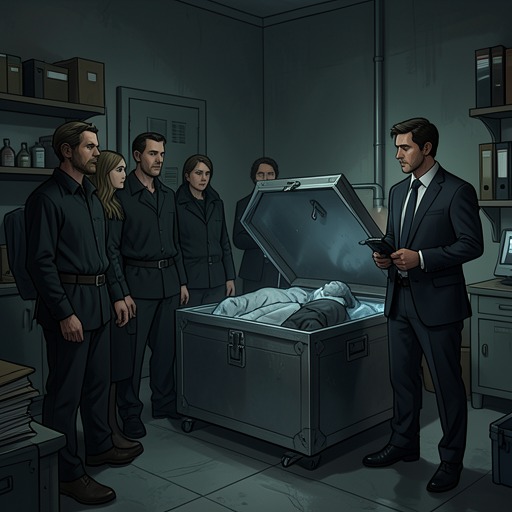
When Sara awakens after an abduction that has carried her hundreds of thousands of years into the future, she is relieved to discover that she is still wearing her uniform. That detail tells her she has not yet been processed by slavers for auction, since captives intended for sale would have been stripped or dressed provocatively. Her relief is immediately replaced by a more dangerous uncertainty: she is confined in a cage of flickering blue energy inside a Trioeil’s office, surrounded by strange objects, while the alien identifies her as an Aphrosian and announces that she is to serve as the Goddess of the Fifth Cycle Festival.
The Festival is not a harmless celebration. It is an ancient tradition in which a woman is selected to embody a Goddess, bound to fleshy form, and placed at the center of a competition in which men kill one another until only one remains. The survivor becomes the God, while the Goddess is treated as his possession. The United Species has banned the custom because the Goddess is often killed and eaten by the victor. Sara understands that the prohibition has not eliminated the practice; it has merely forced it into cultures and territories beyond effective jurisdiction.
Her danger is doubled by the possibility of discovery. A deep scan would reveal that she is not Aphrosian but human, and humans are rare and expensive commodities. Her tattoo and bionic eyes can deceive casual observers, yet her DNA cannot. Sara therefore has to survive both the public ritual and the private threat of being taken to a laboratory or sold as biological property. The Festival makes the politics of her body explicit: strangers classify her, display her, and assign her a sacred function while denying her the right to define herself.
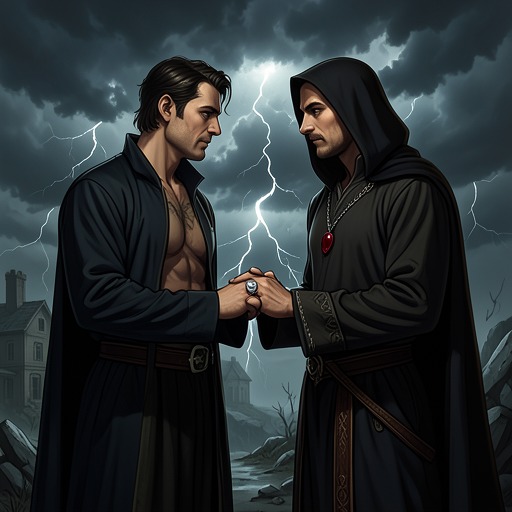
Tom’s arrival changes the ritual’s emotional and practical geometry. Seeing Sara’s image, Tom recognizes her as his Starmate, a bond he has expected to find all his life. An older T’shav eventually declares that the spirits have identified Tom as the God and that it is his duty to serve him, causing the energy cage to disappear. Tom expects to lead Sara away, but she refuses the role of rescued Goddess. She punches the Trioeil, takes the keys from his belt, unlocks herself, jumps from the platform, picks up a sword from the bloody mud, and points it at Tom. She makes clear that even if he is the God, she will fight for herself. Her first response to the Starmate bond is therefore not submission but a public assertion of consent and agency.
Resistance and the Human Cause
Sara’s declaration that she is human is also a political intervention. In conversation with Colonel Flanard, she argues that the living alien species of the present galaxy evolved from humans, including those found in light-speed containers that may predate space travel. She insists that evolutionary difference does not erase civilization, government, law, social boundaries, or culture. When Flanard tries to interrupt, she identifies herself plainly as human and describes the terror of discovery: humans risk being placed in laboratories simply because they are rare.
Her demand is concrete rather than symbolic. Sara calls for a human sanctuary where humans can live without constant fear. The statement shifts her role from fugitive soldier to advocate. She is not asking only for personal exemption from exploitation; she is naming a collective need for safety, autonomy, and recognition. Her human identity, initially a secret required for survival, becomes the foundation of a rights claim.
That claim immediately produces action. When Sara learns that humans aboard a ship need someone to bring them into safety, she attacks the petty officer responsible for her immediate circumstances. She locks him in a chokehold until he slumps, takes his weapons, and begins a jailbreak from the brig below. She knows the decision will probably end her military career, yet the prospect of leaving endangered humans under institutional control matters more to her than preserving her professional future. The escape is thus both a rescue operation and a conscious break with the command structure that failed to protect her.
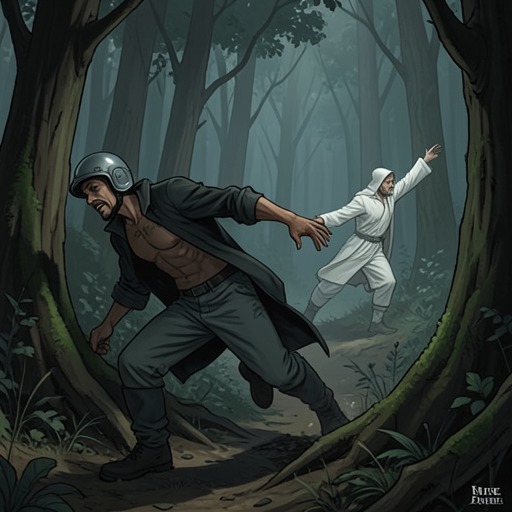
Her technological body becomes an instrument of resistance during the escape. When the pursuing forces close in, Sara reaches into her eye socket, removes a small device, and uses it as a stun grenade. She pulls Tom back and covers his ears while the device produces a flash and a high-pitched grating sound. The revelation astonishes him: her bionic eyes are not merely replacements or disguises but can conceal weapons. Sara treats the adaptation with practical humor, explaining that there is little point in having bionic eyes if they cannot help smuggle explosives, even if the explosives are only stun grenades. The moment embodies her larger pattern: technological alteration does not diminish her agency; in her hands, it expands the means by which she can resist captivity.
Tom, Pregnancy, and Embodied Belonging
Tom is not simply the man who emerges from the Festival as its designated God. He is the person Sara recognizes as capable of understanding displacement, family, and the vulnerability of a hidden identity. She is initially cautious because T’shav are known as mercenaries and barbarians, but their reputation for strong family bonds gives her a reason to test whether trust is possible. Her account of Earth, military service, flying, and the house fire becomes a deliberate act of disclosure rather than an accidental confession.
The relationship is shaped by a tension between irresistible connection and negotiated autonomy. Tom experiences Sara as his Starmate with absolute certainty, while Sara’s first response is to challenge the social role that the Festival attaches to him. Their bond therefore cannot be reduced to the ritual’s old hierarchy of victorious God and possessed Goddess. Sara keeps forcing the distinction between emotional recognition and ownership, insisting that the existence of a profound connection does not remove the need for her own choice.
During the escape, she tells Tom that she is pregnant with his child. She has delayed telling him because she fears that the truth might cause him to reject her, but she ultimately chooses disclosure despite the danger and the uncertainty. Tom responds with wonder rather than abandonment. The pregnancy makes their relationship materially consequential: the bond is no longer only an emotional or cultural category but a shared future involving a child conceived across the boundaries that the galaxy treats as species divisions.
The pregnancy also places Sara’s body at the center of the novel’s posthuman tensions. Her eyes are bionic, her visible appearance is partly constructed as a disguise, her identity is hidden in her DNA, and her child is connected to a species considered rare and valuable. Yet the narrative does not treat her as a passive biological symbol. She remains the person who decides when to reveal the pregnancy, when to fight, whom to trust, and how to define the meaning of her body in a system that repeatedly tries to classify it for her.
Change, Return, and Narrative Role
Sara’s trajectory moves through separation, threshold, ordeal, and return, but it reverses the conventional pattern in which a hero returns to restore the old world. She is separated from Earth by abduction and extreme temporal distance, enters a future that treats her as an alien specimen, crosses the threshold of the Fifth Cycle Festival, and survives an ordeal that combines ritual violence with the threat of scientific exploitation. Her return is not a literal restoration of her old life. Instead, she carries the knowledge of human vulnerability into a new political role.
The epilogue confirms that Colonel Flanard’s testimony against her is considered deeply compromised, so Sara is not expelled from the Corps. The United Species, eager to demonstrate that humans will be treated with dignity and respect, assigns her within months to serve as an ambassador between the United Species and Zon’s fleet. The appointment transforms the consequences of her insubordination. The jailbreak that seemed certain to end her career becomes evidence of the moral necessity of her intervention, and the hidden human becomes an official representative of relations between powers.
Sara’s pregnancy continues into this new public life. Her swollen ankles irritate her, and she compares her feet to pumpkins, a small domestic complaint that contrasts sharply with the violence and political stakes surrounding her. The detail gives her future a physical, ordinary texture: after surviving abduction, ritualized murder, species prejudice, and institutional betrayal, she is also a pregnant woman adapting to the discomforts of carrying a child.
Sara’s lasting narrative importance lies in the refusal of every imposed category. She is labeled Aphrosian but is human; named a Goddess but rejects the title’s ownership; recognized as Tom’s Starmate but insists on fighting for herself; treated as a rare commodity but becomes an advocate and ambassador. Her story joins bodily hybridity, military discipline, reproductive vulnerability, and political resistance without allowing any one of them to replace the others. By the ending, Sara has not recovered the lost world of Earth. She has made herself visible on her own terms and turned survival into the beginning of collective protection.