Seth Fischer's Post-Rescue Shifter-Rights Speech
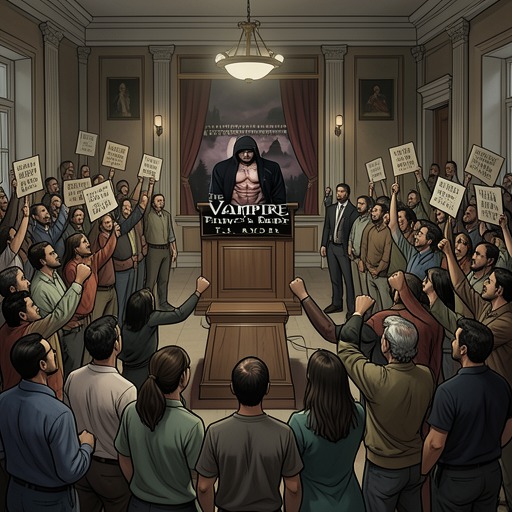
The Vampire Prince’s BrideSeth Fischer's Post-Rescue Shifter-Rights Speech is the public turning point at which Seth Fischer converts his recovery into an organized defense of shifter identity. Appearing outside the hospital on the day he is released, pale but standing firmly before cameras and microphones, he offers condolences to Crystal Scott's family before arguing that Crystal's suffering was not an isolated personal failure. It was the consequence of a society that shames shifters, pressures them to hide, and treats their nature as something that must be removed. The speech therefore links bodily survival, mental health, public recognition, and civil rights: Seth's own return from danger becomes the platform from which he demands that other shifters no longer be forced into concealment.
Causes and Background
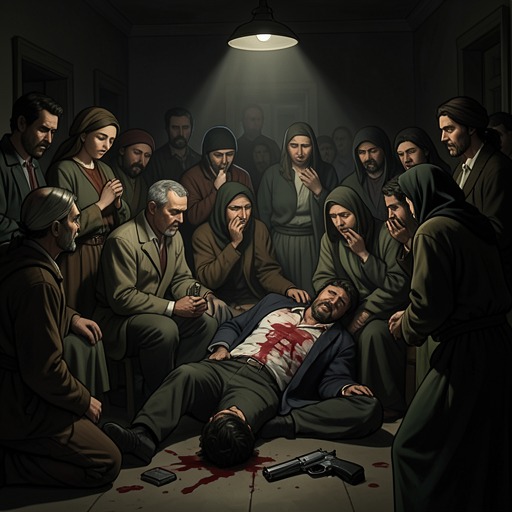
The immediate setting is Seth's discharge from the hospital after a full recovery, although Ana Medina notes that doctors have warned him not to overexert himself. His physical condition is visibly fragile when he addresses the press, but his voice remains powerful and his determination has intensified. The broadcast follows the recent crisis surrounding Crystal Scott, whose mental breakdown exposed the human cost of anti-shifter prejudice. Crystal had been adopted by anti-shifter parents, and after her husband discovered that she was a shifter, he accused her of raping him. Ana describes Crystal as someone who never had a fair chance, because the hostility around her identity had shaped the conditions in which she was forced to live.
Seth's argument also develops against the proposed Shifter Registry. Ana is already working with him on research for arguments opposing the registry, and she says that they hope it will not pass. The political danger is clear: anti-shifter groups could use Crystal's breakdown as supposed proof that shifters require surveillance and classification. Seth instead seizes the same tragedy and redirects its meaning. Crystal's experience is presented not as evidence that shifters are inherently dangerous, but as evidence that hatred, shame, and forced self-denial damage people. The speech thus contests the state's proposed remedy at the level of cause: registration would institutionalize suspicion rather than address the social conditions that produced the harm.
What Happens
Seth begins by extending sympathy to Crystal Scott and her family, acknowledging that the events have been painful for everyone and especially for those who loved her. He then states that the tragedy has strengthened his resolve to bring change to the country. His public language moves from mourning to diagnosis. When shifters are not free to be themselves, when they are shamed into believing that something is wrong with them, or when they attempt to suppress the part of themselves that makes them shifters, Seth argues that the damage reaches their mental health.
The speech gives that diagnosis a collective political conclusion. Seth calls on shifters to stand up publicly and affirm their presence and pride rather than accept silence. He insists that personal courage alone is insufficient because the law itself discriminates against shifters in a country that claims to be free. His challenge to the meaning of freedom is directed at the audience, the cameras, and the political system at once: freedom cannot be treated as a universal national principle while shifters remain legally marked as a suspect population.
The scene's most important reversal is interpretive. Crystal's collapse might have been absorbed into an anti-shifter narrative as proof of instability or danger. Seth makes it proof of social injury. The event shifts the value at stake from private survival to public dignity: the hospital release is not merely a medical conclusion but the beginning of Seth's renewed political action. His weakened appearance contrasts with the force of his position, allowing the speech to dramatize resilience without reducing the issue to individual heroism. The demand is structural: laws and public attitudes must change so that shifters can live openly instead of being driven to hide or suppress themselves.
Participants and Political Stakes
Ana Medina and Joseph Baker watch the broadcast with Ana's parents, and their reactions show the speech spreading beyond the official platform into domestic and political life. Joseph feels pride as he listens, recognizing that the argument applies directly to his own decision to stop hiding his shifter side from coworkers. Seth's words therefore reach a shifter who has not been the center of the public crisis but has still experienced the pressure of concealment. Joseph understands that change will require many voices, including his own, rather than reliance on a single spokesman.
Ana's connection to Seth gives the speech an institutional continuation. She is already back at work with him, though less extensively, and is conducting research for his arguments against the Shifter Registry. Her work indicates that Seth's appearance is not an isolated emotional statement. The broadcast is part of a broader campaign combining public testimony, legislative research, and the growing visibility of shifter-rights groups. Ana reports that those groups have become more vocal since the news about Crystal broke, suggesting that the tragedy has produced collective mobilization rather than only grief.
The stakes extend beyond the registry itself. The proposed law would make shifter identity a matter for legal classification, while Seth's position treats identity as something that must be allowed to exist without shame. The opposing frameworks are sharply different: one responds to fear through surveillance, and the other responds to harm through rights, education, and social acceptance. Ana and Joseph's agreement that Seth has handled the moment brilliantly confirms the political effectiveness of his intervention, but their discussion also preserves the danger that opponents may continue to weaponize Crystal's story.
Consequences and Aftermath
After Seth finishes, Ana's father asks when Ana will return to working with him, and Ana explains that she is already assisting him through research. Seth's recovery consequently produces an immediate political aftermath rather than a quiet return to private life. His hospital release becomes a renewed public mandate, while Ana's research supplies the arguments needed to challenge the registry through formal political channels.
Joseph's response shows a second consequence: the speech changes how he understands his own identity. He resolves to stop hiding his shifter side from coworkers and imagines that Buck Harmon would be proud of him for finally taking a stand. Seth's advocacy thus generates a chain of recognition in which public speech enables private disclosure. The point is not that one speech instantly ends discrimination, but that it makes silence less inevitable and gives individuals a language for refusing the shame imposed on them.
The event also establishes a new way of remembering Crystal Scott. Her fate remains tragic, and Seth does not erase the pain inflicted on her or offer an easy recovery narrative. Instead, he makes her experience politically legible. The account of her adoption, marital accusation, and mental collapse becomes an argument for changing the conditions that made such damage possible. In that sense, the speech turns testimony into policy pressure: grief is preserved, but it is directed toward preventing the same social violence from being repeated.
Narrative Significance
The speech stands as a clear confrontation between the medical or punitive treatment of difference and a social-rights understanding of identity. Crystal's breakdown is not presented simply as an individual defect requiring correction, and shifter nature is not treated as a danger that must be cut away. Seth identifies the surrounding culture of shame as a source of injury, placing responsibility on families, intimate partners, workplaces, and laws that deny shifters equal standing. The event therefore broadens the story's concern from supernatural secrecy to the political consequences of enforced secrecy.
Its placement after Seth's rescue gives the scene a value shift from vulnerability to agency. He leaves the hospital visibly weakened, yet he speaks with greater resolve, making recovery meaningful through action rather than physical restoration alone. The speech also contrasts private relationships built on recognition with institutions built on suspicion. Joseph's decision to be more open, Ana's research, and the increased activity of shifter-rights groups all show how a public statement can become a distributed movement.
Most importantly, Seth refuses to let the state define the lesson of Crystal Scott's tragedy. The registry would make shifters more visible as objects of legal scrutiny; Seth's appeal seeks visibility as a condition of pride and equal citizenship. His intervention therefore changes the political vocabulary of the surrounding conflict. Shifters are not merely beings to be monitored, concealed, or defended after a crisis. They are people entitled to speak, to remain whole, and to demand that the law recognize the freedom it claims to protect.