Shifter Registry Act
The Vampire Prince’s BrideThe Shifter Registry Act is a proposed piece of legislation that would require the state to formalize its knowledge of shifter identities. In the novel, it becomes the clearest legal expression of anti-shifter fear: supporters describe registration as protection for humans, while its opponents see it as the first step toward detention, exclusion, and the removal of equal citizenship. The Act therefore matters not merely as a political proposal but as a test of whether public safety will be defined through rights shared by everyone or through exceptional controls imposed on a stigmatized population.
Political Purpose and Opposition
Ana Medina works as the personal assistant to Senator Seth Fischer, a shifter-rights advocate who is preparing a speech against the Act. She helps him refine every part of his delivery because the proposal is only one step away, in her view, from a Shifter Detainment Act. Ana is not a shifter herself, but she rejects the logic that legal protection should depend on species. Her position is summarized by the principle that people are people, and her support for the campaign is active rather than merely sympathetic: she records Seth’s rehearsal, reviews the playback, and researches arguments for his opposition to the bill.
Seth’s political task is unusually delicate. He must persuade other senators that the proposed registry is unconstitutional and dangerous to shifter lives without allowing opponents to dismiss his case as an emotional attack or a straw man. His speech must be passionate without becoming inflammatory, and he plans to argue that the law mistakes a cultural prejudice for a universal necessity. The narrative specifically contrasts American hostility with other cultural approaches to shifters, noting that countries such as China have condemned the treatment of shifters in America. Seth’s election itself offers evidence that the political tide is changing: he is only the third shifter elected to a senatorial position and has already served longer than either of his two predecessors.
The Registry as a Mechanism of Exclusion
The Act operates within a broader legal environment that already leaves shifters vulnerable. Joseph Baker is a police detective and a Bear shifter, but only his friend Buck knows his secret at the precinct. There is no law preventing a shifter from becoming a police officer, yet there is also no effective protection against dismissal merely because an employer considers the ability to transform into an animal a safety threat. The Self-Preservation Act permits employers to terminate anyone they believe threatens their safety, and shifters are routinely classified as threats simply for being shifters. The resulting contradiction is structural: known shifters can lose access to employment and then be condemned as idle people seeking government support.
Against that background, registration cannot be understood as neutral recordkeeping. Knowledge of identity would enter a system that already permits exclusion while offering little meaningful protection. The feared progression from registry to detention is thus grounded in existing practice rather than presented as abstract paranoia. The proposed law would give administrative form to a social order in which shifters are asked to remain invisible, punished when discovered, and then blamed for the insecurity produced by their forced concealment.
The Act also threatens the ordinary privacy through which characters manage their identities. Cain Samson’s nonhuman nature is perceptible to Michelle Handsworth through her supernatural gift, although he appears to everyone else to be a successful, wealthy, physically impressive human. Max reveals to Scarlett Brenan that he can transform into a gorilla and has kept that fact secret because people might fear him, leave him, expose him to others, or lead the government to decide that he is dangerous simply for existing. These private revelations show what compulsory identification would cost: secrecy is not always deceit, but often a defensive response to the possibility that disclosure will trigger social or governmental violence.
Violence Around the Debate
The Act’s political stakes become immediate when Crystal Scott abducts Seth Fischer, Ana, and Joseph for a hostile broadcast. Crystal describes shifters as untrustworthy and vile, questions whether they should be allowed to walk freely in public, and presents Joseph’s Bear identity as proof that even a police officer cannot be trusted. She insists that the registry is necessary to protect humans from shifters. Her rhetoric turns the proposed law into a justification for treating an entire population as inherently suspect.
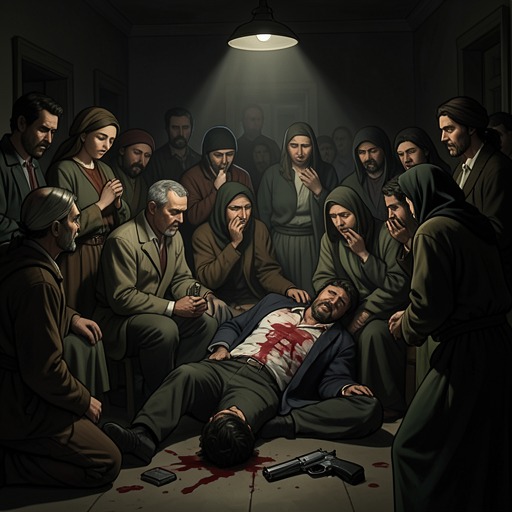
The confrontation exposes the danger of the logic the Act embodies. Crystal shoots Seth and then turns the gun toward Ana. Joseph shifts in front of them, attacks Crystal’s armed guards, and incapacitates them while Ana helps the wounded senator reach cover. Crystal’s hatred is not represented as a harmless opinion: it produces an armed assault, dead bodies, and a crisis in which the identities that the registry claims to manage become grounds for violence. The scene reverses the bill’s stated promise of protection. Fear of shifters does not prevent violence; it supplies the language through which violence is organized.
Seth interprets Crystal’s collapse and self-hatred as evidence of the damage caused by enforced secrecy. He argues that when shifters are compelled to hide, taught to hate themselves, or pressured to suppress the part of themselves that makes them shifters, their mental health suffers. Ana reaches a similar conclusion after seeing the bodies on the warehouse floor. The attack strengthens rather than weakens her commitment to shifter rights, because she recognizes that the deaths are inseparable from anti-shifter hatred. The Act’s alleged protection of humans is therefore challenged by a more fundamental account of public safety: a society that refuses people recognition can create the conditions for the very crisis it claims registration would prevent.
Public Speech and Counter-Politics
After the attack, Seth recovers from his gunshot wound and leaves the hospital to address the media. His public response is not a call for retaliation against Crystal or her family. He expresses sympathy for those who loved her and uses the tragedy to argue that prejudice has damaged a human life as well as endangered shifters. He presents the Act as part of a legal system that forces people to suppress themselves and asks the public to confront who is actually included in the language of freedom.
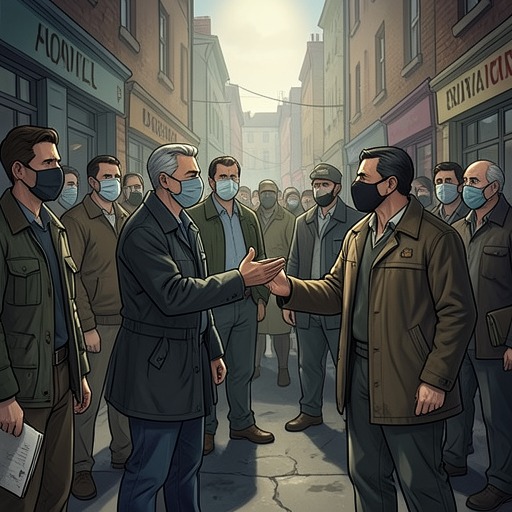
Seth’s speech turns the registry controversy into a demand for open identity and equal citizenship. He urges shifters to stand publicly in their own identities and insists that the law must change because shifters are being legally discriminated against in a country that calls itself free. Ana and Joseph both see the address as a possible turning point. Joseph, who has hidden his nature from coworkers, feels pressure to stop concealing his shifter side; Ana returns to work with Seth and conducts research for arguments against the bill. The political response thus moves from private fear to collective advocacy.
The campaign remains precarious. Ana recognizes that anti-shifter groups could use Crystal’s actions as evidence that a registry is necessary, and Joseph sees how easily the tragedy could be repurposed against the people it was meant to defend. Seth counters that danger by seizing the public meaning of the event immediately, presenting Crystal’s breakdown as an indictment of forced concealment rather than proof of shifter criminality. The struggle over the Act is consequently also a struggle over interpretation: the same incident can be made into evidence for surveillance or into evidence that discrimination destroys lives.
Narrative Significance
The Shifter Registry Act gives institutional shape to the novel’s recurring conflict between hidden identity and public belonging. Characters such as Joseph and Max conceal their forms because disclosure may cost them employment, relationships, safety, or freedom. Others, including Ana and Seth, insist that silence cannot be the price of citizenship. The Act stands at the point where private stigma becomes official policy, converting suspicion into a category that can be recorded, administered, and enforced.
Its significance also lies in the contrast between protective language and coercive consequence. Across the wider narrative, institutions repeatedly claim authority over bodies and identities in the name of order, fertility, safety, or tradition: Cheryl is sent to the Shrine of Nethja under a rule that turns pregnancy into a condition of kingship, the Fifth Cycle Festival is a banned ritual in which a woman is treated as a prize for male violence, and humans such as Sara are endangered by systems that classify their bodies as rare commodities. The registry belongs to this larger pattern of protection that suspends ordinary autonomy. It promises security by making certain people exceptionally visible while leaving them exceptionally exposed.
The proposed law is not confirmed as enacted in the supplied events. Its narrative function instead rests on the campaign against it, the attack carried out in its name, and the renewed public movement that follows. Seth’s recovery, Ana’s continued research, and Joseph’s willingness to consider public identification all indicate that opposition has become more organized. The Act remains a threat, but the response to it establishes a competing political principle: safety cannot be achieved by treating shifters as a danger category, and freedom cannot remain a privilege available only to those whose identities attract no official suspicion.