Shifter Rights Movement
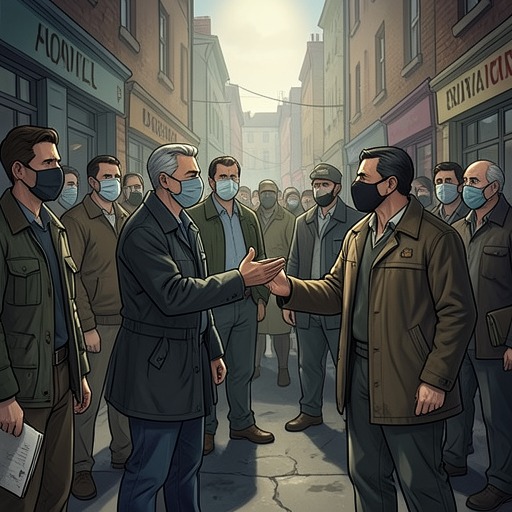
The Vampire Prince’s BrideThe Shifter Rights Movement is the organized demand that shifters be treated as full citizens rather than as threats to be registered, detained, feared, or forced into silence. Its decisive conflict is not only over legislation but over identity itself: the movement challenges a society in which shifters can be legally discriminated against, driven to suppress their Beast, and then condemned when that suppression produces mental collapse. Through Senator Seth Fischer, his personal assistant Ana Medina, Detective Joseph Baker, and the tragedy of Crystal Scott, the movement becomes both a political campaign and a struggle for the right to exist openly.
Origins and Political Stakes
The immediate political target of the movement is the proposed Shifter Registry Act. Seth Fischer is preparing a parliamentary speech arguing that the Registry is unconstitutional and risks becoming the first step toward a Shifter Detainment Act. His concern is not merely rhetorical. A registry would mark shifters as a special population subject to surveillance and exceptional control, making legal recognition conditional upon disclosure and turning a category of citizens into a suspected class.
Ana Medina, although human rather than a shifter, supports the movement because she regards the proposed law as an attack on basic civil rights. She helps Seth refine his speech so that he can oppose the Registry without appearing evasive or needlessly hostile. Her position is grounded in the principle that people deserve equal treatment regardless of species, and her commitment is strengthened by her long friendship with Seth. He recruited her despite her lack of formal credentials because he valued her intelligence, courage, determination, and passion for shifter rights.
The movement also contests the claim that anti-shifter suspicion represents universal human opinion. Seth explains that different cultures have treated shifters differently, while the European colonialization period produced a particularly violent Western image of shifters as devil-worshipping witches. That history included burning, hanging, and organized hunts. The fact that such attitudes persist in the present gives the Registry debate a historical dimension: the proposed law threatens to convert old superstition and persecution into modern bureaucracy.
Seth Fischer and Public Advocacy
Seth is central to the movement because he combines political authority with unusual public visibility. Before entering politics, he was an immensely popular movie star and was even used as the poster figure for an anti-shifter organization before revealing that he was himself a shifter. He became only the third shifter elected to a senatorial position and had already served longer than either of his two predecessors. His election therefore functions as evidence that public attitudes can change, even though his prominence also makes him a repeated target.
The assassination attempt against Seth and Ana exposes the danger surrounding that advocacy. Seth is shot in the arm, while Ana is placed in protective custody with Detective Joseph Baker after the attack. The pair also discover that the assassin was likely part of a larger conspiracy. Ana has gathered documents on anti-shifter groups that had been threatening them, and she insists on returning to the city because Seth’s survival, work, and evidence are all connected.
Seth’s political importance is presented in contrast with Joseph’s instinctive privacy. Joseph is a solitary bear shifter who has little desire to become a public representative. Yet Seth possesses the charisma and personal charm needed to make people listen, which makes him indispensable to a movement that must change minds as well as laws. His role demonstrates that rights advocacy requires both institutional access and personal testimony: private endurance cannot substitute for a visible challenge to discriminatory power.
The Movement Against Concealment and Self-Hatred
The story links legal discrimination to the suppression of the shifter side. Joseph explains that the Beast’s voice can easily be mistaken for schizophrenia, while prolonged denial or suppression can produce serious mental illness. Shifters may hide themselves to avoid social punishment, only to be used as evidence for the very stereotypes that caused their concealment. The movement therefore seeks more than formal equality. It challenges the social conditions that make self-recognition dangerous.
Crystal Scott becomes the most devastating example of this pattern. At the warehouse, she insists that her Beast is a demon inside her and tries to reject it completely. Her breakdown is not treated as proof that shifters are inherently unstable. Seth identifies it as the consequence of teaching a shifter to hate her own identity. He points to Crystal and the dead bodies around her as evidence of what happens when prejudice forces people into secrecy and self-denial.
Ana’s understanding changes through this confrontation. She had already supported shifter rights, but Crystal’s condition and the violence surrounding it show her how deep the damage runs. The tragedy transforms commitment into resolve. Joseph experiences a parallel change: after hearing Seth speak, he decides that he can no longer hide his shifter side from his coworkers. He also thinks that Buck, his dead police partner, would be proud of him for finally taking a public stand.
Law, Media, and Collective Response
Seth turns Crystal’s tragedy into a public argument rather than allowing anti-shifter groups to use it as evidence for a registry. After leaving the hospital, he addresses the media and offers sympathy to Crystal’s family while connecting her collapse to the social punishment imposed on shifters. He argues that shifters must be free to be themselves and that laws must change because shifters are legally discriminated against in a country claiming to be the home of the free.
His speech calls for shifters to declare their presence and refuse silence. The appeal is simultaneously personal and collective: it asks individuals to stop treating their own nature as shameful, while demanding that institutions stop making openness dangerous. Seth’s public language turns mental-health suffering into political evidence and makes Crystal’s death and breakdown part of the movement’s moral record rather than an isolated private misfortune.
The aftermath shows how quickly tragedy can be contested in the public sphere. Anti-shifter organizations could present Crystal as proof that shifters require registration, but Seth immediately reframes the case as proof that discrimination is destructive. Ana returns to work with him in a reduced capacity and conducts research for his arguments against the Registry. More shifter-rights groups become vocal after the news about Crystal, suggesting that the movement gains momentum through collective response to exposed injustice.
Family, Community, and Continuing Struggle
The movement also reaches beyond parliament and public speeches into private family histories. Joseph’s mother, a shifter who could transform into a vampire bat, lost her medical license after a patient accused her of drinking blood. Joseph’s father is a bear shifter, but his parents generally avoided discussing their identities, following the philosophy that remaining unobtrusive would prevent conflict. Their experience shows that discrimination can operate through professional punishment and accusation even when no formal registry exists.
Seth’s recovery does not end the campaign. He leaves the hospital determined to continue, while Ana and Joseph become equally committed after witnessing Crystal’s suffering. Seth’s speech gives Joseph a language for public identity, and Ana’s research gives the movement practical legislative support. Their partnership places the campaign between personal loyalty, investigative work, political communication, and the broader pressure created by shifter-rights organizations.
The Shifter Rights Movement therefore opposes a complete system of exclusion: historical persecution, contemporary legal discrimination, workplace punishment, hostile public stereotypes, and the internalized shame that can follow from them. Its central demand is that shifters should not have to choose between safety and authenticity. By the end of the documented arc, the Registry remains contested rather than defeated, but the movement has gained stronger voices, wider public attention, and a clearer argument that freedom requires the right to be recognized without being controlled.