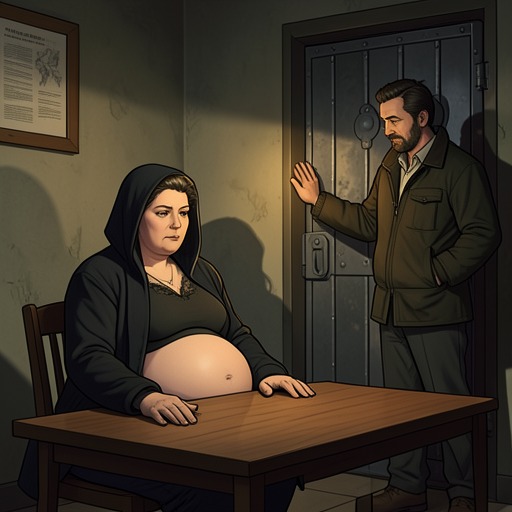
Single motherhood
The Vampire Prince’s BrideSingle motherhood is presented through Amanda’s decision to raise Logan without Jace’s knowledge after their relationship ended. Her situation is not simply the absence of a partner in the household: it is the accumulated burden of parenting, financial self-reliance, concealed lineage, and unresolved attachment. Amanda’s private life is organized around protecting Logan while postponing the revelation that could alter his place within the pack and reopen her relationship with Jace.
Identity and Circumstances
Amanda is a working mother and college student whose daily life combines employment, study, and childcare. Six years after the earlier events of the story, she works as a receptionist in a chiropractor’s office while taking an accounting class. The job is usually manageable enough to allow some homework between clients, but the day on which Jace’s return becomes the subject of local conversation is one of the worst days of her life. Her routine includes collecting Logan after a playdate, driving him home, and trying to give him her full attention while carrying an increasingly disruptive secret.
Logan is not merely Amanda’s dependent child; he is the hidden son of Jace, a successful wolf-shifter whose return to town makes the concealed family structure difficult to maintain. Amanda has raised Logan without telling Jace that he was born from their relationship. She has kept the secret so completely that only her parents and she know the child’s paternity. Her parents love Logan but hold the old-fashioned view that Amanda should have made Jace marry her, leaving her without a comfortable family audience for the confession she has been avoiding.
Daily Life and Maternal Responsibility
Amanda’s motherhood is shown through ordinary acts rather than grand declarations. After picking Logan up from a playdate, she watches him buckle himself into his car seat and asks whether he enjoyed the afternoon. Logan proudly explains that he and Kaylen have decided to attend kindergarten together the following year, revealing a child already forming plans and friendships while Amanda manages the adult consequences of his hidden parentage. She listens as he chatters about his day even when her thoughts are dominated by Jace.
The practical pressures of single motherhood are real but not depicted as total deprivation. Amanda has a house, pays reasonable rent, and keeps Logan fed and clothed. When her friend Betty proposes that Jace should pay child support, Amanda rejects the suggestion that she might be seeking his money. She insists that if she tells Jace, it will be because he deserves to know that he has a son, not because she wants financial assistance. Her refusal separates maternal responsibility from economic opportunism and establishes a moral boundary around the disclosure.
Amanda also continues her education in the hope of improving Logan’s future as well as her own. Betty argues that child support could allow Amanda to reduce her hours at the chiropractor’s office and devote more time to earning her degree and obtaining a better-paying job. Amanda’s response shows both her independence and the limits imposed by her circumstances: she is struggling, but she does not want Logan’s father’s wealth to become the basis of their relationship. The condition of single motherhood therefore involves a constant negotiation between legitimate need and the desire to preserve dignity.
Secrecy, Paternity, and Pack Politics
Amanda’s silence is rooted in fear as much as in pride. She has not seen Jace directly since graduation except for occasional distant glimpses in town. In the first years after Logan’s birth, she repeatedly wanted to call and tell him about their son, but the idea of confessing became increasingly frightening. She began dating another man soon after the breakup, although the relationship never produced more than mild attraction, and she worries that this later dating history could make Jace doubt her claim about Logan’s father.
The child’s resemblance makes the secret both more secure and more precarious. Logan looks like Amanda’s father in human form, so Amanda believes Jace may not immediately recognize himself in the boy. Yet Logan’s personality resembles Jace’s: he is bold, confident, and repeatedly becomes the leader of whatever group surrounds him. When he shifts, his Wolf looks exactly like Jace’s own. The inherited resemblance creates a dramatic contradiction: the truth is visible in Logan’s behavior and Wolf form even while Amanda’s spoken confession remains absent.
Jace’s return intensifies the conflict because he is now successful and has improved the pack’s living conditions through his work and donations to repair housing and public buildings. Amanda fears that revealing Logan’s existence could affect the whole pack, not merely the two adults who once dated. She wonders whether Jace would want involvement in Logan’s life, whether he might seek custody, and whether Logan’s position would be threatened by Jace’s relationship with Clarissa and her child. Her jealousy toward Clarissa is intertwined with maternal protection: she imagines that Clarissa’s son might become the next Alpha and worries that Logan could face competition.
Disclosure and Emotional Consequences
Amanda eventually tells Betty that she and Jace used to date, using the conversation as a way to release a burden she cannot discuss with her parents. Betty immediately interprets Jace as Amanda’s mate and suggests that his obligations as Logan’s father should include financial support. Amanda resists that interpretation. Her hesitation is not a simple refusal of connection; it is an attempt to control the meaning of the revelation and prevent it from being reduced to money, marriage pressure, or pack succession.
Once the truth begins to move into the open, Amanda is forced to confront the cost of years of concealment. She spends a sleepless night reliving the disappointed and betrayed look in Jace’s eyes. She accepts that he has reason to be upset, yet she cannot predict whether he will forgive her, seek a role in Logan’s life, or demand custody. The questions show how single motherhood has been sustained by a fragile arrangement: Amanda has exercised complete responsibility, but Jace’s discovery threatens to transform private guardianship into a contested parental relationship.
The emotional structure of Amanda’s situation is marked by pursuit and withdrawal. She has remained attached to Jace while avoiding contact, dated someone else while never developing a comparable attraction, and continued to imagine the consequences of telling him. Her secrecy protects the stability she has built for Logan, but it also preserves the unresolved bond that keeps Jace psychologically present. The eventual disclosure does not erase the years of solitary care; instead, it makes those years newly visible as both an act of protection and a source of injury.
Narrative Significance
Single motherhood functions in the story as a point where intimate secrecy intersects with supernatural inheritance and communal power. Amanda’s household appears ordinary—work, rent, school, playdates, and bedtime—but Logan’s Wolf form and Jace’s position within the pack make ordinary family life politically consequential. The child’s identity could affect emotional loyalties, parental rights, and the future hierarchy of the pack.
The state also contrasts with other reproductive and family systems in the wider narrative. Cheryl’s pregnancy is imposed as a royal fertility test in which the father determines the king, while Sara’s pregnancy and human identity place her under the threat of species-based exploitation. Amanda’s experience is less overtly institutionalized, but it still shows how reproduction is never entirely private in a world governed by pack inheritance, mate bonds, and supernatural secrecy. Her decision to raise Logan alone becomes a quiet form of resistance to the assumption that pregnancy must produce immediate marriage, political order, or public disclosure.
Amanda’s single motherhood ultimately represents endurance under conditions of incomplete knowledge. She provides Logan with stability while carrying the fear that the truth may disrupt it; she rejects money as the motive for recognition while acknowledging the material strain of work and study; and she protects Jace from a revelation even as that protection denies him his son. The condition’s significance lies in this unresolved double movement: Amanda’s independence sustains Logan, but the same secrecy that made that independence possible also keeps the family divided.