Storling Disease Vaccine And Cure Scheme Success
The Vampire Prince’s BrideThe success of the Stlozyn disease vaccine and cure is the decisive scientific and ethical turning point in Shay and Gemma’s storyline. What begins as a contested attempt to save the Stlozyn people without violating Gemma’s bodily autonomy ends with a treatment that reverses the disease’s effects, eliminates the need to harvest human DNA from Earth, and allows Shay to accept a position on the Science Board on his own achievement rather than through coercion.
Causes and Background
The Stlozyn disease has become a crisis severe enough for the Science Board to discipline Shay. When he is summoned before the Board, Niqæsh accuses him of possessing a potential cure while refusing to take the steps required to develop it. The demand carries a sharp ethical conflict: Shay’s research has identified Gemma’s pregnancy as scientifically significant, but Gemma and the developing child are not simply experimental material. Shay understands that extracting DNA at such an early stage could endanger both of them, and he regards that risk as unethical even though the Board treats the concealment of scientific knowledge as blasphemy.
The Board’s pressure is intensified by its belief that Gemma’s pregnancy should not be possible. When Gemma is taken, a dragoness explains that the child she carries may be the key to curing the Stlozyn people. The language of research turns Gemma into a “specimen,” reducing her physical body to a resource whose value is measured by its usefulness to a population. This threat clarifies what Shay is resisting: not science itself, but a system willing to place a pregnant woman and her unborn child in danger for an allegedly collective benefit.
The Scientific Breakthrough
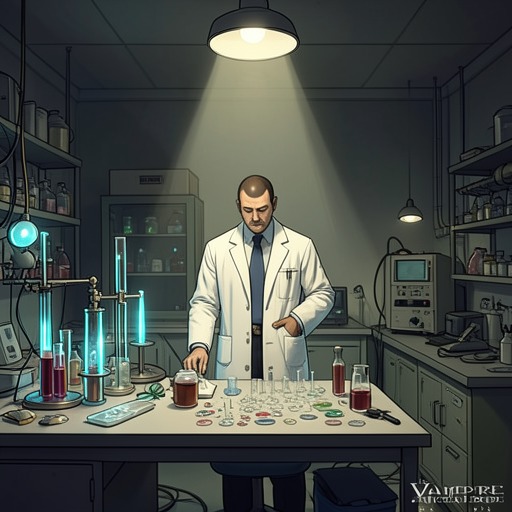
Shay ultimately develops an infusion of human DNA into Stlozyn DNA as a possible vaccine against the disease. The breakthrough exceeds its original purpose. Rather than merely preventing infection, the treatment reverses the disease’s effects. Its success also removes the immediate justification for taking DNA from humans on Earth, because simulated DNA works just as well as biological human material.
That detail changes the moral and political meaning of the discovery. The cure does not require a new extraction of vulnerable bodies, a renewed assault on Gemma, or the continuation of a research program founded on coercion. The method instead converts the boundary between human and Stlozyn biology into a source of treatment without making human beings into a permanent medical supply. In practical terms, Shay has found a way to save his people while protecting the person whose pregnancy first exposed the possibilities of cross-species biology.
What Happens
Shay brings Gemma the news with unmistakable excitement. He tells her that the infusion works and then corrects himself: it is better than a vaccine because it reverses the disease’s effects. He also tells her that simulated DNA is sufficient, so no human DNA needs to be harvested from Earth. Gemma responds with confidence in him and recognizes that he has cured his people.
The scene gives the scientific result an intimate dimension. Gemma is not a silent source of biological material or a passive beneficiary of Shay’s work; she is the person to whom he chooses to bring the result, and her recognition completes the emotional movement of the discovery. The achievement belongs to Shay’s research, but it is inseparable from the ethical choice to protect Gemma and their child rather than sacrifice them to the Science Board’s demand.
Consequences and Aftermath
The cure resolves the immediate scientific crisis and changes Shay’s institutional standing. Having achieved a result capable of reversing the disease, he decides to accept a position on the Science Board, declaring that he has earned it. The appointment therefore functions as recognition after resistance: the same institution that reprimanded him for refusing dangerous fetal research must now receive him as a scientist whose alternative method has succeeded.
The breakthrough also secures a future in which Stlozyn survival need not depend on extracting human DNA from Earth. It answers the Board’s claim that hidden knowledge is intolerable without endorsing the Board’s willingness to compel experimentation. The cure preserves the value of universal scientific knowledge while exposing the difference between openly shared research and forced access to another person’s body.
Narrative Significance
The event brings together the book’s recurring oppositions between scientific progress and bodily consent, collective survival and individual dignity, and biological difference and cooperation. The cure succeeds not by confirming that Gemma must be used, but by proving that the scientific problem can be solved without treating her pregnancy as public property. Cross-species biology becomes a possibility for healing rather than a pretext for capture.
Its emotional conclusion is deliberately personal. Shay’s success leads directly to his decision to join the Science Board, but the scene ends in gratitude toward Gemma and in the couple’s physical reunion. Scientific authority, public recognition, and private love converge: Shay saves the Stlozyn people, Gemma’s body is spared further exploitation, and the research that once placed them in danger becomes the foundation of a shared future.