Werewolf reproductive duty
The Vampire Prince’s BrideWerewolf reproductive duty is the hereditary obligation by which an Alpha must produce young who can eventually inherit leadership and protect the pack. In the narrative, reproduction is therefore not treated as a merely intimate matter. It is tied to succession, the stability of the pack during the full moon, and the preservation of a supernatural community whose members can become dangerous when their wolves take control. The duty gives biological continuity a constitutional force: an Alpha’s body, marriage prospects, and potential children become subjects of collective concern.
Definition and Social Function
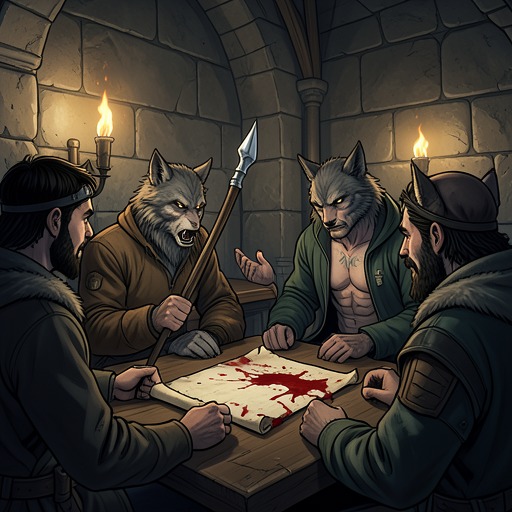
Werewolf reproductive duty is most clearly expressed through Roland Davis’s position as Alpha. Roland and Adam are the only two born werewolves remaining in their pack, and Roland is responsible for maintaining order when the full moon transforms the pack into bloodthirsty monsters. Adam, as Beta, has greater control than the others but cannot completely resist the lunar change. The future heir is consequently expected to do more than inherit a title. That child will eventually replace Roland as Alpha, protect the pack, and keep its members in line during the three nights when their wolves dominate them.
The obligation is collective as well as personal. Roland’s authority depends on the existence of a future successor, and the pack’s patience has limits. Adam warns that the members are becoming restless during the moon and may begin challenging Roland, especially Brian, if he does not produce young soon. Reproduction thus becomes a condition of political legitimacy. The “heir imperative” does not operate as a ceremonial preference; it is a pressure capable of destabilizing the entire hierarchy.
Melissa Clarkson and the Cost of the Duty
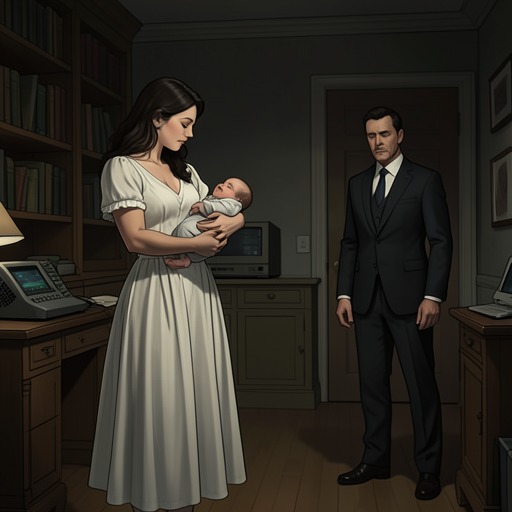
Before Melissa Clarkson’s death, she was the pack’s only female, remaining after Roland’s mother had died. Roland and Melissa did not love each other, nor did they experience the connection of being mates, even when they shared a bed. Their relationship was organized around duty: both understood that they were expected to produce children, and they had spent the previous year attempting to do so.
That effort had already exacted a severe emotional cost. Melissa suffered three miscarriages and eventually decided that she could not endure another cycle of hope and loss. She and Roland agreed to pause their attempts until she was strong enough to face the possibility of losing more babies. Roland had not expected her death to make the reproductive crisis immediate, and, while mourning her, he was uncertain whether he could bear further heartbreak himself. The duty therefore exposes a contradiction at the center of the pack’s order: the community demands continuity precisely through a process that can repeatedly injure the people expected to provide it.
Melissa’s body is found in Roland’s bed with a knife still in her chest, making the reproductive obligation inseparable from murder, grief, and investigation. Roland remembers that she had wanted to become a mother and had agreed to try with him for that reason. Her death ends not only a life but also the pack’s last established reproductive arrangement. Adam’s immediate question about how Roland will find a mate now is politically practical, but it arrives while Melissa’s body remains in the bed, revealing how quickly the social duty can displace mourning.
Mate, Fertility, and Consent
The reproductive imperative does not automatically produce a true mate bond. Roland and Melissa’s failed attempts show that a couple can fulfill a recognized obligation without emotional or supernatural union. Their lack of mating connection distinguishes reproductive function from intimacy, while the miscarriages demonstrate that duty cannot guarantee a viable heir.
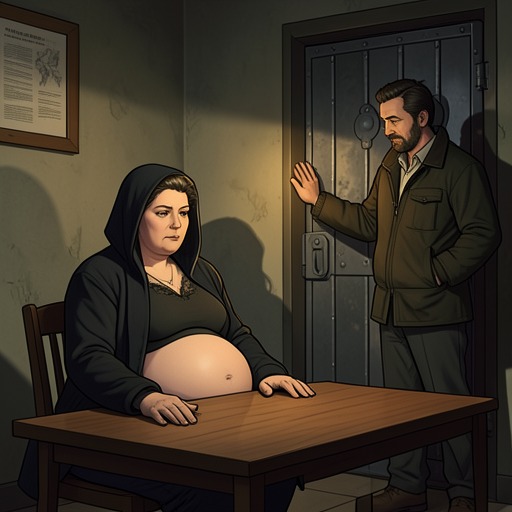
Roland later rejects the idea that Claire Doyle should be treated as a convenient reproductive solution. When Adam suggests that Roland’s wolf may want Claire as a mate, Roland responds that it will not happen because Claire is not a werewolf, and he refuses to turn her merely so she can bear his children. His resistance is significant because it interrupts the pack’s instrumental logic. Claire’s body is not reduced to a vessel for producing Alpha babies, and transformation is not accepted as a simple administrative step toward succession.
This refusal creates a tension between the pack’s customary demands and Roland’s emerging ethical boundary. He knows that the pack needs an heir, yet he rejects the conclusion that any available woman may be converted and compelled into reproduction. The duty remains powerful, but Roland’s response suggests that its authority is not absolute: the need for continuity must confront the autonomy and status of the person expected to provide it.
Wider Reproductive Economies
Other storylines place werewolf reproductive duty within a broader world where bodies, children, and fertility are repeatedly treated as negotiable resources. Killian Flanagan prevents Ryan Higgins from killing Dean McGrath because McGrath controls Danita Valdez’s debt and ransom. Killian has arranged to buy Danita’s freedom, accepting a month to pay the debt plus an additional two hundred and fifty thousand dollars. The scene shows how a woman’s future can be converted into a financial obligation, linking reproduction and sexual control to debt, ransom, and exchange.
Maskin’s gift of a grass necklace to Cheryl also contrasts coercive reproductive expectations with an attempt to create affection. Maskin has been shaped by a warrior-slave system in which the only females available to warrior-slaves are synthetic orbots, sometimes awarded for brief periods after exceptional battle performance. His uncertainty around a flesh-and-blood woman and his wish that Cheryl should like him rather than fear their joining make visible the difference between possession, prescribed mating, and reciprocal attachment.
In another royal context, Sheridan states that he has been seeking a woman “To bear me a child.” His direct formulation makes fertility an explicit dynastic requirement and places Maribel Arnaz under the gaze of a ruler who identifies her through her reproductive potential. Darilth Rothgar’s relationship with Ella Stewart offers a different model: the Draco’s Eye, a silver band with a large blue stone, identifies Ella as his destined mate when he first sees her on Earth. There, reproductive destiny is connected to a supernatural object and a mate bond rather than only to political calculation. Across these cases, the narrative repeatedly asks whether reproduction is an imposed function, a mystical recognition, an economic transaction, or a relationship that must be chosen.
Narrative Significance
Werewolf reproductive duty gives the pack’s supernatural premise a material and institutional pressure. The wolves are not only creatures of the full moon; they are a community organized around succession, vulnerability, and the fear of losing control. An heir promises future protection, while the absence of one makes the present Alpha challengeable. The reproductive demand consequently transforms private grief into public crisis and turns mating into a question of governance.
At the same time, the concept is tested by the narrative’s attention to miscarriage, unequal gender expectations, artificial or technological bodies, cross-species pregnancy, and destined companionship. Sara’s bionic eyes can conceal stun grenades; Lisa’s pregnancy is examined through a medical scanner that produces a three-dimensional holographic image of an embryo; and Shay explains that Stlozyn ancestors were humans from Earth whose added DNA permits shape-shifting. These details blur the boundaries among human, animal, machine, and reproductive body. Werewolf reproductive duty belongs to that wider inquiry into whether identity and kinship are inherited, engineered, chosen, or imposed.
The concept’s decisive tension is therefore between continuity and consent. The pack may need an heir, but the story shows the emotional damage of compulsory reproduction and gives Roland a moment of resistance against treating Claire as a breeding instrument. Werewolf reproductive duty preserves the pack’s future in theory; in practice, it exposes how survival doctrines can turn love, grief, fertility, and women’s bodies into instruments of political power.