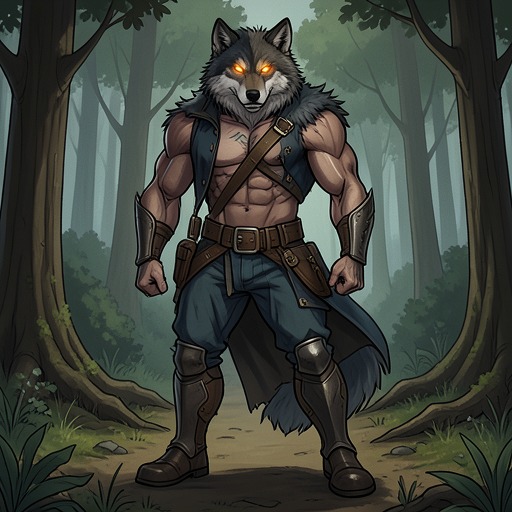
the dragon within
The Vampire Prince’s Bride“the dragon within” names the force that governs Cain Samson’s central struggle: an angry, hungry dragon lives inside him, demanding release, while Cain has spent years learning to remain its master. The expression joins supernatural identity to emotional discipline. His dragon is not merely a hidden power or a weapon; it is a continually pressing presence that converts passion, jealousy, and anger into the danger of transformation. Cain’s life depends on finding outlets strong enough to exhaust it without allowing it to decide whom he becomes.
Meaning and Manifestation
The dragon first appears as an embodied surge rather than an abstract idea. When Michelle Handsworth bites her lip, electricity pulses through Cain’s veins and the fire in his stomach becomes an “unending burning fire,” a roaring passion intensified by her presence. The image of fire gives the dragon appetite and momentum: it is something stoked, something that can overtake him, and something that must be contained before desire becomes loss of control.
Cain’s dragon is literal as well as figurative. He can transform into a dragon with a long snout, sharp teeth, yellow and green scales, and dark wings. In flight, the creature sees its reflection over a calm blue lake, making the transformed body a visible counterpart to the man who struggles to govern it. The expression therefore describes a divided identity: Cain is both the disciplined hockey player and the predatory creature always waiting beneath that discipline.
Discipline, Memory, and Hockey
Cain has spent years learning to lock the dragon down until the moment when its energy can be used safely. He channels it into competition, keeping the force contained until game time and then releasing enough of it to propel him toward victory. Hockey becomes his lifesaver because it provides a sanctioned outlet for aggression and physical intensity. By exhausting himself on the ice, he no longer lashes out without reason and can drain the beast before it forces a transformation.
His control is neither effortless nor permanent. Cain’s father taught him to build a “memory palace,” a peaceful internal landscape of mountains and a wide blue lake where he can calm the angry beast. In that imagined place, the dragon’s body is not denied: Cain sees its scales, wings, teeth, and reflection. The technique works by confronting the creature in a controlled mental space rather than pretending it does not exist. He has perfected the practice throughout his life, turning memory into a form of self-command.
Cain’s discipline is measured by time. He has gone more than eight years without losing control and transforming, and he is determined not to end that record. The streak does not mean the dragon has weakened. It remains angry, always hungry, and never at rest; the achievement lies in Cain’s continued mastery over it. The expression thus carries the pressure of recurrence: every calm interval is also evidence of another battle temporarily won.
Desire, Jealousy, and Threat
The dragon becomes most dangerous when Cain’s emotional life disrupts the routines that normally contain it. His attraction to Michelle Handsworth is intensified by the fact that she is his attorney rather than an unattached woman encountered elsewhere. He believes they belong together, yet she is preparing to date his best friend, Brock Thaddeus. That blocked desire turns the inner dragon toward jealousy, giving the creature a target as well as an appetite.
Cain’s body reveals the conflict before his judgment can settle it. He slams his fist into a locker, but the pain in his knuckles does not calm him; it only makes him angrier, while the dragon rears up and screams to be released. The violence is displaced onto an object, yet the act shows how narrow the margin of control has become. He is scheduled to train, but he feels tired and sluggish, wanting only to transform and fly even though he knows that surrendering to the impulse would be dangerous.
The crisis sharpens when Brock Thaddeus skates onto the ice. Cain’s blood boils, and the dragon imagines handling his oldest and best friend by tearing him apart, burning the pieces, and feeding on them. Cain immediately rejects that impulse because Brock is not an enemy and Cain would never deliberately hurt him. The contrast defines the expression’s moral tension: the dragon can generate murderous images, but those images are not yet Cain’s chosen actions. His identity depends on recognizing the difference between the creature’s demand and his own loyalties.
Narrative Function and Significance
“The dragon within” gives physical form to a conflict between power and restraint. Cain’s supernatural nature supplies extraordinary force, but that force threatens intimacy, friendship, and self-possession whenever it is stirred by passion or anger. Fire, hunger, racing blood, pounding exertion, and the remembered image of wings over water make the struggle bodily before it becomes verbal. The reader encounters control as an ongoing practice rather than a settled trait.
The expression also links Cain’s romantic predicament to his athletic life. Hockey is not simply his profession or a source of public success; it is the ritual that keeps the dragon from ruling him. The game offers a socially acceptable arena for aggression, while the memory palace offers a private one. Together they form the two structures of his self-control: physical expenditure in the world and mental containment within himself.
At the same time, the dragon exposes the limits of that control. Cain’s eight-year record is impressive precisely because the creature remains present and insistent. Michelle’s gesture can ignite it; the sight of Brock can make it imagine murder; a locker-room blow cannot extinguish it. “the dragon within” therefore functions as a compact expression of Cain’s divided existence: the beast is part of him, but it is not allowed to become the whole of him. His achievement is not the dragon’s disappearance. It is the repeated, costly choice to remain the master.