Esmeralda and Alyson
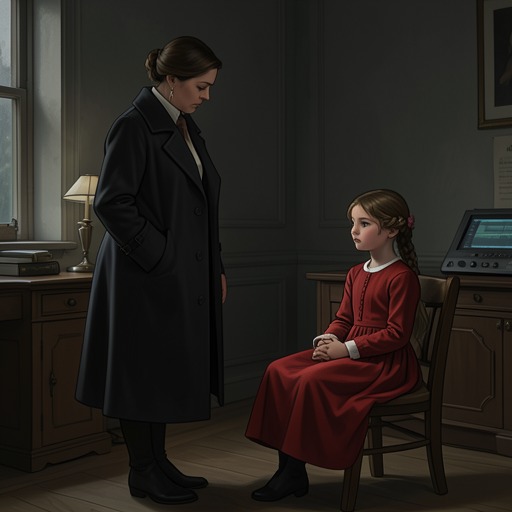
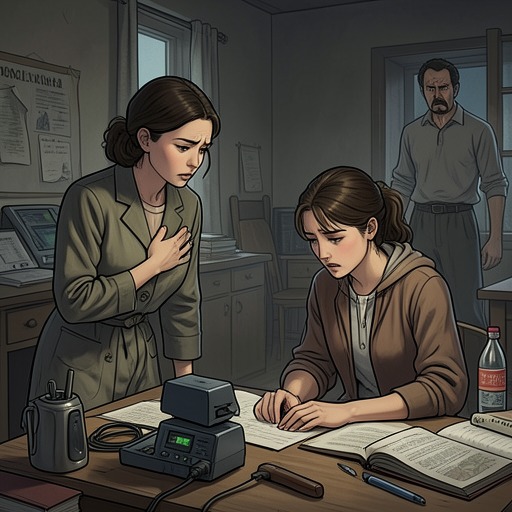
The Vampire's Pet: Romantasy at its darkest (Blood and Kisses Chronicles : A Dark, Gothic Romance Series)Esmeralda and Alyson are mother and daughter, joined by both family ties and the demands of pack leadership. Their relationship comes into focus when Alyson catches up with Esmeralda during the pack’s confrontation with Aleksander Dumoulin: she first acts to recover and protect her daughter, then recognizes that Esmeralda’s bond with Aleksander changes what protection must mean. Alyson ultimately accepts a choice that may separate Esmeralda from the pack and its succession, making maternal care a counterweight to the authority and duties surrounding them.
Family and Pack Identity
Esmeralda grew up in a pack of Werewolf Witches far to the northwest, although she was born without either a wolf or magic. Her membership in that community therefore does not rest on her possessing the abilities associated with its name. Alyson’s status within the pack is different: she is its Luna, and Esmeralda is the daughter of both the Luna and the Alpha, Thomas. Esmeralda is also understood to be next in line to lead. Their bond consequently carries a public and political dimension alongside its private one: Esmeralda is Alyson’s daughter, but she is also a significant figure in the pack’s future.
Esmeralda’s lack of a wolf and magic has shaped what she knows beyond her home. She is unfamiliar with aspects of vampire life that someone raised in Ichoryllia would take for granted, and her explanation that she grew up in her pack helps account for that distance. The difference between her background and Aleksander’s world becomes a point of contact between mother and daughter as well: Alyson must respond not only to Esmeralda’s disappearance, but to the possibility that her daughter’s life has become attached to someone outside the pack.
Recovery and Maternal Concern
When the pack finds Esmeralda, Alyson runs after her and catches her, holding her as the confrontation unfolds. The gesture initially places mother and daughter in opposing positions: Esmeralda is being kept with her people, while she is trying to return to Aleksander. Yet Alyson’s intervention does not simply express a wish to control her daughter. The family had believed Esmeralda was being held against her will and treated badly, and Alyson apologizes to Aleksander for the damage to his mansion and butler on that understanding. Thomas also says that Alyson had been worried and had asked others to search for Esmeralda. Her actions arise from fear that her daughter is in danger, not indifference to her wishes.
That fear is complicated by what has already happened. Esmeralda acknowledges that she was a prisoner when she first tried to escape Aleksander’s mansion, but by the time her family reaches her, she is choosing to stay with him. Alyson’s initial understanding is therefore both reasonable and out of date: the conditions that once made Esmeralda’s captivity real have changed, while her family’s rescue effort has continued under the earlier assumption. The scene asks Alyson to distinguish between recovering a daughter who needs rescuing and accepting a daughter who now claims a different choice.
Recognizing the Fated-Mate Bond
The turning point comes when Alyson hears that Aleksander considers Esmeralda his Fated Mate. She asks whether he means the mate given by the Moon Goddess, and his nod confirms that this is not merely his claim of affection. Alyson understands the bond as a sacred rule with authority beyond the division between their peoples. In answer to Thomas’s rejection of the possibility that the Moon Goddess would join their kinds, she insists that the goddess is not bound by racial boundaries and that the bond between Fated Mates is uniquely important.
Alyson’s response revises the meaning of the rescue. Until this revelation, the immediate question has been whether Esmeralda is safe with Aleksander; once the bond is recognized, her mother must weigh that danger against a divine connection that Esmeralda herself accepts. Alyson releases her daughter, and Esmeralda goes to Aleksander. Her relief and embrace make the change visible: the mother who had physically caught and held her now lets her move toward the person she has chosen. Alyson’s acceptance does not erase the danger of the confrontation or make Thomas agree, but it prevents parental protection from becoming another form of captivity.
Choice, Succession, and Acceptance
Alyson later asks Esmeralda directly whether she is sure, warning that there will be no going back. The question acknowledges the gravity of the decision rather than treating the bond as an easy escape from conflict. Thomas argues that both parents swore to protect the pack when he became Alpha, framing Esmeralda’s departure as a possible failure of their obligations. Alyson does not dismiss that duty. She says that accepting her daughter’s decision breaks her heart, while also accepting the Moon Goddess’s choice.
Alyson makes the cost concrete: if Esmeralda becomes a vampire, she will not be able to lead the pack. Esmeralda accepts that consequence and says her brother has always wanted the leadership. The exchange separates the mother’s love from the political future others may have imagined for her daughter. Esmeralda is valuable to the pack as the Alpha and Luna’s child and prospective successor, but Alyson does not make that value a reason to overrule her. Esmeralda thanks her mother, marking their agreement as an act of recognition rather than a simple surrender of parental authority.
Significance of Their Relationship
Alyson’s role is pivotal because she mediates between several competing claims: a mother’s fear for her child, a Luna’s responsibility to the pack, and the spiritual authority of the Moon Goddess. The surrounding story also presents a wider world in which political power can separate families: the Queen’s restored laws have torn hybrid families apart, and protests have been violently suppressed. Alyson and Thomas’s immediate conflict is not presented as an instance of that royal policy, but the contrast underscores how many forces can claim authority over intimate bonds. In this family, Alyson ultimately recognizes a limit to pack and parental authority when it conflicts with Esmeralda’s chosen bond.
The relationship’s decisive movement is from urgent retrieval to consent. Alyson first reaches for Esmeralda because she believes her daughter is being harmed; after learning what Esmeralda wants and what the Fated Mates bond means, she lets her go, names the consequence for succession, and still supports her decision. Their connection is not shown as free of grief or disagreement—Alyson admits that the choice breaks her heart—but it survives the prospect of separation because she treats Esmeralda as both her daughter and a person capable of choosing her future.