Queen’s Grand Piano
The Vampire's Pet: Romantasy at its darkest (Blood and Kisses Chronicles : A Dark, Gothic Romance Series)Queen’s Grand Piano is the damaged royal instrument repaired by Aleksander Dumoulin after a letter bearing the royal seal summons him to the palace. More than a valuable object, it is the immediate reason for his return to a place bound to his family history, and its restoration gives temporary shape to a life otherwise marked by weariness and disinterest.
Royal Commission and Setting
Queen’s Grand Piano enters the narrative through a formal summons addressed to Aleksander Dumoulin by his full name rather than by his usual title of Lord. The royal seal identifies the request as an official one, consistent with the Dumoulin family’s generations of service to the crown. Aleksander’s family made and repaired pianos, a trade that had earned them nobility over the centuries, and he inherited both the technical skill and the obligation to continue the family name after his father’s death. The commission therefore joins personal inheritance to royal authority: the instrument belongs to the court, but its care depends on a craft carried by one particular family.
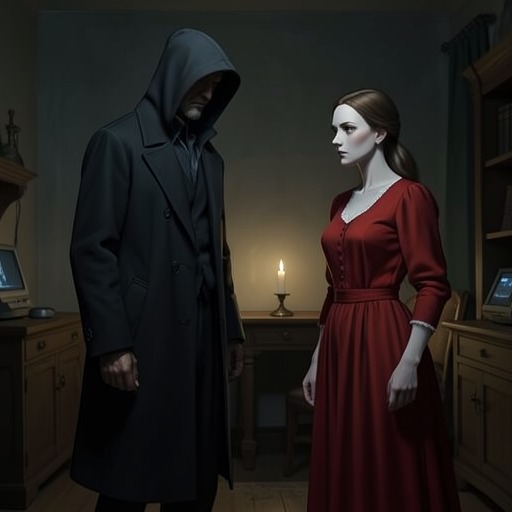
The damaged piano is located in the palace music room of Ichoryllia Royal Castle, a mountain-top stronghold whose white stucco and black brick walls dominate the town. The room retains its refined elegance despite the wider changes occurring in the castle. Servants are repainting rooms and replacing curtains and chandeliers, while portraits of Hecate, mother of Vampires, have been replaced by images of Alastor, demon and spirit of vengeance. Against this shifting political and religious background, the polished ebony piano remains a conspicuously beautiful object, even as its broken condition calls attention to the material labor required to preserve royal display.
The Queen’s Attachment
Lysander, the elderly servant who receives Aleksander, explains that the Queen was distraught when the piano broke. He adds that she asks for it to be played daily, establishing the instrument as part of the court’s regular life rather than as a merely decorative possession. Its importance is thus measured through repetition: the piano is expected to sound each day, and its failure interrupts a ritual the Queen considers essential.
The Queen’s attachment also gives the repair a political dimension. The instrument’s daily music continues within a palace where the Queen has reinstated the Old Vampire Law, opened Human Breeding Farms, replaced the kingdom’s official religion, and made opposition punishable by death. The piano is not presented as an explicit instrument of propaganda, but its restoration helps preserve continuity and ceremony while the surrounding order is being remade. Its music belongs to the polished surface of power, even when the world outside has become visibly disordered.
Damage and Restoration
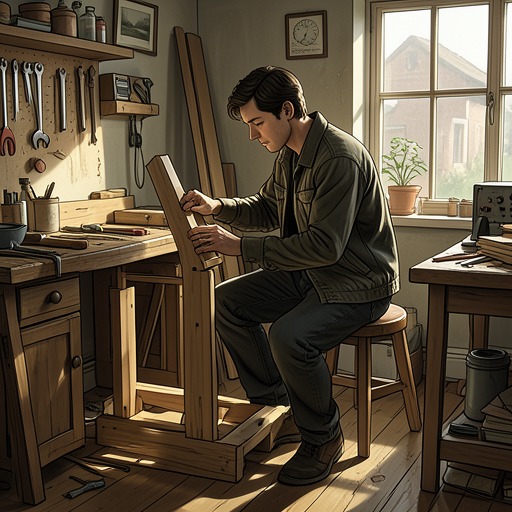
Aleksander approaches the instrument as a professional and finds a conventional but substantial failure: the strings have rusted, the hammer felts need replacing, and the soundboard is damaged. Fortunately, he has all the necessary materials with him. The repair is therefore neither miraculous nor improvised; it is a detailed technical process grounded in the inherited knowledge he learned from his father.
For Aleksander, however, the work carries an unusual emotional intensity. He says that time seems to stand still whenever he repairs a piano. The smell of the old wood and the concentration on the strings allow him to lose himself in the instrument, which seems to him to have a story to tell while he becomes its sole audience. This personifying image shifts the piano from inert equipment toward a presence with a history. The object does not speak literally, but its worn materials invite attention, and repair becomes a form of listening to what damage has preserved and concealed.
The instrument’s breakdown produces a moment of defamiliarization: a piano normally recedes into its function as an object that simply plays, but rusted strings, worn felts, and a damaged soundboard make its physical construction suddenly visible. Aleksander must confront the piano as wood, metal, felt, and labor before it can resume its familiar role as music. His craftsmanship reverses that interruption, restoring the object’s usefulness without erasing the evidence that it has aged and required care. When the work is complete, he states plainly, “All fixed,” and Lysander thanks him.
Memory, Craft, and Narrative Significance
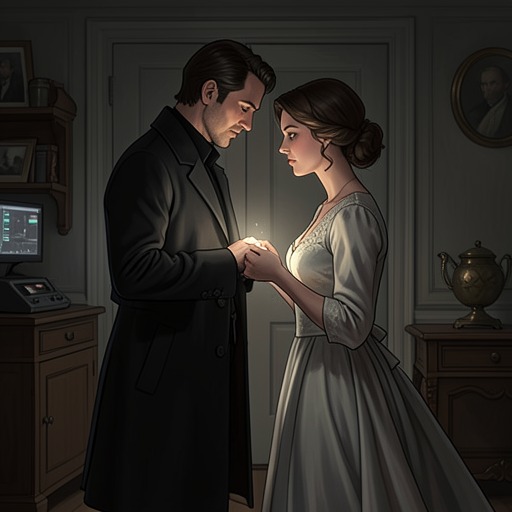
The restoration brings Aleksander into the palace for the first time since his parents died. Walking its corridors recalls accompanying his father to earlier contracts, when his father explained the trade and allowed him to learn by watching and working under advice. The Queen’s piano consequently activates a layered memory: it is a royal instrument in the present, but it also belongs to the professional world through which Aleksander understood his father and inherited his place in society.
That inheritance is complicated by Aleksander’s emotional emptiness. Even as a young vampire, while his parents were still alive, he could find no passion in singing, dancing, painting, or other pursuits arranged to awaken his interest. Repairing the piano is the notable exception. The work gives him absorption where ordinary life gives him desolate weariness, making the instrument a rare channel through which skill, memory, and attention become unified.
The piano therefore stands between continuity and rupture. Its daily playing represents the Queen’s insistence on ceremony; its damaged body exposes the fragility beneath that ceremony; and its repair allows an old family craft to continue inside a palace undergoing ideological transformation. By the time Aleksander leaves the music room, the instrument has been restored, but the encounter has also returned him to the court, to his father’s memory, and to the changing political world that the piano’s music cannot conceal.