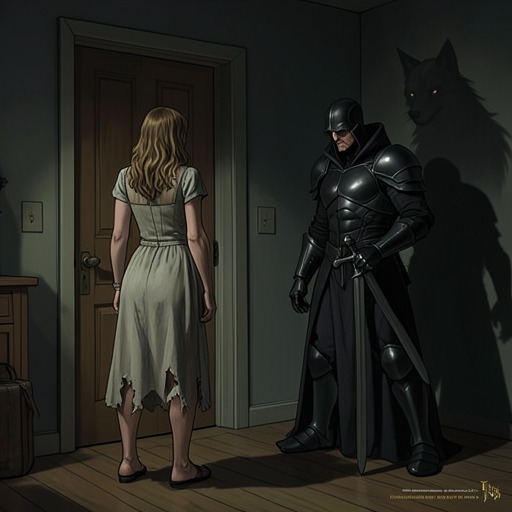
Vampire Attack Near the Breeding Farm
The Vampire's Pet: Romantasy at its darkest (Blood and Kisses Chronicles : A Dark, Gothic Romance Series)The attack near the breeding farm brings the restored vampire laws into intimate, immediate focus: the city’s new system of human captivity is also the setting for Esmeralda’s assault and Aleksander Dumoulin’s intervention.
Political and Personal Context
The attack takes place in a city reshaped by the Queen’s restoration of the old vampire laws. Human breeding farms opened as the laws took effect, while protests against the new order were met with violence or death. Aleksander had accepted the return of human subordination, even as he recognized that the political shift was severe. The breeding farm therefore stands not as a distant policy detail but as a landmark within the changed city, close to the route Esmeralda takes after escaping his mansion. Esmeralda is especially exposed in this environment. She grew up in a reclusive pack of werewolf witches far to the northwest, but was born without either a wolf or magic; in the city, she lacks familiarity with vampire society and its dangers. When she runs from the mansion, she does not know the streets and makes her way toward the outskirts. Her flight brings her near the newly established farm, where the broader violence of the new order becomes a direct threat to her.
Discovery and Intervention
Aleksander is searching for Esmeralda when he hears a woman scream from a street near the farm. The wind also carries the scent of lilac, which directs him to her. He dives down and finds her on the stones, with a blond vampire standing over her. The attacker has pressed a knife to her throat, torn the top of her dress, and wounded her arm; he is poised to feed while she lies injured beneath him. Aleksander orders the vampire away and strikes him with a wave of vampiric power, throwing him off balance. He identifies Esmeralda as his pet and warns the assailant not to touch her. The confrontation thus begins with an attempt to stop an immediate assault, but also exposes the possessive language through which Aleksander understands his responsibility for her.
The Fight and Its Cost
The attacker’s knife finds Aleksander’s shoulder as the vampire lunges at him. Rather than pull away, Aleksander catches the assailant’s hand before he can free the blade and keeps him close, enduring the pain as he strikes him repeatedly in the face. The blows leave the vampire bloodied and nearly unrecognizable. Aleksander’s claim that “Nobody touches what’s mine.” gives the rescue its blunt, possessive force: his defense of Esmeralda is immediate, but he frames her safety as protection of what belongs to him.
When the attacker staggers and Aleksander bares his fangs and lengthens his nails, the threat of another round is enough to make him retreat. The escape ends the immediate danger without making the encounter costless. Esmeralda has a gash on her arm, though Aleksander judges it superficial and expects it to heal quickly with proper care; the knife remains lodged in his shoulder until he grits his teeth and pulls it free. Esmeralda flinches at the sight of his blood, while trying to cover herself and apologizing. Aleksander is furious that she disobeyed and could have died, but postpones their reckoning until they are safe.
The return journey carries the encounter’s danger into a quieter struggle. The mansion is close enough for Aleksander to fly to despite his injury, and he takes Esmeralda in his arms without speaking. Her blood’s tempting smell makes his fangs grow instinctively; he hisses through clenched teeth and resists the urge to feed, choosing instead to get her back and tend to their wounds. At the entrance, Judith and other servants are waiting. The rescue thus ends with both Esmeralda and Aleksander injured, but with the immediate threat behind them and Esmeralda returned to the mansion.
Later Reframing
The attack’s possessive language is later set against a more reciprocal understanding of the relationship. When Esmeralda’s parents learn of the bond between her and Aleksander, Alyson invokes the Moon Goddess and declares that the fated-mate bond is not limited by differences between races. She releases her daughter, who throws herself into Aleksander’s arms while he is battered, bruised, and bleeding. The reunion gives a later meaning to his earlier defense: at the time of the attack he calls Esmeralda his pet and treats her safety as his responsibility, but their bond is subsequently named as something neither ownership nor species difference can fully explain.
Esmeralda’s own decision makes that shift consequential. Alyson warns that becoming a vampire would prevent her from leading the pack; Esmeralda accepts the loss, noting that her brother has always wanted the leadership, and tells Aleksander that she loves him. This later choice does not erase the danger of the street assault or the hierarchy embedded in Aleksander’s possessive claim. Instead, it places the rescue within a larger conflict over Esmeralda’s safety, belonging, and future: the attack first shows Aleksander protecting her as his claimed pet, while the later scenes establish that she can choose him and the life their bond entails.
Predation and Protection
The assault also sharpens an earlier contradiction in Aleksander’s treatment of Esmeralda. He had warned her that vampires would devour her if she lacked a collar and leash; when she moved close, the warmth of her body and the scent of blood in her veins stirred his own predatory appetite. The street attack does not place a predator against a wholly different kind of protector: Aleksander, too, feels the pull of her blood. What changes the outcome is his choice to restrain that hunger and confront the attacker, then resist feeding while carrying her back to safety.
That choice gives the rescue its uneasy force. Esmeralda is endangered as a human pet in a city where humans are treated as prey, yet the vampire who saves her still describes her through ownership. His intervention protects her from another vampire without abolishing the hierarchy that makes such protection necessary. The scene’s immediate reversal—from a wounded woman beneath a knife to an attacker driven off—therefore resolves the danger in the street while leaving the deeper conflict between care and possession intact.