Aleksander Dumoulin’s existential emptiness
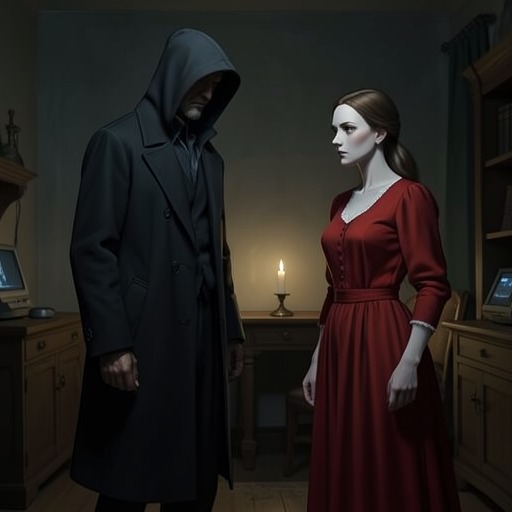
The Vampire's Pet: Romantasy at its darkest (Blood and Kisses Chronicles : A Dark, Gothic Romance Series)Aleksander Dumoulin’s existential emptiness is the persistent sense that something essential is missing, a dissatisfaction that outlasts centuries, material abundance, and physical pleasure. Its decisive change begins when the prospect of acquiring a pet awakens an unfamiliar bodily urgency; through Esmeralda, the emptiness he could neither explain nor cure becomes, for a time, a feeling of fullness and a new capacity for closeness.
A lifelong absence
The feeling predates Aleksander Dumoulin’s adult life. As a young Vampire, even while his parents were alive and providing what he describes as a good childhood and upbringing, he could not identify what was missing. His parents tried to kindle his interest in the world, and, when their efforts failed, called for a doctor. The doctor found no remedy to prescribe beyond private lessons, reasoning that a passion might eventually emerge. Singing, dancing, and painting were among the possibilities his parents arranged, but none took hold. Day followed day in the same desolate weariness.
Centuries later, the absence had not become easier to name. Aleksander had money enough to buy whatever he imagined, yet the objects accumulated in his mansion felt empty, serving only to fill rooms without filling him. Nor did sexual pleasure resolve the lack: he had taken both women and men to bed, but the satisfaction of the flesh left a deeper desire untouched. His account makes the emptiness less a consequence of deprivation than a condition that persists despite having access to possessions and pleasures that might ordinarily promise fulfillment.
The limits of inherited restraint
Aleksander’s family history offers him a way to understand the desire that begins to surface, but not an easy permission to follow it. His mother had taught him that his family preferred Blood Wine because Vampires had become civilized and should not repeat the horrors of the past. She spoke of a time when the human population had been decimated and brought close to extinction; the memory mattered deeply to her, and Aleksander tried to honor the values in which she raised him.
That restraint becomes difficult to maintain after he sees Jason at the castle. The encounter produces a reaction unlike his long-standing numbness: his heart skips several beats, his blood turns hot, and an intense desire moves through him before he can make sense of it. The thought of acquiring a pet, which had never previously occurred to him, suddenly seems to answer a question he has carried for centuries. He wonders whether that is what he has been looking for, while his mother’s warning makes clear why the desire is not emotionally neutral. He is pulled between inherited caution and a newly awakened appetite.
From appetite to acquisition
The practical circumstances sharpen the impulse. Jason appears well cared for and at ease among Vampires at the castle. Because he is already mature, Aleksander reasons that he could not have come from a breeding farm, where Humans would not reach maturity for another twenty years; he concludes that Jason must have come from the pet store. The possibility that had once seemed irrelevant becomes an option he cannot put aside.
Seeing Jason leaves Aleksander craving fresh blood and thinking that he should get a pet. He tries to dismiss the idea as ridiculous and insists to himself that he does not need one, but the desire continues until it becomes an obsession. His family’s preference for Blood Wine no longer satisfies the thirst he describes. Two days after seeing Jason, he is on his way to the Ichoryllia Human Pet Store. The movement from a vague, lifelong emptiness to a concrete errand is striking: for once, desire gives him a direction, even though he initially understands that direction chiefly through acquisition and blood.
Esmeralda and the experience of fullness
After Esmeralda enters his life, Aleksander connects the pet he has acquired with a transformation larger than he anticipated. In an intimate moment, he notices that his shoulder no longer hurts and that it has healed more strongly than usual. Esmeralda asks for more, but he tells her that her body needs rest and offers something else instead. His attention to her condition sits alongside his own desire, and he recognizes that the emptiness which had defined his experience has been filled. He is happy that the laws allowed him to meet her and resolves not to let her leave his life.
That resolution begins in the language of possession: Esmeralda is his pet and, in his perception, a forbidden treasure he is greedily unwilling to relinquish. Yet the relationship develops beyond the immediate satisfaction of fresh blood or physical desire. When Esmeralda asks to sleep in his bed, Aleksander accepts an arrangement he had not considered, having slept alone for hundreds of years. Her warmth against him and her scent in the sheets make sharing his private room feel natural, and he moves her things into it.
A changed daily life
The change is registered through ordinary repetition as much as through the intensity of their first closeness. Although Aleksander needs less sleep than Humans, he goes to bed when Esmeralda does. He waits for her to fall asleep, then listens to her breathing for hours. The man who once tried to fill his mansion with objects now finds meaning in another person’s presence within his room, in a shared bedtime, and in the quiet sound of her breathing.
Their intimacy also becomes a means of disclosure. After centuries, Esmeralda is the first person to whom Aleksander opens his secrets and demons. He finds it natural to speak; as he opens up, she does too. Learning where she has come from deepens his appreciation of her, particularly his recognition that she has endured much and is a fighter. The movement is reciprocal: his new attachment gives way not only to keeping Esmeralda near but also to hearing her history and allowing her to know his.
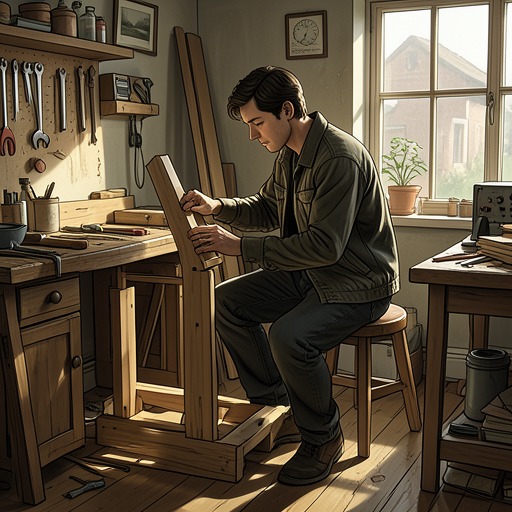
Aleksander continues to leave during the day to work on piano orders or repair a noble’s instrument, and Esmeralda is eager for his return in the evening. That return becomes one of his favorite moments. He imagines that he could grow accustomed to a happy, simple life, a prospect far removed from the restless accumulation and unsatisfied pleasure that preceded her. His emptiness is therefore not presented as solved by wealth, appetite, or acquisition alone. It recedes as his days acquire intimacy, shared space, confidence, and the anticipation of coming home.