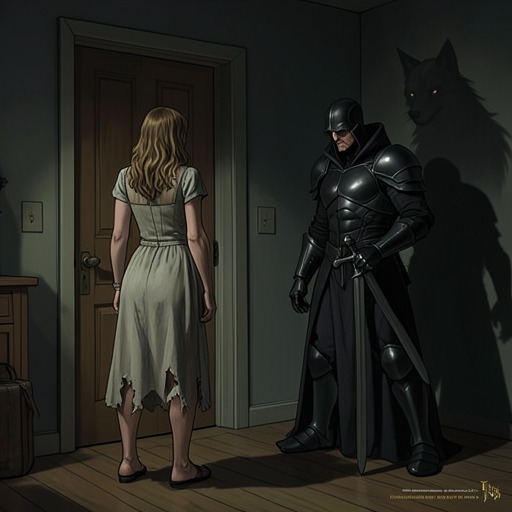
Esmeralda’s status as a vampire pet
The Vampire's Pet: Romantasy at its darkest (Blood and Kisses Chronicles : A Dark, Gothic Romance Series)Esmeralda’s status as a vampire pet places her inside a system that turns human captivity into an ordinary institution, even as her life within it begins to move beyond the role of commodity. Her collar marks that status visibly, while the restrictions and care attached to it reveal the unequal terms on which her relationship with Aleksander first takes shape.
Entry into Pet Status
The arrangement emerges in a kingdom where humans are already being assigned the status of pets. At the palace, Aleksander encounters Jason, a human whom Lysander identifies as the Queen’s new pet. The discovery surprises Aleksander, but it also gives him a glimpse of a changing order: human presence in the castle is not merely tolerated but incorporated into royal life as possession. The palace itself reflects the Queen’s authority, with religious portraits replaced and opposition to her decisions punishable by death. Human pet-keeping belongs to this broader regime of power, rather than appearing as a private custom detached from politics.
Two days later, Aleksander visits the Human Pet Store. The small, dimly lit shop had once sold merchandise for humans; now humans themselves are its merchandise. Cages line the walls, each holding a person with straw, water, and scraps of food. Some occupants sleep, while others cling to the bars in panic. This setting makes the material violence beneath the word “pet” difficult to miss: people are confined and displayed for prospective owners, and the shop’s former purpose sharpens the irony of its transformation.
Among the store’s accessories, Aleksander chooses a black collar decorated with pearls and lace, its front set with a large black gemstone, together with a long black leather leash. He gives the collar to Esmeralda and insists that she put it on. When she hesitates, he holds her gaze and asserts ownership before she complies. The collar therefore functions both as a purchased object and as a visible sign of enforced submission: Esmeralda’s new status is imposed before it can become a relationship she chooses.
Rules of Captivity and Care
At Dumoulin Mansion, Aleksander defines Esmeralda’s new status through a set of explicit rules. She must keep the collar on, may not go outside, and is not to be beaten or bitten by any of the household’s other vampires. He asks Judith to take her to the baths and provide proper clothing, then permits her to choose a book from the library. These provisions distinguish her from the caged humans at the store, but they do not undo the confinement: her safety, movement, and access to the household remain governed by her owner.
Aleksander expects Judith to treat Esmeralda gently, believing that a frightened pet would hide in a corner rather than offer company. His concern is both practical and personal. He intends to drink Esmeralda’s blood once she has grown accustomed to living at the mansion, so he wants her to become comfortable; at the same time, he finds himself anxious about whether she will accept captivity and what she needs beyond food and sleep. After centuries of living alone, caring for another person is unfamiliar to him, and attending to Esmeralda’s happiness awakens a feeling he does not recognize.
The distinction between pet and food becomes a question Esmeralda raises herself. Having overheard a storekeeper tell a customer that pets were of better quality than bred humans, while directing anyone seeking food to the breeding farm, she asks Aleksander what he plans to do with her. He affirms that pets are not intended as food and describes their arrangement as care and companionship. But when she asks whether he will drink from her, he answers that he will, while adding that he wants her to desire it first. His promise of care therefore coexists from the outset with the expectation of feeding on her, leaving the boundary between protected companion and bodily resource unsettled.
Blood, Intimacy, and the Limits of Ownership
Esmeralda’s status as a pet is also defined by the blood Aleksander expects to drink. When she asks whether he intends to feed from her, he confirms that he does, but says he wants her to desire it first. Later, after explaining that fresh human blood strengthens vampires far more than Blood Wine, Aleksander is startled when Esmeralda offers hers. Her offer marks a change from the fear with which she first entered his household, but it takes place within a relationship whose rules he still controls: he tells her that only he may remove her collar, reserving the sight of her bare neck for their intimate moments.
Before the first feeding, Aleksander checks that she is ready and tries to avoid taking too much from the shallow wound on her arm. Esmeralda grips his arm as he bites her neck, and the exchange becomes more than nourishment: he experiences her memories and emotions, including her fear of being caught by vampires and the desire she feels in the moment. The scene joins bodily vulnerability to a new form of connection, without erasing the imbalance that made her blood his to request in the first place.
As the days pass, Esmeralda stops trying to escape, grows joyful and determined, and repeatedly asks Aleksander to drink from her. Her willingness changes the routine of feeding, but it also intensifies his dependence: he describes her blood as increasingly addictive and says he gives himself over to it daily. Their domestic closeness grows alongside this appetite. When Esmeralda asks him to sleep in his bed, he accepts; soon he moves her belongings into his room, sharing a personal space he had kept to himself for centuries. He stays awake beside her, listening to her breathing after she falls asleep. The pet arrangement has not formally disappeared, but its daily practices now include reciprocal desire and intimacy that exceed the detached ownership with which it began.
The Bond and the Limits of Pet Status
The pet arrangement reaches a breaking point when Esmeralda is taken by her werewolf pack and Aleksander is left badly wounded among them. As the pack prepares to attack, he calls her his mate—a declaration that escapes before he can think it through. The language still carries the possessiveness that marked his claim over her as a pet, but it now names a bond with consequences beyond ownership. His insistence on their connection places him in direct danger among a group hostile to vampires.
Alyson, Esmeralda’s mother, stops the pack. She rejects Thomas’s objection that the Moon Goddess would never join a vampire and a werewolf, arguing that the goddess disregards racial divisions and that the fated-mate bond is paramount. Alyson releases Esmeralda, who runs into Aleksander’s arms. Their reunion, while he is battered and bleeding, makes the bond a mutual attachment rather than simply Aleksander’s declaration: Esmeralda tells him she thought she would never see him again, and he answers that he would have gone anywhere to find her.
The bond does not erase the political and familial costs of Esmeralda’s former identity. When the possibility of her becoming a vampire is raised, she accepts that she would then be unable to lead the pack, adding that her brother has always wanted the role. She openly tells Aleksander she loves him, and he returns the confession. Thomas, however, maintains that vampires cannot visit for the pack’s safety. Esmeralda’s status as a vampire pet thus gives way to a contested future as Aleksander’s fated mate: her attachment is affirmed, but joining his world would mean relinquishing leadership and remaining separated from her pack by its prohibition.