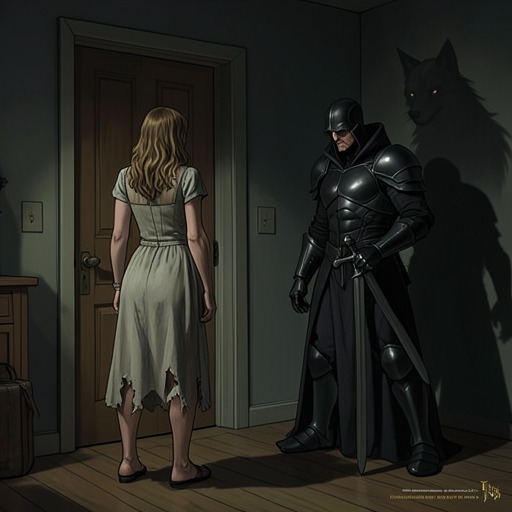
The fated-mate bond between Aleksander and Esmeralda
The Vampire's Pet: Romantasy at its darkest (Blood and Kisses Chronicles : A Dark, Gothic Romance Series)The fated-mate bond between Aleksander and Esmeralda turns a relationship first shaped by captivity and ownership into one explicitly recognized by both lovers and Esmeralda’s family. Its decisive significance lies in the collision it creates between species boundaries, the authority of the pack, and Esmeralda’s choice: she accepts a future with Aleksander even though becoming a vampire would cost her the chance to lead her people.
Origins and apparent impossibility
Esmeralda belongs to Esmeralda’s werewolf-witch pack, a community far from Ichoryllia whose members had little contact with vampires. Yet she was born without either a wolf or magic. Her membership in the pack is therefore familial and communal, not a matter of possessing the traits associated with its name. That difference helps explain why she knows little about vampires, while also making her an unlikely figure through whom a bond between a vampire and a member of a werewolf pack becomes visible.
The bond initially appears impossible to Aleksander because he sees Esmeralda as human. When werewolves take her from his mansion, the force of his response exposes a truth he has not considered: he feels that they have taken not only his pet, but his mate. Recognition arrives as an explanation for his earlier reactions—the distress he felt when she first ran from him and the rage he felt when another vampire attacked her. What had seemed like possessiveness and anger now forms, in his understanding, a pattern of attachment he names as the mate bond.
From pet ownership to intimacy
The relationship begins under an unmistakable imbalance of power: Aleksander has bought Esmeralda as a pet, and she has tried to escape him. He describes their arrangement through the language of human pet-keeping, promising care and companionship while retaining the authority of an owner. When she nervously asks whether he will drink from her, he says that he will, but adds that he wants her to desire it. His words acknowledge her fear while preserving the unequal structure in which her blood is available to him.
That structure shifts, but does not vanish, when Esmeralda later offers her blood. Aleksander is astonished because she had been frightened and trying to flee the day before. He explains that Blood Wine, made from donated blood, can sustain vampires but loses the purity of fresh blood, which also greatly increases their powers, including healing. Against that account of feeding as both nourishment and power, Esmeralda’s offer becomes an intimate decision rather than merely a condition imposed by her status as a pet.
The intimacy remains marked by control. Before feeding, Aleksander tells Esmeralda that she may remove her collar only in front of him, claiming that he alone should admire her exposed skin in those moments. He touches her neck and checks whether she is ready, while holding back because she has never been fed from before. The scene therefore places tenderness and caution beside possessiveness: the developing bond does not retroactively erase the coercive circumstances in which they met.
Recognition in the rescue
The bond becomes urgent after the attack on Aleksander’s home and Esmeralda’s abduction. He realizes that the wolves have taken the one presence that had driven away his emptiness, and the word mate gives that loss a new meaning. He sets out to retrieve her, leaving the damaged mansion to wait. During the confrontation, battered and losing strength, he calls for his mate in front of the pack. The declaration is both a plea to return Esmeralda and a public claim that he understands the relationship to be binding.
Alyson, Esmeralda’s mother, interrupts the pack’s attack and challenges the assumption that the vampire must be her daughter’s enemy. Esmeralda says Aleksander saved her life and treated her well. Alyson’s response changes the immediate conflict: she recognizes the fated-mate bond as more important than the divide between their kinds, and releases her daughter. Esmeralda runs back to Aleksander; despite his wounds, he embraces her, and they tell one another they feared they would never meet again and would have crossed any distance to reunite. The bond is no longer only Aleksander’s private realization: Esmeralda’s return and Alyson’s recognition make it an acknowledged relationship.
Family authority and the cost of choosing
The reunion reveals why the pack pursued Esmeralda so fiercely. She is the daughter of its Alpha, Thomas, and its Luna, Alyson, and is expected to be its next leader. Thomas rejects the possibility that the Moon Goddess would join a vampire to someone of their kind. Alyson counters that the Goddess is not bound by racial divisions and that no bond is purer or more important than that of fated mates. Their dispute sets parental authority and pack identity against a sacred bond that neither parent can simply dismiss.
Alyson accepts that Esmeralda should be with Aleksander if he is truly her fated mate. Thomas instead warns that Esmeralda will die while Aleksander survives for centuries in mourning. Aleksander answers by proposing to turn her into a vampire so that she can live as long as he does; Thomas objects, but Esmeralda agrees. Alyson asks whether her daughter understands that there is no going back, then accepts the decision of the Moon Goddess despite the pain it causes her. The choice has a concrete consequence: Esmeralda will not be able to lead the pack as a vampire. She accepts that loss, noting that her brother has always wanted to lead.
Esmeralda’s declaration of love makes clear that her decision is not presented solely as a negotiation between parents or a solution to Aleksander’s fear of outliving her. She tells him she loves him, and he returns the declaration. Thomas remains opposed to vampire access to the pack for its safety, but Alyson says she will visit Esmeralda in Ichoryllia and can defend herself with magic despite having no wolf. Their family is not simply reconciled: the bond secures Esmeralda’s choice and her mother’s support, while leaving a continuing boundary between the vampire and the pack.
Significance of the bond
The relationship’s progression depends on repeated changes in how Esmeralda is named and treated: as a purchased pet, as a source of blood, as the Alpha and Luna’s daughter and prospective leader, and finally as Aleksander’s mate and a woman who chooses to remain with him. These descriptions do not carry equal power. The mate bond becomes a challenge to both vampire-werewolf hostility and the original owner-pet arrangement, but the story makes its recognition occur alongside Esmeralda’s expressed choices: she offers her blood, returns to Aleksander, accepts the proposed transformation, and gives up leadership.
The resolution does not make the consequences disappear. Esmeralda’s future as a vampire separates her from the leadership role she was expected to inherit, Thomas refuses to permit vampires to visit the pack, and the lovers’ shared future depends on a transformation with no return. The bond thus joins personal devotion to a costly change in communal identity. Its force is measured not just by Aleksander’s certainty when Esmeralda is taken, but by the family conflict it brings into the open and the future Esmeralda knowingly chooses.