Vampire Pet System
The Vampire's Pet: Romantasy at its darkest (Blood and Kisses Chronicles : A Dark, Gothic Romance Series)The Vampire Pet System is the institution through which humans are captured, displayed, sold, and kept as vampire pets under the restored vampire laws. It places human life inside a hierarchy that distinguishes domesticated pets from food and treats ownership as a legitimate form of protection. The system’s contradiction is central to its meaning: it can spare a human from immediate slaughter while still reducing that person to property, and its language of care can coexist with cages, restraints, restricted movement, and the threat of predation.
Emergence Under the Restored Laws
The system appears in the transformed political landscape created when the Queen reinstated the old vampire laws. Human breeding farms opened on the same day, and the city’s former human population, once visible in the streets and employed in blood banks, was replaced by a more tightly controlled order. Some vampires protested the laws and were met with violence or death, while others, including Aleksander Dumoulin, welcomed the restoration of a hierarchy in which humans no longer occupied an equal social position.
The pet system is therefore not an isolated retail practice. It belongs to a broader regime that also includes breeding farms, the suppression of opposition, and the reclassification of human beings as a managed resource. Aleksander’s family had traditionally favored Blood Wine and regarded abstention from direct feeding as evidence of civilization, remembering the earlier dark times when human numbers had been reduced almost to extinction. Yet the new laws awakened in him an older predatory instinct. The system made that instinct socially permissible, giving private desire a legal and commercial structure.
The institution also develops alongside changes in the kingdom’s official culture. In the royal palace, portraits of Hecate, the mother of vampires, were replaced by images of Alastor, the demon and spirit of vengeance, while the Queen’s change of official religion and punishment of opposition made dissent dangerous. The pet system thus operates within a political order that controls not only bodies and blood but also public symbols and permissible belief. Its apparent normality depends on the same coercive authority that makes resistance punishable.
Market, Classification, and Material Practice
The clearest public face of the system is the human pet store. Aleksander reaches it two days after seeing Jason, the Queen’s new pet, at the castle. Jason’s presence matters because he is visibly cared for, comfortable around vampires, and associated with music rather than immediate consumption. Aleksander had never previously considered acquiring a pet, but Jason gives form to a desire that quickly becomes an obsession. Fresh blood, not Blood Wine, begins to seem like the answer to the emptiness he has carried through centuries of living alone.
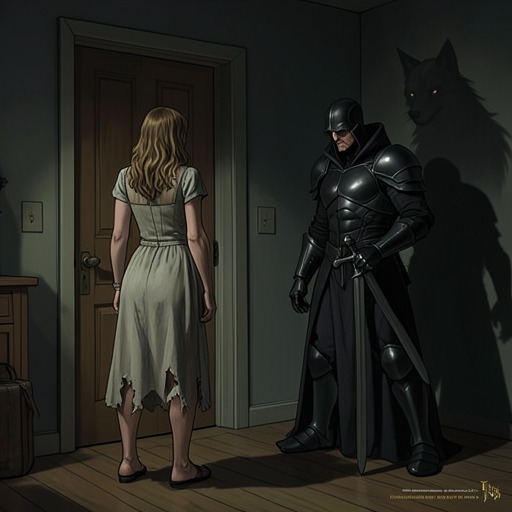
The store itself exposes the institution’s commercial underside. It occupies a former business that once sold merchandise for humans, an irony sharpened by its new function: the shop now sells humans. Its dim interior smells of urine, and cages line the walls. Each cage contains a human, straw, a bowl of water, and food scraps; some occupants sleep, while others cling to the bars in panic. The owner admits that the store is untidy because the pets urinate outside their cages. The scene makes bodily waste part of the system’s visible reality, contradicting the polished language of civilized ownership with confinement, odor, and neglect.
The store also classifies humans by origin, age, health, and use. The adults on display were captured in the city, while humans produced on the farms are still babies and will not mature for another twenty years. This distinction separates the pet market from the breeding-farm economy without making either humane. The store offers adults as immediately available commodities; the farms promise a future supply. Most of the displayed humans are women, and Aleksander judges them as merchandise, examining their bodies and deciding that some are attractive but do not appeal to him.
Accessories make ownership visible and portable. The proprietor offers collars, leashes, toys, clothes, and other goods, and Aleksander selects a black collar decorated with pearls and lace, bearing a large black gemstone, together with a long black leather leash. The objects do more than adorn the human body. They mark possession, signal status to surrounding vampires, and help define the pet as an object whose safety depends upon remaining legible as someone’s property.
Esmeralda’s Purchase and Domestic Enforcement
Esmeralda enters the system as a captured adult whose identity and history are initially unknown to Aleksander. When the store owner raises a whip against her, Aleksander intervenes, not because he rejects the institution but because he wants the particular human he has chosen. He orders the owner not to hurt the pet in whom he is interested. Esmeralda gives her name only after the confrontation, while her frightened gaze moves between the owner and Aleksander.
The transaction is sealed through the collar. Aleksander gives Esmeralda the black gemstone collar and commands her to put it on. When she hesitates, he asserts ownership and demands obedience; she eventually slips the leather around her neck, and he praises her as a good girl. The moment condenses the system’s central mechanism. Her apparent protection from the whip is secured through another form of domination, and her body becomes safer from some immediate violence precisely by being claimed by a vampire with greater power.
Aleksander takes Esmeralda to Dumoulin Mansion and establishes rules for her treatment. His servants are told not to beat or bite her, to keep the collar on at all times, and to prevent her from going outside. He sends Judith to bathe her and provide proper clothing, while allowing Esmeralda access to books in the library. These instructions create a domestic version of regulation: the pet receives food, hygiene, clothing, and supervision, but not freedom of movement or control over the terms of residence.
The system’s protective language is inseparable from its predatory purpose. Aleksander believes Judith should be gentle because a frightened pet would hide in a corner and provide little company. He also intends eventually to drink Esmeralda’s blood and wants her healthy so that feeding will have minimal consequences. When Esmeralda asks what he plans to do with her, he confirms that pets are not intended as food, distinguishing the pet from a human raised at a breeding farm, but he does not thereby recognize her as free. The distinction is between forms of use, not between use and autonomy.
Captivity, Care, and Possessive Attachment
Esmeralda’s placement in the mansion gradually alters the practical meaning of the institution without removing its coercive structure. At first she is a captive who has tried to escape. Aleksander watches her closely, knows that she is unfamiliar with vampire customs, and worries about whether she can adapt to captivity. His uncertainty about what a human needs beyond food and sleep reveals how completely his household has been organized around solitary vampire life.
Esmeralda’s background complicates the system’s classifications. She comes from a remote pack of werewolf witches, although she was born without a wolf or magic. Her pack had sent her north to an elven city to negotiate with a magic guild, but she was captured while walking in the forest near Ichoryllia. She is therefore neither a city human produced for the market nor a culturally assimilated human familiar with vampires. Her lack of knowledge makes the pet system appear newly and violently strange to her, while her connection to a werewolf-witch pack gives her a social identity that the store’s categories erase.
Aleksander’s care becomes increasingly intimate and increasingly possessive. He notices that the store has not fed her properly and urges her to eat so that she will be healthy. He forbids others from biting or beating her, yet he reserves her blood for himself and describes her through the logic of ownership. When a vampire later attacks her, Aleksander responds with extreme violence, defending her as something that belongs to him. The declaration that nobody touches what is his expresses both protection and possession: the pet’s body is defended not as an autonomous body but as property under the owner’s exclusive claim.
Over time, Esmeralda stops trying to run away and becomes joyful and determined in the manor. She repeatedly asks Aleksander to drink her blood, and he becomes intoxicated by the experience, surrendering to the addictive quality of her blood as she sings his name. She asks to sleep in his bed, and he moves her belongings into his room. Though he needs less sleep than a human, he goes to bed when she does and listens to her breathing for hours. These scenes make the system’s domestic promise emotionally persuasive, but they do not erase its origin: the relationship began with capture, purchase, a cage, a collar, and an order that she was forbidden to leave.
Crisis and Exposure of the System
The system’s deepest contradiction becomes visible when Esmeralda’s werewolf-witch pack attacks the vampire city and takes her from the mansion. Aleksander realizes that the pack’s recovery effort indicates that she is far more important than an ordinary market captive. He later learns that she is the daughter of Thomas and Alyson, the Alpha and Luna, and the next leader of the pack. Her value within her own community exposes the inadequacy of the store’s classification: the human labeled a pet is also a daughter, an heir, and a central member of a political family.
The abduction forces Aleksander to recognize the difference between possession and relationship. He experiences Esmeralda’s removal as the loss of the person who had driven away his emptiness, and only then identifies her as his mate. He connects his distress at her attempted escape, his rage when another vampire attacked her, and his immediate fixation upon seeing her in the store. The pet system had supplied the language through which he first approached her, but the crisis reveals a bond that exceeds the market category.
The confrontation with the pack makes the system’s moral history explicit. Alyson initially regards Esmeralda as a prisoner who may have been mistreated, a judgment supported by the facts of her first night at the mansion. Aleksander is forced to acknowledge that Esmeralda had indeed been a prisoner then, even though she later chose to remain with him. This admission preserves the institution’s original violence rather than allowing affection to rewrite it. Her subsequent preference does not make the purchase non-coercive; it marks a change in the relationship after captivity has already shaped the available choices.
Alyson’s defense of the fated-mate bond further destabilizes the hierarchy on which the pet system rests. She argues that the Moon Goddess is indifferent to racial boundaries and that the bond between fated mates is purer and more important than the objections of Esmeralda’s father, Thomas. Esmeralda returns to Aleksander despite his injuries, and the pair reaffirm their attachment. The scene does not abolish the vampire institution, but it shows its categories being challenged by kinship, pack authority, and a supernatural bond that refuses to respect the division between vampire and human.
Structural Significance
The Vampire Pet System transforms violence into administration. Cages, food scraps, accessories, collars, leashes, household rules, and distinctions between pets and farm-bred humans make domination appear organized rather than chaotic. Its market offers selected humans a form of protection from some forms of abuse, but that protection is purchased through ownership and remains dependent on the owner’s power. The system therefore produces a hierarchy in which a human can be spared as an individual while still being denied full personhood.
Its vocabulary also stabilizes contradictory classifications. Humans are described as prey, food, pets, daughters, and mates, with each category carrying different permissions and dangers. The smell of urine in the store, the scent of blood in the mansion, the black gemstone collar, and the wounds inflicted during conflict repeatedly return the reader to the body beneath the institution’s polite terminology. Sensory signs expose what official categories try to conceal: the pet is a living body subject to hunger, fear, injury, desire, and claims made by competing communities.
The relationship between Aleksander Dumoulin and Esmeralda gives the system its most complicated narrative function. It is the mechanism that brings them together and the social vocabulary through which Aleksander first understands his desire, yet it is also the structure that makes Esmeralda’s captivity possible. As his attachment deepens, care begins to undermine the purely consumptive logic of ownership, but possessive language remains. The story consequently presents the pet system neither as simple protection nor as a framework neutralized by romance. It is a coercive institution whose domestic intimacy can become genuine while its original inequality continues to shape every claim of safety, choice, and belonging.