Vampires
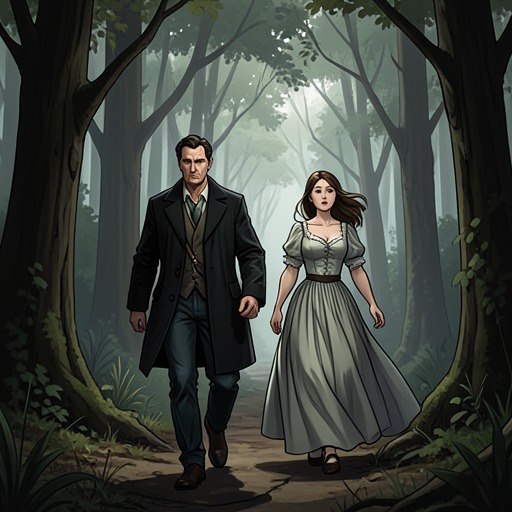
The Vampire's Pet: Romantasy at its darkest (Blood and Kisses Chronicles : A Dark, Gothic Romance Series)Vampires form the ruling supernatural population of Ichoryllia, and their society determines the political and moral order surrounding every other group. They possess immense longevity, heightened physical abilities, fangs, and a biological dependence on blood; yet the novel also shows them as aristocrats, artisans, rulers, servants, consumers, parents, and lovers. Their civilization is therefore marked by a sharp contradiction: refined institutions and inherited culture coexist with the treatment of Humans as prey, property, and a regulated resource.
Nature and Physical Conditions
Vampires can live for centuries. Aleksander Dumoulin has walked the streets of Ichoryllia for hundreds of years, while still describing himself as a young vampire at 215 when recalling the period of his early professional training. Such longevity gives the species a long historical memory, but it does not guarantee fulfillment. Aleksander recalls a comfortable childhood, capable parents, wealth, sexual experience, and years of attempts to discover a passion, yet none of these relieved the emptiness that had followed him from youth. His condition demonstrates that immortality can produce not only power but also a persistent, almost existential dissatisfaction.
Blood is the central biological and cultural substance of vampire life. Blood wine, made from donated blood, allows adult Vampires to survive without sacrificing Humans, but it is explicitly described as less pure than fresh blood. Fresh blood can increase a vampire’s powers tenfold and accelerate healing, making it both nourishment and a source of heightened strength. When Aleksander encounters Esmeralda, the sound of her heartbeat and the scent of blood awaken a primal response that civilized habits had kept partially contained. After she voluntarily offers her blood, the act becomes physically intimate and psychically invasive: the bite creates a connection through which emotions and memories pass between them, while Aleksander struggles not to drink enough to injure her.
The body of a vampire is also presented as an instrument of violence. Aleksander can unleash vampiric power as a force that throws an attacker off balance, and his fangs and sharp nails become weapons in combat. During the confrontation with Thomas and the werewolf pack, he is bitten and clawed from every side but continues fighting because the need to reach Esmeralda overrides concern for his own wounds. The species’ physical power is thus inseparable from the danger it poses, even when that power is redirected toward protection.
Society, Law, and Hierarchy
The status of Vampires is reinforced by a political order that places Humans beneath them on the food chain. After the Queen reinstates the Old Vampire Laws, Ichoryllia changes almost immediately: Human Breeding Farms open, the city falls into disarray, and Humans who had previously worked openly in blood banks largely disappear from the streets. The speed of the transformation leads Aleksander to suspect that the new institutions were planned in advance and connected to corruption at the highest level. The law therefore appears not as a spontaneous return to tradition but as a coordinated system linking government, supply, commerce, and violence.
The new regime provokes resistance among Vampires as well as suffering among Humans. Hybrid families are torn apart, and some Vampires protest in the streets. The Queen suppresses opposition through violence or death, cutting short any possible revolution and making silence a condition of survival. Aleksander recognizes the danger of speaking openly against the regime, particularly when opposition is punishable by death, but he personally welcomes the restoration of predatory hierarchy. His approval exposes the difference between political dissent within vampire society and ethical concern for Humans: he can regard the Queen’s methods as corrupt while still accepting the subordination she imposes.
The regime also alters the kingdom’s religious landscape. Portraits of Hecate, identified as the mother of Vampires, are replaced in the castle by images of Alastor, a demon and spirit of vengeance. Servants repaint rooms and change curtains and chandeliers as the palace is refashioned around the new order. Even Aleksander, who is not religious, understands that the replacement is significant and dangerous. Official religion becomes another instrument of royal power, while the threat of death makes private judgment safer than public speech.
The system depends on institutional classification. The Human Pet Store Aleksander visits occupies a building that once sold merchandise for Humans and now sells Humans themselves. Its cages contain adults captured in the city, while Humans raised on the farms are still babies. The arrangement turns living beings into inventory and converts the old distinction between person and commodity into a visible commercial practice. The cages contain straw, water, and food scraps, but the basic provisions do not challenge the underlying ownership: they merely maintain bodies that can be consumed or possessed.
Predation and the Human Boundary
Vampire attitudes toward Humans range from inherited restraint to open contempt. Aleksander’s mother taught him that his family was civilized and had moved beyond the brutal history of their ancestors, when the Human population had been reduced almost to extinction. Blood wine represented that compromise with the past. Yet the restoration of the Old Vampire Laws revives his attraction to capture and prey, and the sight of Humans being seized in the streets makes him feel alive. He insists that he does not hate Humans, but his language reduces them to a natural category beneath Vampires, a position that allows domination to appear inevitable rather than politically constructed.
The pet system makes predation domestic and personal. In the store, Aleksander judges the caged Humans by appearance, smell, and immediate desire. He is repulsed by a pot-bellied man who smells of sweat, passes over two attractive women, and hesitates before a young, freckled man with long curly brown hair and blue eyes. The scene reveals a marketplace in which human bodies are inspected like merchandise, while the buyer’s supposed individual preference masks the coercion governing every choice.
Esmeralda’s purchase intensifies the contradiction between possession and care. As a Human from a secluded pack of Werewolf Witches, she knows little about Vampires and does not initially understand why Aleksander expects obedience. He uses the threat of dragging her back to compel her compliance, then places a collar and leash on her. Outside the store, he tells her that other Vampires would devour her without those markers of ownership and protection. The collar therefore performs two functions at once: it identifies her as property and makes her legible as someone already claimed by a powerful vampire.
Aleksander’s response to Esmeralda’s captivity is not simple indifference. He worries about feeding, sleep, adaptation, and whether she can accept life in confinement; caring for another person is unfamiliar after centuries of living alone. Her presence awakens a new sweetness and excitement in him, even though he initially intends to drink her blood once she becomes comfortable. The emotional change does not erase the coercive structure. Instead, the novel places tenderness inside an institution built on capture, ownership, and the reduction of Humans to food or pets.
Conflict with Other Supernatural Groups
Relations between Vampires and Werewolves are defined by mutual suspicion and limited contact. Esmeralda explains that she was raised in a pack of Werewolf Witches far to the northwest, although she was born without a wolf form or magic. Aleksander understands that such packs generally avoid vampire cities, while other packs maintain only minimal contact. Her unfamiliarity with vampire customs is therefore connected to a wider territorial and cultural separation rather than mere personal ignorance.
The conflict becomes physical when the pack returns for Esmeralda. Thomas, the Alpha, transforms from a man into a huge wolf, with his snout and mouth lengthening, muscles swelling, clothes tearing, a tail extending, and hair covering his body. The transformation shocks Aleksander because it is the first he has witnessed. Thomas’s greater size identifies him as the Alpha, and at his command the pack attacks. The scene reverses the usual image of Vampires as unchallenged predators: Aleksander is surrounded, bitten, clawed, and covered in blood and spit, while the werewolves’ collective strength threatens to overwhelm even his supernatural abilities.
Alyson, the Luna and Esmeralda’s mother, interrupts the conflict through a different kind of authority. She questions Thomas’s right to challenge his Luna’s choices and reveals that Esmeralda is the daughter of both pack leaders, the next leader of the pack, and one of its most valuable members. The family’s recovery attempt is consequently driven by lineage and succession as well as parental love. Yet Alyson’s interpretation of the fated-mate bond changes the conflict’s meaning: she argues that the Moon Goddess disregards racial boundaries and can unite a Werewolf Witch’s daughter with a vampire. A supernatural rule of kinship and destiny thus contests both vampire law and werewolf expectations.
Contradiction and Narrative Significance
Vampires embody the book’s unstable boundary between civilization and savagery. Their aristocratic titles, royal employment, piano-making traditions, blood wine, architecture, and cultivated interiors suggest refinement. Their cities also contain breeding farms, blood banks, pet shops, cages, collars, captured bodies, and lethal enforcement. The species’ polished social surface does not eliminate predation; it organizes predation into law, commerce, religion, and household routine.
Their blood practices make that contradiction especially visible. Urine in the pet store produces disgust, while fresh blood produces hunger, power, healing, and erotic connection. Wounds are signs of vulnerability in the attack on Esmeralda and signs of intimacy in the first feeding between her and Aleksander. The same bodily substance can be treated as contamination, commodity, medicine, weapon, or the basis of a bond, depending on who controls it and how it crosses the boundary between species.
The novel also refuses to let vampire identity remain biologically fixed or politically self-evident. The Queen’s restored laws claim to revive an ancient natural order, but the simultaneous opening of Human Breeding Farms and the replacement of the kingdom’s official religion reveal a modern process of institutional production. Meanwhile, the fated-mate bond joins a vampire and a member of a Werewolf Witches pack despite the racial rules that both communities use to define themselves. Vampires are therefore both the guardians of rigid boundaries and the beings most capable of crossing them through blood, violence, desire, and supernatural attachment.