Werewolf Witches
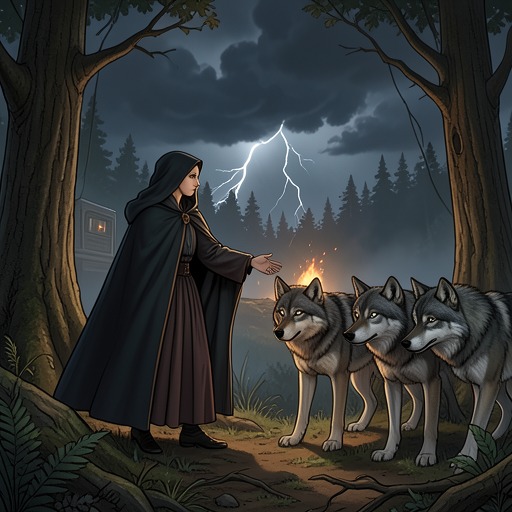
The Vampire's Pet: Romantasy at its darkest (Blood and Kisses Chronicles : A Dark, Gothic Romance Series)Werewolf Witches are the reclusive pack-community in which Esmeralda was raised, a group defined by both wolf lineage and witchcraft but also marked by internal difference. Their importance extends beyond background: the pack’s customs, family hierarchy, and response to Esmeralda’s capture drive the central conflict between the vampire city and the werewolf world, while the revelation of her bond with Aleksander challenges the assumption that racial boundaries determine destiny.
Identity and Social Position
Werewolf Witches are presented as a distinct supernatural people living far to the northwest, apart from the vampire city of Ichoryllia. Esmeralda describes herself as having grown up in a pack of Werewolf Witches, yet she was born without either a wolf or magic. Her lack of transforming ability and witchcraft does not erase her membership in the community; she remains connected to it through birth, residence, and family. At the same time, her difference leaves her unfamiliar with basic vampire customs, including the fact that vampires consume foods other than blood.
The pack is characterized by seclusion rather than open exchange. Aleksander understands that Werewolf Witches are not fond of vampires, just as vampires return that hostility, although the two peoples are technically at peace. Most packs avoid the vampire city, while some maintain only minimal contact. Esmeralda’s answers lead Aleksander to suspect that her own pack belongs among the more isolated groups, explaining both her ignorance of vampire society and the sharp distance between her upbringing and the world into which she has been sold.
Family, Authority, and Membership
The pack is organized around a strong family and leadership structure. Esmeralda is the daughter of Thomas, the Alpha, and Alyson, the Luna. This makes her not merely a missing member but the next leader of the pack and, after her parents, probably its most valuable member. Her position explains why the Werewolf Witches refuse to accept her disappearance as a private misfortune: her recovery is a matter of succession, collective continuity, and parental obligation.
Alyson’s authority is expressed through her ability to challenge Thomas even while he is Alpha. When he questions her decision, she asks, “Since when do you question your Luna’s choices?” The exchange shows that pack governance is not reduced to Thomas’s authority alone. Alyson’s position gives her an independent voice in decisions affecting both the group and their daughter, while Thomas frames those decisions through his duty to protect the pack. Their disagreement therefore joins family feeling to public leadership rather than separating the two.
The pack’s obligations are also presented as reciprocal. Thomas argues that he bowed to protect everyone in the pack when he became Alpha, and that Alyson did the same. This principle helps explain the force of their response to Esmeralda’s capture: protecting one member, especially the heir, is part of the office they hold. Yet the same duty creates pressure when Esmeralda chooses a life that may remove her from succession.
Conflict with the Vampire Order
The Werewolf Witches become active opponents of the vampire household when they come to rescue Esmeralda. Judith reports that they destroyed everything while the servants tried to protect her. The attack occurs in the middle of the vampire city and in broad daylight, a scale and boldness that astonish Aleksander. He had expected that the pack might eventually find Esmeralda, but the prolonged delay had led him to believe that they would never come for her. Their intervention proves that her disappearance remains known and consequential within the pack.
The conflict is intensified by the unequal status imposed by the vampire regime. Esmeralda has been placed in a human pet store, confined among caged Humans, and treated as a purchasable object within a society that has restored the old vampire laws. Aleksander himself initially responds to her as prey, hearing her heartbeat, imagining her blood, and using a collar and leash to move her through streets where other Vampires might devour her. The pack’s attack therefore confronts not only one vampire household but a wider order that classifies vulnerable bodies according to species and usefulness.
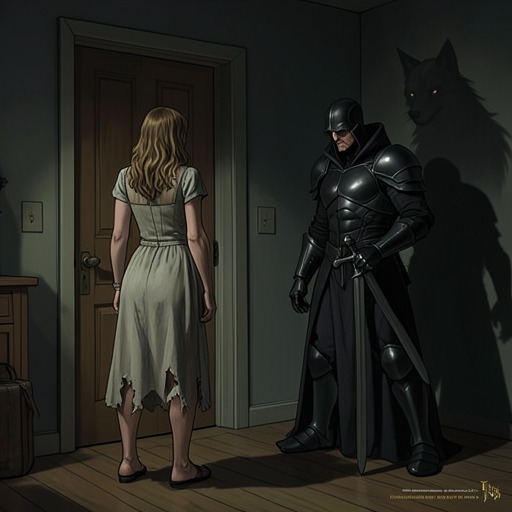
The danger surrounding Esmeralda is made explicit when Aleksander finds her outside the mansion. A blond vampire has torn her dress, cut her arm, pressed a knife to her throat, and lowered his fangs in preparation to feed. Although this attacker is not identified as a member of the pack, the scene clarifies the threat from which Esmeralda’s origins and family seek to retrieve her: within the vampire city, her status leaves her exposed to possession, violence, and consumption.
The Fated-Mate Challenge
The pack initially approaches the vampire relationship through the language of racial prohibition. Thomas rejects the idea that a vampire could be joined to one of their kind, insisting that the Moon Goddess does not mate such opposing races. Alyson counters that the goddess is not governed by species boundaries and that the bond of fated mates is more important than those divisions. Her intervention places supernatural law above the assumptions of pack prejudice and transforms the confrontation.
This dispute reveals a layered legal and moral order. The Queen’s restored vampire laws and the official replacement of the kingdom’s religion attempt to regulate bodies, species, and acceptable belief through political power. The Werewolf Witches possess their own pack authority, expressed through the offices of Alpha and Luna. Above both systems stands the Moon Goddess’s apparent power to establish a fated bond that neither racial convention nor political decree can simply cancel. Esmeralda’s case becomes a contest over which rule has the greatest legitimacy.
Alyson ultimately accepts that order even though it wounds her as a mother. She tells Esmeralda that choosing vampirism means she will no longer be able to lead the pack. Esmeralda accepts the loss of succession, noting that her brother has always wanted to lead, and declares her love for Aleksander. The decision does not erase her connection to the pack; instead, it changes the terms on which she belongs to it. Her birth and family remain werewolf-witch foundations, while her chosen future follows the bond recognized by the Moon Goddess.
Narrative Significance
Werewolf Witches function as more than an opposing species. They expose the instability of the classifications enforced by the vampire world: Esmeralda is born into a Werewolf Witch pack without wolf or magic, becomes a Human identified as a vampire pet, and is then recognized as Aleksander’s fated mate despite the supposed impossibility of a cross-racial bond. Each designation is imposed by a different authority, and none fully contains her.
Their presence also supplies the story’s strongest counterweight to the vampire hierarchy. The vampire regime presents domination as natural, restoring Humans to a lower place on the food chain and treating resistance as punishable by violence or death. The pack’s rescue effort answers that regime with collective loyalty, family protection, and a competing conception of obligation. Yet the pack itself is not free of hierarchy: Esmeralda’s value is tied to her place as the Alpha and Luna’s daughter and potential successor. The narrative therefore presents Werewolf Witches as both a refuge from vampire ownership and a community whose duties can constrain individual choice.
By the end of the confrontation, the pack’s recognition of Esmeralda’s decision makes the cross-species relationship possible without pretending that the cost is negligible. Alyson accepts the Moon Goddess’s decision, while Esmeralda relinquishes the right to lead and chooses Aleksander. Werewolf Witches consequently stand at the center of the novel’s negotiation between inherited identity and chosen attachment, between communal law and sacred exception, and between the violent categories imposed by society and the relationships that exceed them.