Ichoryllia Human Pet Store
The Vampire's Pet: Romantasy at its darkest (Blood and Kisses Chronicles : A Dark, Gothic Romance Series)Ichoryllia Human Pet Store is a small, dimly lit business in the streets of Ichoryllia where humans are confined, displayed, and sold as vampire pets. Its most decisive significance is the way it converts bodily need into commerce: Aleksander Dumoulin enters seeking a source of fresh blood and leaves with Esmeralda, a transaction that initially defines her as property but later becomes the starting point for protection, blood exchange, and the recognition of a fated-mate bond.
Setting and Social Context
Ichoryllia Human Pet Store lies beyond a route marked by gray street stones, a tavern, a blood bank, and other shops. The building is not large, and its handwritten sign carries an irony that exposes the surrounding society’s moral reversal: the premises once specialized in merchandise for humans, but now sell humans themselves. Its existence belongs to a kingdom in which the Queen has altered the official religion, opposition may be punished by death, and the older memory of the Dark Times still shapes vampire attitudes toward human survival.
That historical contradiction is present in the store’s trade. Aleksander Dumoulin’s mother had taught him that his family was civilized because vampires had moved away from the practices that nearly exterminated the human population, preferring Blood Wine instead. Yet his appetite for fresh blood becomes so persistent that he travels to the shop only two days after seeing Jason at the castle. The store therefore makes visible the gap between a family’s self-image as restrained and civilized and a wider system that has made living humans available as purchasable sources of blood.
Interior and Conditions
The shop is poorly maintained. When Aleksander Dumoulin enters, the smell of urine makes him wrinkle his nose, and the owner admits that the pets urinate outside their cages. Cages line the walls, each containing a human, straw, a bowl of water, and scraps of food. Some captives sleep; others cling to the bars in panic. The arrangement places bodies, waste, hunger, and surveillance in one confined commercial space, making the humans resemble inventory while also emphasizing the violence required to keep them available for sale.
The humans Aleksander Dumoulin examines are adults who appear healthy, and most are women. The owner explains that they were captured in the city, whereas humans produced on a farm are sold only as babies. This distinction reveals that the store is not an isolated aberration but one outlet of a larger supply system involving capture, breeding, and differentiated forms of human commodification. Aleksander Dumoulin’s silent judgment of the shop’s filth does not challenge that system; his disgust concerns the condition of the merchandise rather than the existence of the cages.
Esmeralda’s Selection and Purchase
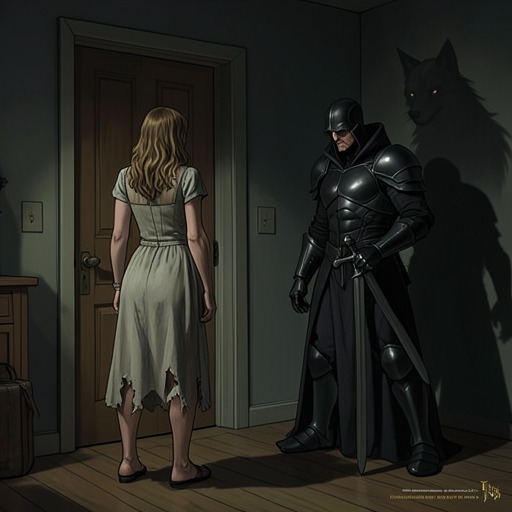
Aleksander Dumoulin does not know exactly what he is seeking, but he expects recognition when the right person appears. He rejects a pot-bellied man because of his greasy hair and smell, pauses over a freckled young man with long, curly brown hair and blue eyes, and passes two attractive women without finding what he wants. At the back of the store, he sees Esmeralda: a woman with long black hair and large brown eyes marked by defiance. Her torn rags provoke disgust at the owner’s treatment of her, while her gaze distinguishes her from the other captives in his eyes.
When Esmeralda gives her name, Aleksander Dumoulin repeats it with possessive approval and decides to take her. The owner treats the choice as a successful purchase, while Esmeralda screams in protest. Aleksander Dumoulin frames the alternative as remaining in a cage in a store that reeks of urine, but the offered choice is constrained by captivity, danger, and the lack of any free route out of the shop. The scene consequently preserves both sides of the transaction: Esmeralda is not merely passive, because she expresses refusal and defiance, yet the shop’s structure ensures that her resistance cannot initially prevent her sale.
The purchase includes equipment designed to mark and manage ownership. Aleksander Dumoulin selects a black collar decorated with pearls and lace and centered on a large black gemstone, together with a long black leather leash. He gives the collar to Esmeralda and orders her to put it on. When she hesitates, he closes the distance between them, holds her fiery stare, and declares, “Whether you like it or not, you’re mine! Now obey and put this collar on.” She complies, and the gemstone appears to him to complement her. The collar thus functions simultaneously as merchandise, restraint, visible status marker, and the first emblem of the possessive relationship he is trying to impose.
From Commodity to Blood Bond
The store’s commercial logic continues to shape Aleksander Dumoulin’s first perception of Esmeralda after the purchase. He warns her that vampires would devour her if she had neither collar nor leash, and her widened eyes suggest that she does not come from Ichoryllia and lacks knowledge of vampire customs. When she moves close enough for him to feel the warmth of her body against his coldness, the scent of her blood intensifies his appetite. In that moment she is still described through the language of prey, even as the physical proximity begins to unsettle the clean boundary between owner and owned.
Esmeralda later identifies herself as someone raised in a pack of werewolf witches far to the northwest, though she was born without either a wolf or magic. Aleksander Dumoulin asks how she was caught and presents her capture as the luck that enabled him to buy such a lovely pet; Esmeralda rejects that description. Her answer exposes the coercive foundation of the store’s market: what appears to be a fortunate acquisition for the buyer is an abduction from the perspective of the person sold.
The relationship changes after Aleksander Dumoulin saves Esmeralda and is injured. She offers her blood because she believes he would have died without her and because she feels responsible for his wound. Unlike the purchase, this exchange is presented as a voluntary act of repayment, although it remains entangled with the unequal relationship created in the shop. When Aleksander Dumoulin accepts, he drinks from her neck and experiences her blood as uniquely powerful, while the bite produces a connection through shared emotions and memories. The original commercial object becomes a participant in a reciprocal bond, but the earlier language of possession does not disappear.
Afterlife of the Store’s Claim
The store’s ownership logic is later echoed when Aleksander Dumoulin fights to recover Esmeralda from her werewolf-witch pack. Surrounded and weakened, he calls her his mate and demands that she be returned. His declaration, “Nobody touches what’s mine,” repeats the possessive grammar first enacted through the collar, but its meaning has shifted: he is no longer defending a purchase from a merchant’s interference, but insisting on a relationship that Esmeralda herself chooses to rejoin. When she throws herself into his arms, the earlier status of captive and commodity is challenged by her active return.
Alyson apologizes for the destruction of Dumoulin Mansion and the death of Aleksander Dumoulin’s butler, explaining that the pack believed Esmeralda was imprisoned and mistreated. Aleksander Dumoulin recognizes the force of that accusation because Esmeralda had in fact been a prisoner when she first tried to escape the mansion, even though she now chooses to remain with him. The contrast keeps the pet store morally present after its physical scene has ended: later devotion does not erase the coercion of the original sale, and protection can become a new interpretation of an earlier structure of possession.
The store also stands behind the argument over Esmeralda’s future. Once the pair’s fated-mate bond is acknowledged, Aleksander Dumoulin proposes turning her into a vampire so that she can live as long as he does, while Thomas rejects the idea and Esmeralda supports it. The possibility of transformation would carry Esmeralda still farther from the human body first displayed in a cage, but the sequence begins with the store’s reduction of a person to blood, beauty, and purchasable equipment. Ichoryllia Human Pet Store therefore functions as both a literal location and an institutional threshold: it begins Esmeralda’s forced passage into vampire society, while the later blood bond and fated-mate recognition expose the instability of the categories imposed there.