
Divorce as Domestic Warfare
The War of the RosesThis thread examines how the language and habits of war turn a separation into a campaign in which every room, legal move, and object becomes contested ground.
increasing Bearing strength in each event
 decreasing
Bearing strength in each eventdecreasingA Legal Disagreement

A Legal Disagreement
Separate Goals
Oliver Rose seeks a settlement he considers fair and manageable, while Barbara Rose wants the home itself. Each interprets the other’s position as unreasonable.
War Enters the Vocabulary
Lawyers describe strategy, leverage, and possible defeat. The language prepares the spouses to see a personal separation not as a process of disengagement but as a contest with winners and losers.
Living as Opposing Forces
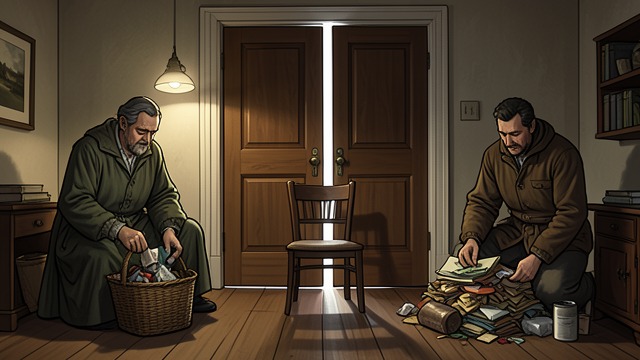
Living as Opposing Forces
Territory and Rules
Separate rooms, locked doors, and divided household responsibilities give the spouses boundaries but no emotional distance. Every shared necessity creates another opportunity for friction.
The Truce Is Unstable
The arrangement resembles an armed pause rather than peace. Both remain attentive to the other’s movements, and ordinary cooperation becomes difficult to distinguish from strategic advantage.
Tit for Tat
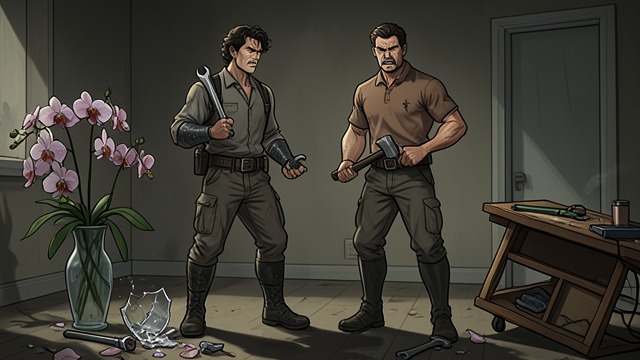
Tit for Tat
Each Injury Demands a Reply
Damage to orchids, food, and household equipment is answered by another act of sabotage. The spouses treat retaliation as both punishment and proof that they cannot safely show weakness.
Escalation Becomes Its Own Logic
The original reasons for separation fade beneath the immediate need to answer the latest attack. Conflict no longer advances a negotiated goal; it supplies its own justification for continuing.
The Home as Battlefield
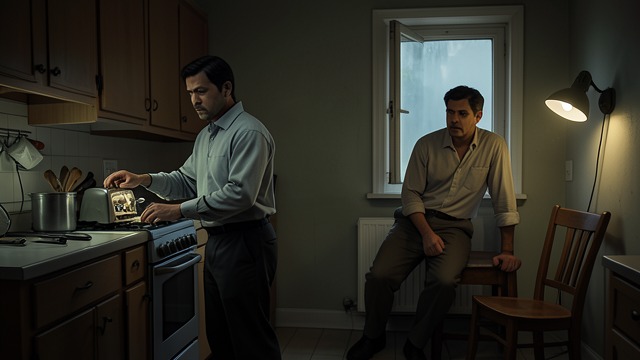
The Home as Battlefield
Tactics Replace Conversation
The spouses sabotage appliances, alter rooms, and use the home’s structure to make one another uncomfortable or unsafe. The domestic setting becomes a field of traps rather than a place to live.
The Enemy Is Still Intimate
Their tactics depend on detailed knowledge acquired through years of cooperation. The conflict is powerful precisely because each spouse knows the other’s habits, possessions, and vulnerabilities.
A Victory Without Survivors

A Victory Without Survivors
Surrender Remains Impossible
In the dining room, neither spouse will abandon the claim to the house. Even conversation takes the form of challenge and counterchallenge, with threats close to the surface.
War Defeats Its Purpose
The collapse kills the couple before a legal victor can be declared. The ending exposes the emptiness of a contest in which defending the prize has destroyed the people who wanted it.
At the beginning of the divorce negotiations
During the first months under the same roof
From the Christmas season into the following spring
During the final period when the children are away
At the final collapse
