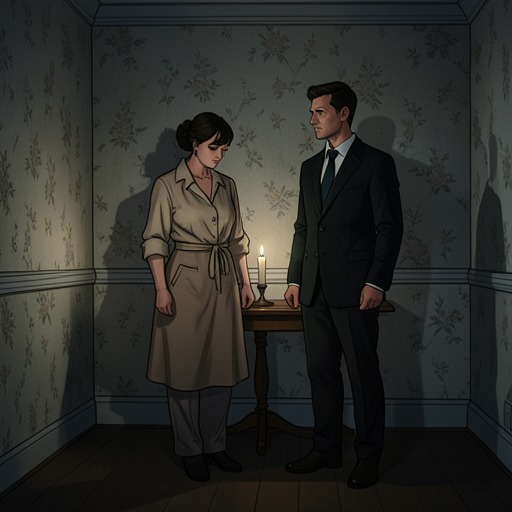
“Love lies”
The War of the Roses“Love lies” is a compact expression of romantic disillusionment in The War of the Roses. First bound to Barbara Rose’s painful reassessment of her marriage to Oliver Rose, it returns in Ann’s reflections as a question rather than a settled verdict: if love deceives, who is being deceived, and by whom?
Barbara Rose’s Lost Innocence
Looking back on her younger self, Barbara Rose recalls having promised Oliver Rose that she would do anything for him. She once treated his words as wisdom and cherished the intimacy of watching him sleep and feeling the world stop when he held her. Now those memories sound different: in her mind, warning bells toll for the innocence she believes she lost by trusting a romantic ideal. She reproaches her former self and blames not only her parents and friends but also films and songs that taught her to expect eternal love. “Love lies” condenses that indictment into a refrain: the promise of romance, in her revised understanding, concealed a bondage she had mistaken for devotion.
Ann’s Reconsideration
The phrase resurfaces after Ann has seen Oliver Rose and Barbara Rose together. Walking from Twenty-second Street across Washington Circle toward the Lincoln Memorial, then along the bridge and bicycle path past the Pentagon, she weighs human values against possessions, which she now regards as worthless and potentially destructive. In that state of mind, she considers that Barbara Rose may have been right about love. But Ann recalls the claim in the past tense and immediately asks, “But to whom?” The question leaves the expression unsettled: it may indict a lover’s promise, the person who believes it, or the assumptions through which either interprets the relationship.
Meaning and Recurrence
The expression links two different acts of reckoning. For Barbara Rose, it is the sharp conclusion of a private history: remembered tenderness is recast as evidence of misplaced faith. For Ann, it becomes a proposition she tests while moving away from the house and reconsidering the worth of both love and property. Its recurrence therefore does not simply repeat Barbara Rose’s judgment. The shift from her emphatic present-tense phrase to Ann’s questioning recollection makes the words less like a universal rule than a bitter, unresolved possibility.