Eve Rose
The War of the RosesEve Rose is the sixteen-year-old daughter of Oliver Rose and Barbara Rose, and the child most openly caught between the appearance of family normality and the reality of her parents’ separation. Her story turns on a widening gap: she tests the limits of adult authority, yet becomes the confidante of Ann and a watchful witness to the household’s unraveling. As the Roses’ conflict grows, Eve’s private uncertainty becomes a measure of how far their marital war has reached beyond the couple.
Identity and First Impressions
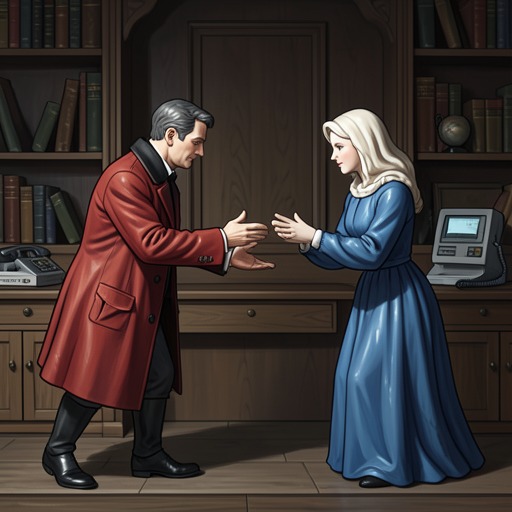
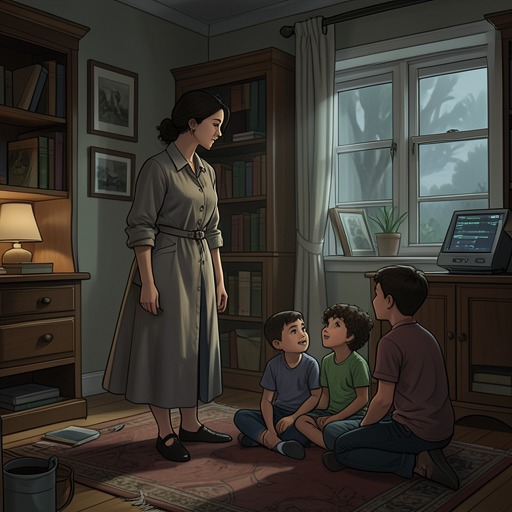
When Ann begins looking after Eve, their first encounters are marked by reserve. Eve’s room makes that distance visible: its flowery prints and pink bookcase resist the antiques that have engulfed the rest of the house, while schoolbooks lie scattered beneath the bed. Eve tells Ann where she keeps her marijuana and says she is on the pill, watching for a reaction. Ann keeps her expression still. Eve’s bluntness is a test of the new caregiver, but Ann reads the bravado as covering insecurity rather than simple defiance. A shared laugh loosens the tension, and Ann sees a vulnerable, gawky teenager still growing into herself.
The age difference between Eve and Ann shapes the beginning of their relationship. Ann knows that being assigned to watch a sixteen-year-old could feel insulting, and Eve’s provocations establish that she does not intend to meet the arrangement with easy compliance. Yet Eve soon reveals that the posture is not the whole person: beneath it are embarrassment, fear, and a strong need for someone she can trust.
School Trouble and a Growing Trust
That trust takes a practical form when Eve fails math at Sidwell Friends School. Too frightened to tell her parents, she confides in Ann and fears that she has disgraced them. Ann agrees to act as a go-between, carrying a risk of her own by stepping into a family matter. Oliver is disappointed but resigned; Barbara reacts angrily, snapping that lack of preparation is a curse. Ann knows that Barbara married at nineteen and left college, a history that gives added context to the force of her response without resolving the difference between mother and daughter.
Ann tells Eve that she has promised her parents Eve will attend summer school, provided there are no recriminations or harsh words. Eve collapses into shivery tears. The arrangement does not erase the academic failure, but it changes the terms of their bond: Ann has taken Eve’s fear seriously and helped her face the consequences. For Eve, the exchange is a turning point, and for Ann it establishes a trusted intermediary role that will matter more as the parents’ conflict deepens.
Eve’s parents later mark her improvement with a family celebration. At the table, Oliver notes that her B-minus is a long way from an F and presents her with keys and a remote-control garage-door opener for a Honda. Josh jokes at her expense, as he often has the advantage of bringing home straight A’s, but the gift transforms the occasion into a triumph for Eve. She squeals, embraces Oliver, then repeats the ritual with Barbara, Josh, and Ann before dashing toward the back of the house. Oliver admits that the family is spoiling her, but that it feels good. The scene shows a household still capable of shared delight—and makes the contrast with its later estrangement especially sharp.
The Separation Reaches Eve
When Eve learns that her parents have decided to separate, she goes to Ann in tears. Ann already knows what has happened, but the news has not fully registered; she finds herself denying it and feeling guilty. She initially tells Eve that the separation may be temporary, not understanding what has passed between Oliver and Barbara. Eve corrects that hope with the seriousness of someone forced to confront an adult decision before she is ready.
Eve explains that Barbara described the separation as a declaration of independence. Barbara said she wanted freedom to pursue her aspirations and did not want to remain an appendage; she also insisted that the change would not damage Eve’s relationship with Oliver and that the family could handle matters civilly. Eve cannot make sense of the explanation. What wounds her most is the realization that Barbara had not been happy with Oliver: Eve and her friends had believed her parents had one of the best marriages around, in part because of all they did together and all they had done with the house. Asked to understand, Eve said she would try, but admits to Ann that she does not understand at all.
Her response is not simply allegiance to one parent. Eve asks whether Oliver might also have been unhappy, but Barbara had not said so. She is trying to find a reason that would make the break comprehensible, while recognizing that she has only one parent’s account. The certainty she had attached to her family’s closeness has given way to shock and unanswered questions.
Living Inside the Conflict
As the separation continues under one roof, Eve and Josh initially try to bring their parents back together. Their efforts fade in the face of Oliver and Barbara’s continued hostility, and the children move toward grudging acceptance and then tolerance. Eve spends more time with her friends and less under Ann’s scrutiny. One night she tells Ann that her parents have simply gone crazy, a blunt summary of a conflict she cannot repair. Josh finds some steadiness in basketball and other sports and continues to see Oliver; Eve’s own adjustment takes a different form, marked by distance from the household and private conversation with Ann.
The Christmas tree fire offers another glimpse of how the parental conflict shadows ordinary family life. Afterward, Eve and Josh pick through the damaged presents. Josh holds up binoculars warped by the heat, and Oliver promises to replace them. Eve, wiping soot from her hands onto her robe, quietly asks what Oliver had bought her. His reply invokes Barbara’s view of the holiday as not very merry, and Barbara turns away in contempt. The exchange leaves Eve’s gift unanswered in that moment, amid the burned presents and the adults’ mutual hostility. Eve is present not as the cause of the quarrel but as one of the children left to navigate its effects.
Fear, Separation, and Narrative Significance
When Ann discusses summer camp, Eve refuses to go. She knows, she says, that her parents are sending the children away to remove them from the atmosphere at home, but the reason she shares privately is the opposite of wanting distance: she is afraid to leave Oliver and Barbara alone together. She asks Ann to keep this secret. She wishes her parents would reconcile, that Oliver would move out, or that Barbara and the children would leave; failing that, she wishes they would sell the house and end the stalemate. Her fear reveals how thoroughly the children have been drawn into anticipating what the adults might do next.
Later, Eve’s concern turns toward the silence of both parents. She insists that whatever their differences, they are still her parents, and asks why neither has called or written. Crying and close to panic, she says she intends to return home and see for herself. Ann promises to find out where they are and make them call, while privately needing time and wanting to keep Eve and Josh away from the house. Eve’s question is not answered in the exchange; what matters is that the separation has left her without the reassurance she seeks from either parent.
Eve’s arc does not resolve the Roses’ dispute. Instead, her changing position—from testing Ann, to confiding a school failure, to grieving the separation, and finally fearing for her parents—makes the cost of that dispute legible through a child’s experience. Her wish for reconciliation coexists with a desire for someone to leave or for the house to be sold: she wants the family’s danger and uncertainty to stop, even when she cannot imagine a single solution that would restore what she thought the family was.