Harry Thurmont
The War of the RosesHarry Thurmont, known as the Bomber, is Barbara’s divorce lawyer and one of the figures through whom the Roses’ private conflict acquires legal and financial terms. He advises Barbara on the value of the shared estate, represents her in a dispute over business expenses, and becomes a recipient of her anger after her catering work is sabotaged. His role is consequential less because he resolves the marriage than because he makes its domestic and material stakes legible as legal claims.
Identity and Introduction
Thurmont enters the story as a lawyer Oliver knows only casually. When he calls to say that Barbara has retained him, Oliver had been hoping instead for a call from Barbara herself, one that might signal regret. The news that she has already obtained counsel makes the separation feel newly formal: Oliver recognizes that he too will need a lawyer, and Thurmont’s reputation gives the announcement extra force. Oliver knows him as the Bomber, a name that suggests a formidable adversary, and worries that the opposing counsel may make an already painful process harder to control.
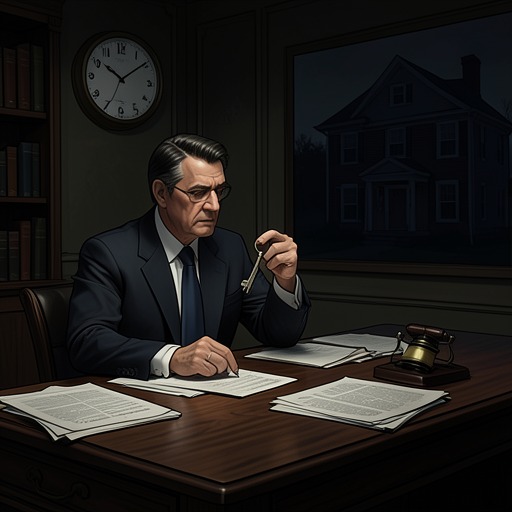
Barbara meets Thurmont in his office, where he watches her from behind a free-form Plexiglas desk. He is dapper in a pin-striped suit and an oversized collar; through the office window are the White House and the Washington Monument. The setting links the personal dispute to professional authority and the capital’s legal world. Barbara initially reads his bulbous nose and watery eyes as signs of a drinker, but he tells her that he is a member of Alcoholics Anonymous. He describes his past alcoholism briefly and says that, since giving up alcohol, he is mean. Barbara hopes that this side of him will not be needed, though she is uncertain by the time she is speaking with him.
Representing Barbara
Thurmont tells Oliver that he tried to dissuade Barbara from seeking a divorce, describing that as the first step lawyers are taught to take. He nevertheless makes clear that she is adamant. Oliver asks whether she might give way; Thurmont’s answer is no. The exchange establishes both his professional role and the limit of it: he may advise or attempt to intervene, but he presents Barbara’s decision as settled rather than as an opening bid that Oliver can easily undo.
In discussing the settlement, Thurmont distinguishes a share of the estate’s value from a claim to the house or its individual contents. He explains that an independent appraiser would determine the market value of the property and possessions, after which Oliver could borrow money to make a single payment. Without an inventory, Thurmont estimates that Barbara might receive between four and five hundred thousand dollars after fees. That figure is a preliminary calculation, not a completed settlement, but it gives the conflict a concrete financial scale. His language also frames the payment as a means for Barbara to begin again, while Barbara objects that the proposal does not feel fair.
The meeting reveals a tension in the representation. Thurmont offers a practical estimate and speaks in terms of market value, fees, and what Barbara might take away; Barbara experiences his manner as superior and his explanation as a lecture. When he stands and moves toward her, leaving his cigar in the ashtray, she briefly braces for a physical advance. He makes no pass, but his looming posture intensifies her sense of vulnerability. Her objection to the settlement is therefore not only about its amount: in the conversation, she is also confronting the unequal authority she perceives in the person explaining her options.
Divorce Law and the Shared House
Thurmont’s work takes place within a divorce process whose rules separate the end of the marriage from the division of property. Under the District of Columbia no-fault divorce rule, Title 16-904, Section C, a couple can pursue a divorce while living in the same house, provided they live separately and do not cohabit. The waiting period remains in effect. Oliver’s lawyer, Murray Goldstein, explains that the house and its contents are still subject to a separate property decision: a judge might order the assets sold and the proceeds divided, and a court dispute could continue for years. These details show the legal circumstances in which Thurmont represents Barbara, but the text does not present him as the source of that explanation.
The law does not simply provide an exit from the shared home. It allows the Roses’ separation to proceed while leaving them in close physical proximity and leaving ownership unresolved. That gap between formal status and daily life helps explain why their dispute persists beyond the initial decision to divorce. Thurmont represents one side of a process in which the people may be separated in law before they have separated their home, possessions, and financial interests.
The legal conflict also reaches into the household through interim injunctions. After Oliver challenges Barbara’s business expenses, she accuses him of harassment and violating their maintenance agreement; Goldstein goes to court and wins an injunction requiring her to keep business expenses separate. Later, Barbara obtains another injunction forbidding Oliver from breaking into her room. The decisions are associated directly with the lawyers’ work and have immediate effects at home: the children hear about the court’s ruling, and Josh is visibly shaken by the possibility that his father could go to jail if he violates it. Thurmont’s representation thus belongs to a larger legal struggle that converts everyday behavior and household boundaries into matters a judge can regulate.
Conflict, Consequences, and Narrative Role
Thurmont’s most direct confrontation with Barbara comes after the collapse of one of her catering jobs. She rushes to his office following a debilitating conversation with the Greek ambassador’s wife, who has told her that guests vomited, including one person who vomited directly on the table. Barbara reports that the ambassador and his wife summoned her at seven in the morning and led her into the kitchen to see the evidence. Thurmont tries unsuccessfully to hide a smile at the account. Barbara insists that the incident was sabotage and that he is not taking it seriously. The scene makes him the immediate audience for her distress, but it does not establish that he identifies the saboteur or secures a remedy.
Thurmont’s characterization remains bounded by these professional encounters. The narrative supplies his recovery from alcoholism, his sharp self-description, his reputation as the Bomber, and the mismatch between Barbara’s urgency and his attempted smile. It does not provide a private history or a broader account of his motives. His importance lies in the way he gives the separation institutional form: the marriage’s grievances become appraisals, possible lump-sum payments, injunctions, and arguments about fairness. The law can define what the Roses may do while they remain under one roof, but the proceedings do not themselves reconcile them or resolve the emotional injury that set the conflict in motion.