Staffordshire figurine collection
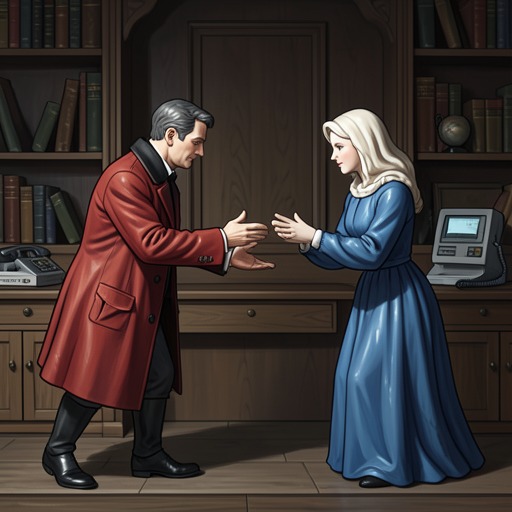
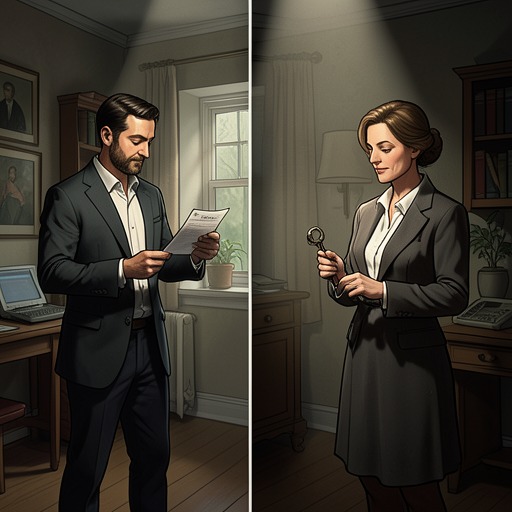
The War of the RosesThe Staffordshire figurine collection is one of the Roses’ contested household possessions, but its significance changes as their separation turns the house into a battlefield. Barbara regards the figures as crude and largely without beauty; Oliver recognizes their market value and reads their disappearance as evidence that she is financing her independence. As pieces are removed, broken, and mutilated, the collection shifts from a prized asset to a means of provocation: the spouses use its objects to declare defiance and answer one another’s threats.
Value, Taste, and the Missing Figure
The collection’s financial value becomes explicit when Oliver notices that Little Red Riding Hood is missing. His first suspicion is not abstract: he connects the absent Staffordshire figure to Barbara’s planned dinner party and asks where the money for it could have come from. He calls Goldstein and insists that Barbara took it, estimating that she could get at least two thousand dollars for it. The figure’s disappearance gives Oliver a concrete explanation for Barbara’s spending, but it also makes the collection a new front in their fight over who may dispose of the possessions in the house.
Barbara’s view of the collection is sharply different. She says she has never admired Little Red Riding Hood and is not especially fond of Staffordshire collecting. To her, the figures are crude, their expressions insipid, and their beauty negligible. She has grown sick of the memory associated with Cribb and Molineaux. Yet she knows the objects’ financial value: she regards two thousand dollars for Little Red Riding Hood as an absurdly low return and notes that the Cribb and Molineaux Staffordshire ceramic boxing figures are now worth five thousand. Her contempt for the collection therefore does not make it insignificant. She can reject its aesthetic and emotional claims while still treating it as property she is entitled to sell.
A Possession Becomes an Accusation
Oliver’s discovery of the empty place where Little Red Riding Hood had been prompts him to call Goldstein late at night. Goldstein answers Oliver’s alarm with a joke about the wolf having eaten the figure, but Oliver insists that Barbara has taken it to pay for her dinner party. When Goldstein says he is going on vacation, Oliver repeats that the missing figure is where the money is coming from. Goldstein also reminds him that he is behind on his retainer. The exchange leaves Oliver staring at the phone and feeling abandoned by his adviser; he resolves to show the others what resolve means. The collection has become evidence in Oliver’s private case against Barbara, even though his certainty about her actions does not restore the missing object.
For Barbara, taking Little Red Riding Hood is part of a larger effort to survive and assert control. She hopes Oliver will not discover its absence until Thurmont has returned from vacation, while Goldstein is also away. She considers using the proceeds for utility bills but chooses instead to hold her dinner for fourteen guests—thirteen in practice, because she has no escort—and show her work to regular and prospective customers. The choice links the figure’s sale to her business ambitions and to her wish to demonstrate that she can manage on her own. What Oliver interprets as theft and humiliation, Barbara frames as a resource available to her during the separation.
Breakage and Countermeasures
The collection’s role grows more violent as Barbara and Oliver move through the house in hiding. During one sortie, while Oliver is snoring, Barbara enters the library, puts Staffordshire figures into her shopping bag, crushes Garibaldi, and scatters its contents outside his locked door. She writes a warning in lipstick directly on the door: she will break some every day. The threat makes the objects’ destruction a continuing message, not an accidental loss. Garibaldi is identified as one of the most valuable figures, so the act damages both the collection and the financial security its contents represent.
When Oliver later finds the broken Garibaldi, he does not mourn it. Instead, he reads Barbara’s warning and methodically turns the house into a trap. He loosens doors, furniture, kitchen fixtures, and stair fittings, but avoids the already wrecked dining room. The collection is only one strand of this escalating material conflict, yet Barbara’s deliberate destruction of it helps make the house itself feel unsafe: familiar possessions can be missing, broken, or arranged as signs of an opponent’s presence.
Barbara, meanwhile, continues to move through the booby-trapped rooms by touch and memory. She gathers figures from the library mantel and the parlor, carries them away in her shopping bag, and avoids the hazards Oliver has prepared. The act reverses the collection’s usual display function: instead of remaining visible ornaments on mantel and parlor, the figures become portable property that Barbara can remove from the shared home. Her successful return to the attic with them is part of her belief that every measure has a countermeasure.
The Collection as a Weapon
Barbara turns two Napoleons into a final pointed message. Squatting outside Oliver’s room, she takes them from her bag, beheads them with her cleaver, and stands the figures on the floor in front of his door. She writes “Off with their heads” in lipstick on the door, then retreats to her attic hideaway, delighted that she has outwitted him. The figures now serve neither as collectibles nor as saleable assets: their altered bodies stage a taunt aimed directly at Oliver. The allusion makes the beheading legible as a threat within their private contest, while the act’s careful placement at his door makes the household object part of their face-to-face exchange.
Across these episodes, the collection’s meaning is repeatedly unsettled. Its pieces can be appraised in thousands of dollars, dismissed as ugly, carried off, smashed, or transformed into a message. Oliver sees the missing Little Red Riding Hood as a clue to Barbara’s finances; Barbara sees the figure as something she may claim and sell. Garibaldi’s destruction and the beheaded Napoleons push that dispute beyond ownership into retaliation. The collection registers the collapse of ordinary domestic order: objects once kept for display become instruments through which the Roses mark territory, communicate hostility, and try to gain the advantage in a house neither is willing to leave.