The Roses' fight to keep the house during their divorce
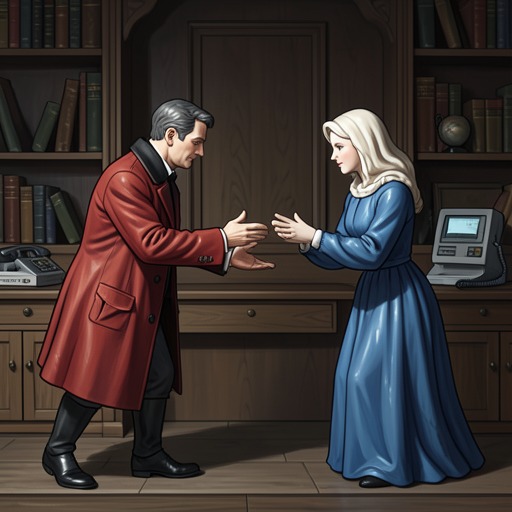
The War of the RosesThe Roses’ fight to keep the house during their divorce is the point at which a shared home becomes both the object of a legal dispute and the terrain on which the marriage’s unequal investments are contested. Barbara wants to retain the house and everything in it, not merely receive its market value; Oliver initially considers a half-value settlement, then relies on a legal provision that allows him to stay and fight for the property. Their competing claims turn separation into a struggle over money, labor, independence, and the meaning of the life they built together.
Causes and Competing Claims
The house carries a history of joint effort. Barbara and Oliver had taken pride in its appearance, even commissioning a copperplate engraving to send at Christmas. They collected antiques together on weekends and during European vacations, making the furnishings repositories of shared pursuits and memories. Barbara also helped refinish their antique furniture and, as the children needed less of her time, began imagining a commercial future in cooking, an interest she had developed through her mother and summer work with professional cooks and bakers.
The kitchen was designed with Barbara’s catering ambitions in mind. Oliver supported its construction energetically, applying his knowledge of electrical circuitry and craftsmanship; Barbara learned practical repairs and worked alongside him on projects including the sauna and shower. This shared history complicates their later claims. The house is not simply an asset acquired by one spouse: both contributed to it, but not in the same ways or with the same earning power.
When Oliver first discussed the divorce with Goldstein, he described the house and antiques as joint property and estimated the house might be worth at least half a million dollars, with the contents worth another half-million or more. He said that half of everything would be acceptable because they had made it together. Goldstein pressed him to distinguish sentiment from settlement. Oliver said he wanted the children to be comfortable and was prepared to offer reasonable support, but he had not yet decided what to do about the house.
Barbara’s position is different. Harry Thurmont explains that Oliver’s offer means half the assessed value, not ownership of the home and its contents. Barbara objects to treating that sum as equivalent to keeping the place. She argues that she devoted nearly twenty years to Oliver’s career, needs, security, and household; gave up her schooling; raised their children; and spent more time on the house than he had. Because she cannot match Oliver’s earning power, she fears that he can eventually replace the property’s value while she will be left with cash alone. For her, keeping the house is both a financial claim and a demand to preserve the lifestyle and work it represents.
Law as a Means of Staying
At first, Oliver assumes the divorce should proceed quickly. Goldstein explains that a no-fault divorce in the District of Columbia has a six-month waiting period if uncontested and a one-year wait if contested, while the property settlement is a separate matter that may continue much longer or go before a judge. Oliver expects the couple to be reasonable, but Goldstein warns that the property fight could become protracted and costly.
A legal opening changes Oliver’s options. Goldstein points to Title 16-904, Section C, which permits a no-fault divorce when the spouses live under one roof, provided they live separately and do not cohabit. The rule means Oliver need not leave the house while the divorce proceeds. It does not determine who will receive the house or its contents: a judge might instead order the contested property sold and the proceeds divided, and an appeal could extend the dispute for years. Oliver sees remaining in the home as a way to demonstrate his determination and perhaps compel Barbara to leave.
His resolve is not uncomplicated. He imagines living there with Barbara as a nightmare and admits that, in his present state, seeing her might make him want to strangle her. Goldstein treats such anger as a liability in court and urges him to remain in the house without giving Barbara a basis for legal action. Oliver should avoid disturbing the household, bringing girlfriends into the home, taking meals there, or removing property. He is to behave as inconspicuously as possible, leave Barbara the kitchen, and remain a father to the children without making them an issue in the case. Goldstein frames the choice as a contest over the house, not a simple division of assets.
The Home Divided
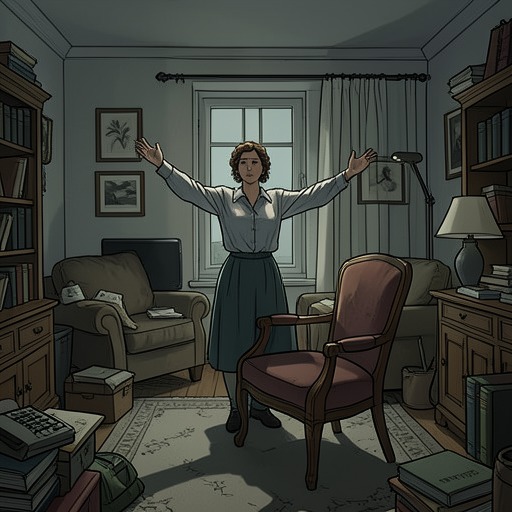
Once both spouses stay, the arrangement becomes visible in the house’s ordinary routines. Barbara and Oliver install locks on their separate bedrooms and have separate telephone lines installed, while leaving one original line for the children. The kitchen is Barbara’s domain; Oliver gives up its food and facilities and keeps a small carton of orange juice by the side window of his guest room, an incongruous trace of boarding-house life. He does not eat at home and keeps dry dog food in his room for Benny, who roams the neighborhood by day and returns to sleep at the foot of Oliver’s bed.
Other parts of their former shared life acquire boundaries too. Oliver retains the care of his orchids and spends much of his time in his workroom, which becomes his domain by silent agreement. He meets the children there and sometimes sees Ann. He also keeps the garage space for Oliver’s Ferrari, taking it out for short drives or spending hours tuning and polishing it when he feels low. Barbara, meanwhile, works at double time to build her catering business, and the house is repeatedly filled with the aroma of her cooking. These routines show the practical form of the legal arrangement: neither spouse has left, but access, meals, work, possessions, and even the children’s visits are partitioned.
The division does not eliminate conflict. Oliver challenges Barbara over household expenses and what he considers a reasonable estimate; Barbara answers that he has forced her into a newly legalistic way of dealing with him. She takes him to court, alleging harassment and violation of their maintenance agreement. Goldstein wins an injunction requiring her to keep her business expenses separate from household funds. In a later dispute, Barbara again goes to court, and an injunction forbids Oliver from breaking into her room. Each ruling places a legal boundary inside the home, where everyday disagreements can become claims and counterclaims.
Costs to the Family and Barbara’s Business
The contest is not confined to the couple. Ann initially struggles to accept that the divorce is real and tries to reassure Eve that the separation may be temporary. Eve rejects that comfort: her mother had described the decision as a declaration of independence and said that she wanted freedom to pursue her aspirations rather than remain an appendage. Eve is shocked that her parents’ apparently close, cooperative marriage could end and cannot understand why her mother was unhappy. The children first try to bring their parents back together, then retreat toward grudging acceptance as the hostility persists.
Eve later tells Ann she does not want to go to camp because she is afraid to leave her parents alone in the house. She fears what may happen while the children and Ann are away and wishes either that her parents would reconcile or that one side would move. Josh, too, is shaken when Barbara tells him that Oliver could go to jail if he breaks the court’s order about her room. The proceedings intended to settle the adults’ separation thus make the children witnesses to restrictions on their father and to a family that still occupies one address but no longer functions as a shared household.
Barbara’s attempt to establish financial independence also exposes the difficulty of the unequal position she described to Thurmont. Her catering customers pay slowly, while suppliers require payment sooner. She does not press customers because she wants the business to succeed, and she borrows from household money to keep it afloat despite the separation agreement’s restriction. A meat supplier cuts her off, mocks her customer invoices, and tells her that women should not be in business; she throws chopped meat at him after he calls her lady. Her business success is therefore not a straightforward escape from dependence: it creates cash-flow pressures and legal vulnerabilities even as it gives her a possible source of income.
A Contest Without a Clean Separation
The Roses’ strategy produces neither a quick departure nor a settled division. Oliver chooses to stay because leaving would surrender the position he hopes to defend; Barbara insists that she will not give up the house or its contents, regardless of the financial and emotional cost. Their locks, separate lines, court orders, and divided domestic routines make the property dispute part of daily life rather than an issue held apart for lawyers and judges.
The conflict also exposes the different meanings each spouse assigns to fairness. Oliver initially regards half the value as reasonable compensation for property they built together. Barbara considers that offer inadequate because it converts years of domestic labor, child-rearing, and foregone schooling into a sum she cannot use to reproduce her former security. The house is simultaneously a shared achievement, a contested asset, a platform for Barbara’s independence, and the place Oliver refuses to leave. By keeping both spouses under one roof while the case continues, the law supplies a way to separate without resolving the emotional or material claims that make separation necessary.