Women's autonomy and economic dependence
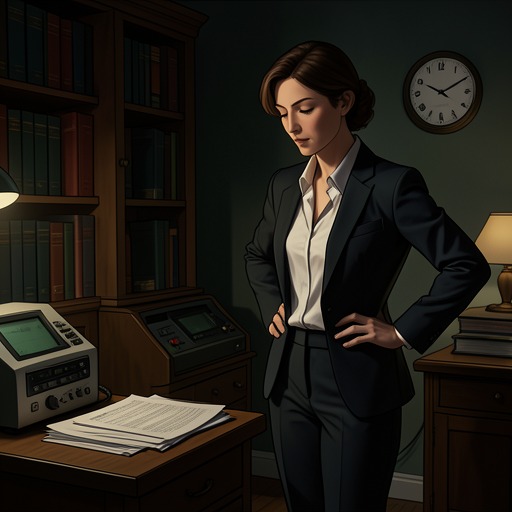
The War of the RosesWomen’s autonomy and economic dependence in the novel are not abstractions: they take shape in Barbara Rose’s catering business, her claim to the house she helped make, and the everyday financial constraints of a contested separation. Barbara wants a life and livelihood of her own, yet her ability to build one is shaped by unpaid work, unequal earning power, household assets tied up in litigation, and business conditions she has had little chance to learn. Her struggle makes independence a practical question of money, property, and who has the power to define what counts as a fair share.
Domestic work and the desire for a livelihood
Barbara’s interest in cooking has a history beyond her marriage. Her mother was an excellent cook, and Barbara learned from professional cooks and bakers while working during summer vacations. As the children needed less of her time, she began to consider commercial work. At the same time, she recognized a sense of inadequacy within herself and resisted the idea that cooking made her a conventional or merely traditional woman. The business thus begins amid a tension: a skill rooted in family and domestic life could become paid work, but Barbara does not want that skill to define or confine her.
She designed the kitchen with catering in mind. Oliver Rose supported the project energetically, spending weekends on its construction and bringing his knowledge of circuitry and craftsmanship to the contractors’ frustration. Barbara, too, learned how household systems worked: she could change washers, tighten faucets, clean grease traps, and repair the garbage disposal. Oliver gave her a tool chest, and she had learned to use tools in his basement workshop. They also built the sauna and shower together and refinished antique furniture. These details complicate any simple division between a capable husband and an inexperienced wife: Barbara had practical competence and had contributed labor to the shared home, even while the confidence and commercial experience needed to run a business remained uncertain.
The separation turns that shared history into a dispute over what Barbara’s contribution entitles her to keep. Oliver initially tells Murray Goldstein that he is willing to offer half the value of the house and possessions, describing the house as the place where the couple put everything they had. Goldstein explains that this offer means money calculated from an independent appraisal, not the house and its contents themselves; Barbara might receive roughly four or five hundred thousand dollars after fees. To Oliver, half the value appears reasonable. Barbara answers that she spent nearly twenty years supporting his career and needs, gave up her schooling, raised their children, and devoted more time to the house than he did. Because she cannot match his earning power, cash is not, in her view, equivalent to retaining the home and its way of life. “I want the house. I want all of it.” Her demand makes visible the labor and opportunity costs that a simple division of market value can leave out.
Separation, business, and cash flow
Barbara’s catering work is meant to make her more self-sufficient, but the separation agreement bars her from using household money for the business. Following Harry Thurmont’s instructions, she gets suppliers and food markets to issue separate invoices. The bookkeeping appears manageable in principle: add the costs, add the customers’ bills, and calculate the difference. In practice, customers pay slowly, while suppliers expect payment sooner. Because Barbara is anxious to keep the business moving, she does not press customers for money; to remain afloat, she borrows from household funds, violating the agreement.
This is not merely a matter of enthusiasm outrunning sound accounting. Barbara tells Thurmont that nobody taught her how to run a business, and recounts that a meat supplier cut her off, sneered at her customer bills, and told her women should not be in business because they were too emotional. She threw chopped meat at him. He struck his cleaver into the counter; Barbara understood the gesture as a threat, though she clarifies that he did not swing it at her. The incident gives a concrete form to the barriers her new enterprise faces: a woman’s effort to establish commercial credibility meets both a hostile supplier and the risk that anger will be used to discredit her.
Thurmont warns that the catering business is not relevant to her divorce case and that her success may actually hurt it. Barbara is also behind on the gas, electricity, and telephone bills by two months each. She asks Thurmont for a loan, but he says Oliver is already three months behind in paying him. Their lawyer-client arrangement itself has a price: Thurmont charges two hundred dollars an hour and reminds Barbara that he is a divorce lawyer, not a business consultant, advising her to collect payment on delivery. Her effort to secure guidance and support is therefore constrained by the very financial trouble she hopes to escape.
Credit, property, and gendered bargaining power
When Barbara seeks a five-thousand-dollar bank loan, the question of collateral exposes how closely her business prospects are bound to the divorce. She has only a vague grasp of the term. The loan officer identifies the house as possible collateral, but Barbara points out that she and Oliver own it jointly and are already in litigation. The officer says the litigation is what frightens the bank. Barbara leaves angry, believing that legal changes meant to help women have not removed the practical obstacle to credit when her principal asset is jointly held and contested.
She tries two more banks. One male loan officer offers to take her out for a drink; Barbara loudly asks whether sleeping with him would get her the money. The scene does not grant her a loan or resolve her predicament. Instead, it shows how the search for financial independence can expose her to sexual pressure as well as institutional reluctance. She returns home mortified and tries another route, calling customers to plead for payment. The Thai ambassador’s wife says that overseas payments take a long time. Barbara swallows her anger rather than provoke a confrontation, confronting the difference between the painstaking, artistic care she gives her products and the customers’ indifference to paying promptly.
The novel sets Barbara’s limited access to cash against the house’s accumulated value and shared history. Her claim is not only that she needs money; she argues that the home represents a lifestyle she helped create and has more direct reason to preserve. Yet a settlement that converts the house and its contents into an appraised sum may leave her with less practical security than Oliver, whose earning power she says he can eventually use to replace the property’s value. The conflict therefore concerns both ownership and the different consequences that an apparently equal division can have for spouses with unequal incomes and work histories.
Self-revision, intimacy, and independence
Barbara’s struggle for autonomy also alters how she interprets her marriage. She recalls that she once submitted sexually after Oliver returned from long trips, less for her own enjoyment than to validate her role as his wife. She describes this behavior as programming and repudiates her former self for accepting it. During the detective episode, she feels jealousy and considers the pressures of male celibacy, but she is also unsettled by her own tactics and wishes she could apologize to Ann. She recognizes that the logic of war has led her to suspend compassion and behave in ways she does not consider her true self. Independence here is neither a clean escape nor a simple triumph: the struggle to resist dependence can reproduce the coercive habits of the conflict around her.
Her financial crisis revives memories of an earlier, idealized intimacy. In imagined conversations with Oliver, she hears the argument that he had tried to protect her from a harsh business world, and answers that he should have taught her to protect herself. The imagined exchange also recasts the marriage vows as a demand for sexual compliance, acceptance of his advice, and silence. Elsewhere she remembers telling Oliver she would do anything for him, once treating his words as wisdom and love as a promise that made the world seem to stop. Now she blames the romantic stories and songs that taught her to expect eternal devotion, and concludes, “Love lies.” The remembered promise of total devotion stands against the present material question of whether she can support herself.
Barbara does not respond to her financial troubles by simply withdrawing from business. Proud of her pluck and ingenuity, she decides to host a dinner for fourteen customers and prospective customers, though she chooses not to bring an escort, asserting her singleness. She has sold a Staffordshire figure and debates whether to use the proceeds for overdue utility bills; instead, she invests in the opportunity to show her cooking and her home, hoping that guests will see her style and pay their bills. The dinner plan gathers the article’s central tensions into one effort: Barbara uses a home she claims as her own, culinary skills learned through family and work, and deliberate self-presentation to pursue commercial standing. The evidence does not settle whether this strategy succeeds. It shows, rather, that her independence is being built under the very financial and legal conditions that make each attempt to establish it precarious.