New York
The Werewolf Mates Anthology (Erotic Romance)New York is the old home of Wren Longwood and the setting against which her new life in Boise is defined. It is not merely a place she left behind: it is the inherited system of family authority, professional expectation, and werewolf concealment that first gives her identity its shape and then rejects her when that identity becomes impossible to manage. The contrast between New York and Boise therefore charts Wren’s movement from obedience and disgrace toward self-determination, even as the possibility of returning continues to exert emotional pressure.
Definition and Setting
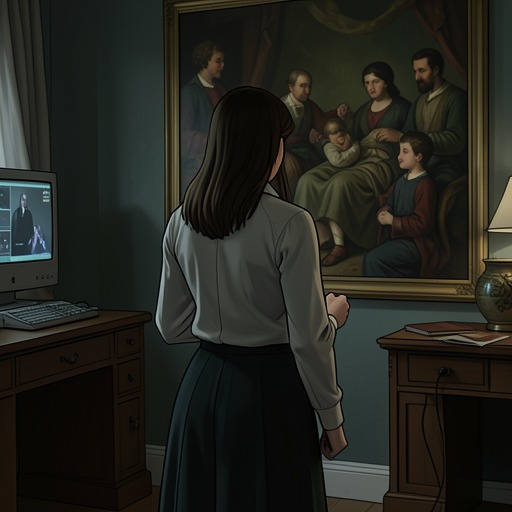
New York is associated with Wren’s family home in Manhattan, where the Longwoods have lived for more than two hundred years. That history gives the city the weight of an inherited institution rather than a neutral residence. Wren’s departure takes her to Boise, Idaho, which she initially experiences as too quiet and slow, yet also liberating: there she can run as a wolf, live independently, and practice criminal law rather than remain trapped in the corporate legal work her mother assigned her. New York consequently functions as the measure of what Boise is not—crowded, established, demanding, and governed by expectations that predate Wren herself.
Before leaving, Wren worked at Olson and Breyer, Attorneys at Law and was drawn immediately to Andy Olson. Her attraction to Andy remained secret because she feared becoming the woman who slept with the boss’s son to secure her position in the company. The professional world tied to New York thus combines genuine ambition with a hierarchy she refuses to exploit, while her family’s maxim, “Damn the wants, damn the needs, damn the cost,” teaches her to subordinate desire to duty. The city’s social order is sustained by exactly that kind of self-denial.
Wren’s Transformation and Exile
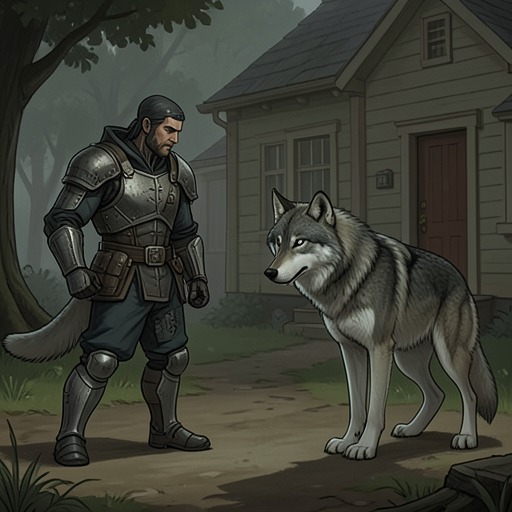
Wren’s break with New York begins with an attack in Central Park a year before the main period of her Boise life. A large dog attacked her while she was running, and neither the police nor animal control found it. She then became severely ill, spent two days in a near-comatose state in a private hospital suite, and recovered with heightened speed, vision, and hearing. The physical evidence of the incident initially permitted her family to treat it as an unexplained accident. The full moon exposed its meaning.
Wren’s first full-moon experience transformed a private health crisis into a forbidden identity. The Longwoods of Manhattan had no use for a werewolf in their midst, and Wren was expelled from her home and ordered never to return. Her inherited belonging therefore proves conditional: two centuries of family residence cannot protect her once she is classified as dangerous. New York becomes the place where lineage loses to stigma, and where family continuity is preserved by excluding the member who no longer fits its definition of normality.
The expulsion also reveals the coercive relationship between family reputation and bodily difference. Wren’s family does not initially understand what has happened, but once her condition is investigated, it is treated as a problem to be contained rather than a transformation to be understood. Her removal to Boise gives her physical and professional freedom, yet the freedom is purchased through separation. New York remains present as the source of the loss she is trying not to dwell on.
Return and Conditional Acceptance
A year after Wren’s departure, a telephone call from her brother reopens the possibility of returning. The call unsettles her because it compresses her Boise life back into the emotional dimensions of New York. She realizes that she has changed and grown during her absence; a year earlier, the conversation would not have troubled her in the same way. When her mother, Marion Longwood, later visits in person and declares that it is time for Wren to come home, the invitation carries the authority of a summons rather than the warmth of reconciliation.
Marion explains that the family has researched Wren’s condition and decided she is less harmful than they feared. The family has also found a way to manage her monthly outbursts and arranged a place for her at headquarters. This proposed return is not an unconditional restoration of membership. It makes Wren’s presence acceptable only after her body has been assessed, classified, and made administratively useful. Her mother’s language turns homecoming into a controlled placement.
The proposed work makes the terms clearer. Wren will not return to the legal department, where she would have been forced back into the corporate law she hates; instead, Marion says that research awaits her in which she will be incredibly helpful. New York offers her family shelter only by converting her condition into institutional value. The city’s apparent welcome therefore repeats the logic of her expulsion: Wren is admitted or excluded according to what the family believes it can control.
Relationships and Conflicting Belonging
Wren’s connection to New York is mediated through family rather than simple nostalgia. She misses the city, but after living away from it she can no longer fully remember why she had once been desperate to return. Thirty-three years of conditioning still pull her toward home, even though only a few months of independent life have begun to loosen that attachment. Her hesitation shows belonging as a learned obligation that survives physical departure.
Her relationship with Andy Olson intensifies the conflict between New York’s expectations and the life she is building elsewhere. Andy tells Wren that she is his mate, a bond she understands as something more powerful than an ordinary committed relationship. The prospect frightens her because she wonders whether the attraction is merely chemical and whether the relationship will last once its force fades. Yet excitement outweighs fear. When Marion threatens to reassert control over her life, Andy’s rage is immediate, while Wren tells her mother to leave and never come back. Andy’s quiet embrace afterward, rather than a demand that Wren stay, allows Wren to choose her future herself.
That choice places Wren’s chosen bond above the claim of her birth family. She does not simply reject New York as a location; she rejects the conditions under which the Longwoods are willing to receive her. Her new attachments in Boise, including Andy and the werewolf pack, provide forms of membership that are not identical to blood kinship but are more responsive to her transformed identity.
Institutional Contrast and Narrative Significance
New York’s importance extends beyond Wren’s personal history. It stands opposite the hidden institutions governing werewolf life and the danger posed by Silver Sky Research. In Boise, Max explains that werewolf society includes rules concerning the full moon, assimilation into the pack, and a small tribute paid to the alpha. These customs may be restrictive, but they are presented as a community structure Wren can learn to inhabit. The Longwoods’ headquarters, by contrast, treats her as a research resource whose monthly condition must be managed.
The city also represents the ordinary legal and civic world that the werewolves protect through secrecy. The Griffith matter cannot be allowed to expose “real live werewolves at a research facility in Idaho,” and the pack remains cautious even if no one would believe an outsider’s account. Against that secrecy, the Longwood family’s handling of Wren shows another form of concealment: not public protection, but the suppression of a socially inconvenient member. New York’s established respectability depends on keeping the transformed body out of sight.
As a result, New York becomes a geography of conditional identity. It begins as Wren’s inherited home, carries the prestige of Manhattan and the Longwood name, and supplies the family and professional systems that once organized her life. After her attack and first full moon, it becomes the place that excludes her. When it later calls her back, it offers not unconditional forgiveness but managed inclusion and research work. Its decisive narrative function is to make Wren’s departure more than relocation: leaving New York is the act through which she tests whether identity can be chosen rather than assigned by family, institution, or inherited custom.