Silver Sky Research
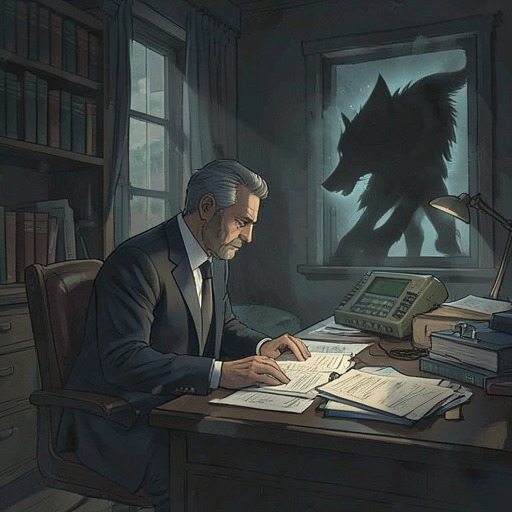
The Werewolf Mates Anthology (Erotic Romance)Silver Sky Research is the scientific and institutional setting through which the novel’s interest in wolves, research, bodily transformation, and concealed violence becomes concrete. For Kelly Shaw, it is the place where an apparently ideal post-doctoral opportunity begins; for Abigail McKinney, it becomes the workplace that selects her as an unwitting human subject; and for Jacob Pitman, it is the facility holding his missing sister Jaz. The institution’s decisive significance lies in this reversal from respectable research center to controlled site of human experimentation, where servers, cameras, access cards, alarms, and official explanations help conceal what happens to people inside.
Public Identity and Research Mission
Silver Sky Research is introduced as a large research organization operating out of Boise. Kelly Shaw, twenty-nine and newly finished with a PhD at the University of Oregon, has been chosen for post-doctoral work there on an animal research project. The stated work concerns migration patterns and the possible effects of expanding wolf reintroduction into the wild on modern life. For Kelly, the position joins professional ambition to a longstanding attraction to the western landscape, whose mountains, lakes, wilderness, and remaining wild wolves offer the possibility of field study rather than merely academic observation.
That promise gives Silver Sky Research an ethically appealing public face. Its research appears to connect scientific expertise with the protection and management of wildlife, and the institution includes a wing dedicated to rehabilitating orphaned and injured animals. When Griffith describes the facility as a place that brings animals inside for disturbing experiments, Andy Olson initially interprets his account as a misunderstanding of this rehabilitation center. The gap between the institution’s announced purposes and the suspicions surrounding it is therefore established before the larger secret is confirmed.
The Facility as an Ordinary Workplace
The building does not initially resemble a clandestine prison. When Jacob Pitman enters it, dim fluorescent lights fall across paintings of wolves and other wild animals mounted on beige walls. Office doors have windows and name tags; some require key-card access, but nothing about the decor openly suggests that innocent women have been kidnapped and imprisoned there. The visual language is bureaucratic and reassuring, making the facility’s violence harder to recognize precisely because it is embedded in familiar institutional forms.
Kelly reaches the large reception area for her first day and waits for her new supervisor, Abigail McKinney, to give her a tour. Abigail arrives in a light purple business suit, with curly hair held back by a silver headband, and the meeting begins like an ordinary professional introduction. This controlled welcome contrasts with the hidden conditions later associated with the institution. Silver Sky Research can therefore recruit, supervise, and socialize employees through the conventions of a legitimate workplace while concealing the coercive program operating beneath them.
Concealment Through Information and Infrastructure
The institution’s secrecy is partly maintained through small technical irregularities that become meaningful only in retrospect. Around the time of the break-in later investigated by Andy Olson, Silver Sky’s servers crashed. The incident was officially treated as unrelated, yet Kelly Shaw remembers that it occurred on the same day. Immediately afterward, one file share became password protected without any public announcement. Kelly discovered it accidentally by clicking the wrong folder, prompting an IT employee to check on her; the folder then disappeared from her computer.
These details turn the facility’s digital systems into instruments of selective visibility. A server failure can be dismissed as irrelevant, a restricted file can be treated as an access problem, and a vanished folder can remove the evidence of its own existence from an employee’s ordinary view. Andy had seen the server crash mentioned in the police report but had not considered it important because the investigation had accepted Silver Sky’s explanation and Griffith had denied knowing about it. Kelly’s recollection begins to connect the break-in, the crash, and the institution’s internal controls.
Silver Sky also uses personnel narratives to make disappearance appear normal. After Abigail is taken, Dr. Greggs announces that she has gone on vacation, although Abigail had made no such plan and would ordinarily have told Kelly. The false vacation story is important because it does not merely hide Abigail’s location; it attempts to prevent colleagues from asking why she is absent. Institutional deception thus operates socially as well as technologically, replacing a missing employee’s real circumstances with an administratively convenient fiction.
Human Experimentation and Captivity
The underlying crime is revealed when Max tells Abigail and Kelly that Silver Sky Research has been doing more than studying wolf migration. A few months earlier, Max and others had discovered that the organization was conducting unauthorized, unvetted testing on humans. The reasons remained unclear, but the evidence indicated that Abigail had been selected as one of its subjects. Her disappearance, which the institution explains as a vacation, is consequently reclassified as abduction and experimentation.
Abigail’s long employment makes the betrayal especially difficult to absorb. She had worked for Silver Sky Research for more than five years and found it difficult to believe that the organization, or even Dr. Greggs, would betray her or anyone else. That disbelief shows how institutional trust functions as part of the facility’s security: a respected workplace does not need to hide every suspicious detail when its employees have been trained to interpret anomalies through loyalty and routine.
The facility’s treatment of Jacob later confirms that captivity is not an isolated accusation. After Jacob is recaptured, attendants give him only red meat, including a tray of undercooked meat left on the floor. His cage is controlled by a card reader, and when he presses a stolen key card against it, the door unlocks only long enough for him to take two steps into the hallway before an alarm sounds, red lights flare, and a guard levels a gun at him. The scene reveals a system designed not simply to observe subjects but to contain them physically, monitor their movements, and respond immediately to escape.
Infiltration, Rescue, and Escalating Security
Jacob’s first infiltration is motivated by the disappearance of his younger sister, Jaz Pitman. She had gone to work for Silver Sky Research at its Montana facility four months earlier and vanished after only one month. The company repeatedly blocked Jacob’s inquiries, while the police found nothing. Information from Jaz’s former partner, Rodney Gilcrist, finally gave Jacob a lead: Silver Sky was allegedly experimenting on its own employees in Idaho. Jacob discovers that Jaz is being held at the facility and plans a timed rescue because the company will not provide her whereabouts.
His operation depends on a precise understanding of institutional routines and technical weaknesses. At 12:37, when guards are expected to shift positions, Jacob intends to enter using a stolen identification card, disable the camera feed, replace it with dummy footage, turn off sensors for the holding cells, unlock doors along his route, and trigger a false alarm in the south quadrant. The plan treats the facility as a network of schedules, cameras, sensors, doors, and human responses; its apparent success depends on briefly rearranging that network faster than security can restore it.
After Abigail is removed from the facility, Jacob returns because waiting would allow Silver Sky to repair its security failures and possibly make her impossible to locate. He drives through back roads toward the same facility, where several black SUVs pass him in a no-passing zone, making clear that the organization knows about the previous intrusion. He parks more than a mile farther away than before, conceals his truck beneath branches while preserving a possible escape route, and watches from a tree with binoculars. The security force has already doubled, and the key card in his pocket becomes dangerous when he remembers that every card contains a tracking chip with a limited radius. A device that enabled entry the previous night may now reveal his position to the facility’s computer.
Narrative Significance
Silver Sky Research embodies the novel’s central contrast between the language of care and the practice of control. Wolf migration, reintroduction, and animal rehabilitation provide a public vocabulary of knowledge and protection, while the hidden program treats human bodies as experimental material. The institution’s research identity does not disappear when its crimes are exposed; instead, the exposure shows how scientific legitimacy can coexist with secrecy, restricted information, manipulated records, and coercive confinement.
The facility also links the novel’s animal and human plots. Abigail is taught to picture a wolf in order to shift, beginning with fur, teeth, and the effort to hold an animal image intact. In the context of Silver Sky’s human experiments, that transformation is not merely a supernatural development but part of the institution’s broader crossing of the boundary between animal research and human bodily alteration. The organization’s most consequential secret is therefore not only that it imprisons people, but that it turns the scientific study of wolves into a rationale for remaking human lives.
Its apparent solidity is repeatedly punctured by the same mechanisms meant to guarantee control. A crashed server, a protected file share, a disappearing folder, a falsified vacation, a stolen access card, a looped camera feed, and a tracked credential each expose a different weakness in the institutional surface. Silver Sky Research remains formidable because it possesses money, personnel, surveillance, and official explanations, yet it becomes narratively vulnerable when those systems are read together. The facility is consequently both a place and a system: a polished workplace on the outside, a laboratory of coercion within, and the contested center of the rescue and investigation that follows.