Wolves
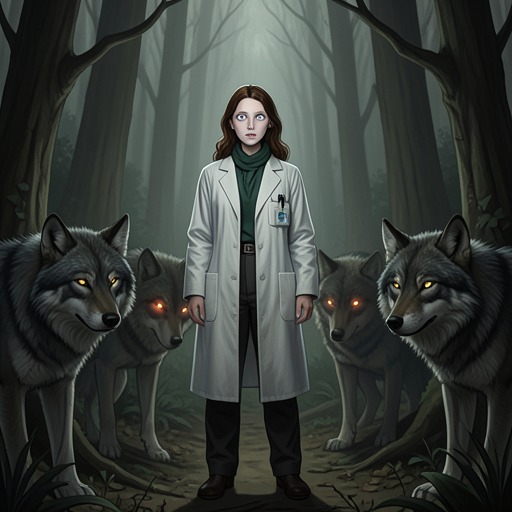
The Werewolf Mates Anthology (Erotic Romance)Wolves are the novel’s central nonhuman presence and its most important bridge between scientific observation and embodied transformation. Kelly Shaw comes to Boise because the American West still contains wild wolves, hoping to study them in the field; before long, the wolf becomes more than a research subject. It is a bodily inheritance, a source of instinct and motion, a danger capable of transmitting lycanthropy, and a figure through which the characters imagine family and freedom.
Wild Animals and the Reason Kelly Comes West
Kelly Shaw’s interest in Wolves is grounded in professional ambition rather than vague romanticism. At twenty-nine, after completing her PhD at the University of Oregon, she is selected for post-doctoral work with an animal research project operating out of Boise. The project studies migration patterns and evaluates whether expanding the reintroduction of the wolf into the wild would benefit modern life. Her new position is at Silver Sky Research, and the survival of wild Wolves is one of the principal reasons the West appeals to her: the mountains, lakes, and extensive wilderness offer a setting in which civilization can recede and field study can become possible.
This ecological interest gives Wolves an initial status as subjects of knowledge. Kelly arrives prepared to examine their movement and their place in modern environmental policy, but the narrative soon overturns the distance implied by that role. The animal she expects to observe from the outside will instead become part of her own physical and social reality. Her scientific vocabulary remains important, yet it cannot contain what she encounters.
Wolves as the Shape of Lycanthropy
Max’s transformation reveals that the wolf is not merely an external animal but a living presence within the werewolf body. In his backyard, he removes every distraction, breathes slowly, clears his mind, and focuses on the wolf inside him. Once he catches hold of that image, the change comes quickly: the man becomes a huge gray-furred beast. In wolf form, Max runs into the forest, hears an owl, feels the joy of speed, and does not pursue the fleeing small game because the run itself is the point. The transformation is therefore presented as both physical alteration and a change in relation to the world, replacing human deliberation with heightened movement, sound, and instinct.
Max’s history also connects Wolves to transmission and rescue. While he was a student, friends dared him to walk through campus woods at midnight on a new moon. Drunk and stumbling in darkness, he fell against a ravine and hung from its edge. A large wolf appeared, seized a substantial portion of his arm, and pulled him up, barely nicking him in the process. Max later learned that the bite had infected him with lycanthropy; the werewolf leader in that area found him during the full moon, prevented him from getting into greater trouble, and taught him what he needed to know before he moved to Boise after graduation. The animal that first appears as a potential killer thus becomes an accidental rescuer, even as its bite irrevocably changes Max’s life.
The same boundary-crossing occurs with Kelly. When Max shifts before her, his body ripples, the light contracts, and a wolf weighing, by her estimate, at least 200 pounds stands where a man had been. Her first response is disbelief, because the sight violates her understanding of what a human body can do. Later, she follows Max’s wolf through the woods. At first branches cut and score her skin, but once she drops to all fours and begins moving as a wolf herself, the obstacles no longer impede her. Max’s howl becomes a joyous song of life, love, and family, and Kelly answers it with a howl of her own. Wolves thus turn revelation into participation: Kelly does not merely learn that they exist; she enters the condition that had previously defined her scientific curiosity.
Research, Captivity, and Institutional Misrecognition
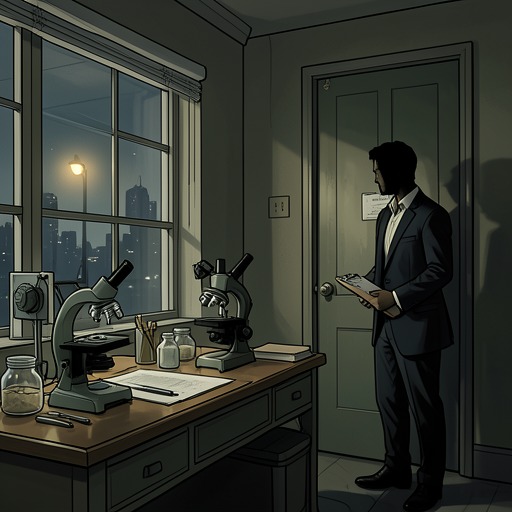
The novel repeatedly places Wolves at the unstable intersection of care, study, and control. Silver Sky Research publicly presents itself through animal research, and its facility includes a rehabilitation wing for orphaned and injured animals. Andy Olson understands that this legitimate work may be mistaken for something sinister when Parker Griffith claims that the organization brings animals into the facility. Yet the suspicion acquires a darker foundation when the group learns that Silver Sky is doing more than studying wolf migration and has been conducting unauthorized, unvetted experiments on human beings.
Wolves are therefore part of an institutional continuum in which animals can be treated as research material and humans can be drawn into the same experimental logic. Abigail McKinney, who has worked for Silver Sky for more than five years, is identified as one of the human subjects. Her transformation from researcher or employee into captive subject exposes the danger of a system that claims scientific authority while withholding consent and accountability. The novel does not make Wolves passive symbols of that abuse; their presence helps reveal how easily the language of research can obscure coercion, bodily risk, and unequal power.
Even the attempt to protect secrecy around the facility is shaped by the existence of Wolves and werewolves. After the Griffith case is dropped, Andy Olson recognizes that ordinary people must be kept from publicly discussing real werewolves at an Idaho research facility. The danger is not only whether anyone would believe such claims. The werewolf community survives by remaining concealed, so the existence of Wolves creates a political and legal pressure that exceeds ordinary scientific controversy.
Image, Practice, and the Wolf Within
For the newly changed, becoming a wolf depends on concentration as much as anatomy. Max explains to Abigail that the essential task is not simply understanding the mechanics of shifting but holding the wolf’s image with the whole mind. Abigail tries to construct that image from concrete details: sleek gray fur, a coat thick enough for long winters, and the necessary teeth. When she concentrates too narrowly on the fur and attempts to correct its shade, the image dissolves. Only when she stops overthinking and holds the wolf as a complete presence does the possibility of transformation become accessible.
This method gives Wolves a distinctive narrative agency. They are not reduced to a costume that a human mind puts on; the characters must make room for an animal form that resists total intellectual control. Kelly’s scientific knowledge and Abigail’s research experience help them approach the animal, but neither can master it through classification alone. The wolf must be imagined, felt, and accepted. Its reality is bodily and relational rather than merely informational.
The pack’s social rules also extend the wolf beyond individual metamorphosis. Max tells Kelly that a werewolf must protect herself during the full moon, assimilate into the pack, and pay a small tribute to the alpha, although few members actually bow. The wolf form is consequently embedded in a hierarchy and a community. It brings obligations as well as exhilaration, placing personal transformation within a collective structure of secrecy, protection, and authority.
Consequences and Thematic Significance
Wolves repeatedly unsettle the human assumption that nature can remain safely outside the self. Kelly begins with a field researcher’s desire to observe wild animals, but the wolf becomes the force that changes her body and binds her to Max. Max’s own life is redirected by a wolf that saves him at the cost of infecting him. Abigail’s attempt to picture the animal becomes part of her effort to understand what has happened to her, while the exposure of Silver Sky’s human experimentation reveals that the boundary between animal research and human violation is institutionally fragile.
The animal is also associated with forms of freedom that human life cannot provide. Max’s run is undertaken for speed alone, and Kelly’s first chase through the forest culminates in shared howling rather than scientific measurement. Yet the same creaturely condition produces vulnerability: a bite causes illness and transformation, a full moon threatens loss of control, and public discovery could endanger an entire hidden population. Wolves therefore carry a double meaning. They promise wilderness, vitality, love, and family, while also demanding secrecy, discipline, and adaptation.
By the time Max and Kelly offer Abigail and Jacob Pitman a place in the Boise pack, Wolves have become the basis of a new social possibility. Jacob is still struggling with the revelation of lycanthropy, but the offer allows him and Abigail to choose whether to enter a community rather than remain defined by captivity and escape. The wolf has moved from the edge of Kelly’s academic dream to the center of the characters’ future, transforming an object of study into a condition of identity, relationship, and belonging.