Wren–Longwood family
The Werewolf Mates Anthology (Erotic Romance)Wren Longwood’s relationship with her family turns on a conflict between belonging and the conditions imposed on it. After a dog attack in Central Park leaves her a werewolf, her family first treats her sympathetically, then regards her as a risk to be managed and a potential research subject. When Wren refuses her mother’s terms, the welcome she had hoped might return becomes an explicit threat of permanent exclusion.
Lineage and Family Expectations
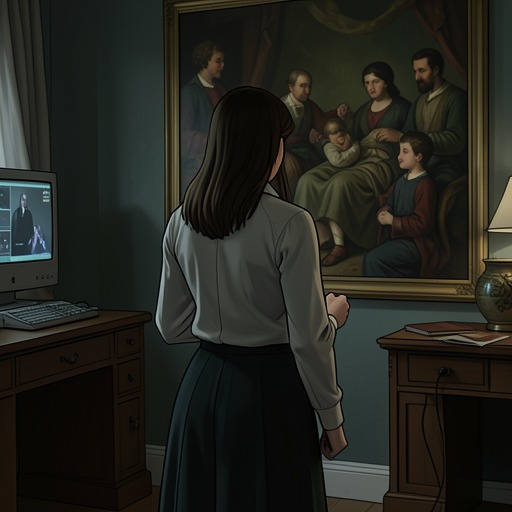
Wren comes from a powerful New York family whose presence in the city extends back more than two hundred years. Her mother, Marion Longwood, rules the family with an iron fist; until Wren’s transformation, Wren feared and respected her as both a mother and an almost godlike authority. The family’s values are captured in the maxim Wren associates with it: “Damn the wants, damn the needs, damn the cost.” She has learned to place duty above desire, even when that discipline requires personal sacrifice.
That inheritance shapes Wren’s response to her attraction to Andy Olson. Although she is strongly drawn to him, she resolves not to use sex to secure her place at work or make him aware of her desire. Her restraint reflects more than professional caution: it is part of a family-trained habit of rising above what she considers base wants to do what must be done. The same code that taught her to suppress desire, however, does not protect her when her family decides that her changed nature makes her unwelcome.
The Curse and the First Rupture
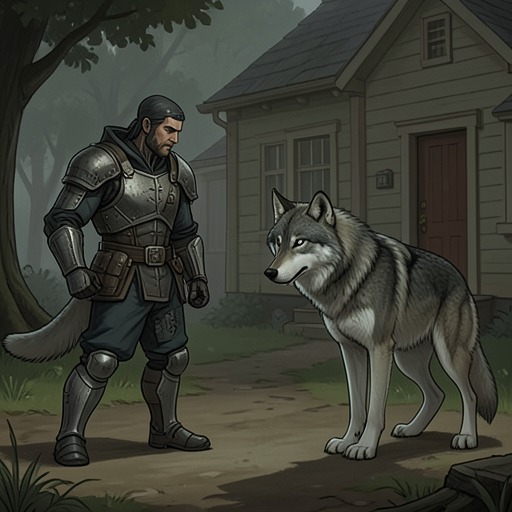
Wren’s exclusion follows a werewolf infection she traces to a dog attack while running through Central Park a year earlier. The police and animal control never found the animal. After the attack, Wren became gravely ill and spent two days in a near-coma in a private hospital suite. She then recovered with unexpectedly heightened abilities: she could run faster, see farther, and hear better than before. The decisive crisis came with the full moon, when her new condition became impossible for her family to treat as an ordinary illness.
The rejection was not immediate. For the first three weeks after the incident, everyone at home was sympathetic, and no one seemed to understand what was coming. That early kindness makes the later estrangement a reversal rather than a simple account of lifelong hostility. Wren had not chosen the curse, yet she came to believe that the Longwoods of New York had no use for a werewolf in their midst. By the time she was living in Boise, she had been away from the family for months without hearing from anyone. She still missed New York, but could no longer clearly remember why she had once been so desperate to return.
A Conditional Invitation
The family reappears through two gestures of contact. Wren’s brother calls her at work; the caller ID makes her heart leap, and for a moment she considers withholding an answer as a small act of defiance. She hopes the family may have overcome its aversion to her curse, but the months of silence leave her uncertain whether anyone actually wants her back. Her brother says their mother had been concerned that Wren would not answer. The call is followed by a more direct intervention: Wren returns home to find Marion waiting on her couch, typing on a tablet.
Marion announces that it is time for Wren to come home, then explains that the family has researched her condition and concluded she will not be as harmful as they feared. They have also found a way to manage her monthly outbursts. The proposed return is not simply a restoration of family life: Marion has arranged a place for Wren at the family’s headquarters, where she would assist with research. Wren understands the offer as an attempt to use her as a lab rat. When she objects that she hates corporate law, Marion clarifies that Wren would not join the legal department; the family wants her for research instead.
The offer thus makes acceptance conditional on both management of Wren’s transformed body and its usefulness to the family. Marion presents the arrangement as a solution to the danger Wren represents, while Wren sees that her family wants access to her as a subject. She rejects the invitation and tells Marion not to call or visit again. Marion answers that refusal means Wren will never be invited back. She also says Wren has always been a disappointment, orders her not to call, and threatens to have the police called if she tries to enter any family property.
Separation and Chosen Support
Marion leaves without looking back. Wren sinks onto the couch, overwhelmed by misery, but the pain is accompanied by acceptance: she had held on to the hope that she might someday be welcome home for herself, even if only for visits, and now recognizes that hope as unfounded. Her response is neither a claim that the separation does not hurt nor an attempt to bargain for a place on her mother’s terms. She accepts the consequence of refusing the family’s plan.
Andy Olson is with Wren after the confrontation. In a rush of anger, he wants to pursue and destroy her mother for having treated Wren that way, but Wren tells him she ordered Marion to leave and never come back. Andy takes this as a sign that Wren is staying, perhaps with him, but does not ask her to make that commitment. Instead, he kisses her forehead, offers to help, and holds her. They remain together on her couch until Wren falls asleep against his shoulder; he carries her to bed and sleeps beside her. His care does not erase the family rupture, but it contrasts with Marion’s ultimatum: support is offered without making Wren’s belonging conditional on returning to the family or serving its purposes.