Parker Griffith
The Werewolf Mates Anthology (Erotic Romance)Parker Griffith is a burglar whose arrest at Silver Sky Research places him at the intersection of ordinary criminal law and the concealed world of werewolves. Initially treated as a poorly positioned defendant with overwhelming evidence against him, he becomes unexpectedly important when his account of the break-in reveals that Silver Sky is conducting far more than legitimate animal research. His testimony gives Andy Olson and Wren Longwood a lead into the facility’s hidden operations, but it also makes Parker a liability whose knowledge must be contained.
Identity and Introduction
Parker Griffith enters the story as the “stupid burglar with connections” whom Andy Olson is assigned to defend through Olson and Breyer, Attorneys at Law. Parker’s father is a friend of Andy Olson’s family, which explains why the firm accepts the case despite its apparent weakness. Andy Olson regards the evidence as so extensive that conviction seems inevitable and considers persuading Parker to plead guilty simply to end the matter more quickly. The case therefore begins in the register of routine legal work: a young or otherwise unremarkable offender, a compromised defense, and a lawyer searching for a technical argument in a losing case.
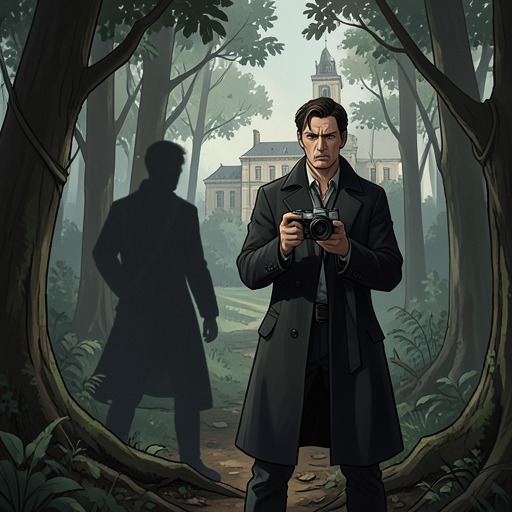
That surface simplicity is disrupted by the circumstances of Parker’s arrest. He was apprehended just outside Silver Sky Research with several vials of expensive painkillers, while an even larger quantity had disappeared from the facility. Parker denies taking them. His own explanation is that he was not attempting to steal material for the street at all; he was trying to record what was happening inside and abandoned the recording in the woods when the police caught him. The distinction matters because it changes him from a conventional thief into an unauthorized witness.
The Break-In and Its Hidden Objective
Parker tells Andy Olson and Wren Longwood that a friend had learned about unusual activity at Silver Sky Research. The facility conducts animal testing, but, according to Parker, it also brings animals into the institution rather than merely studying them in the wild. He distinguishes this work from the publicly visible animal rehabilitation center, which appears legitimate, and describes the concealed program as gene-splicing research that is harmful and deeply abnormal.
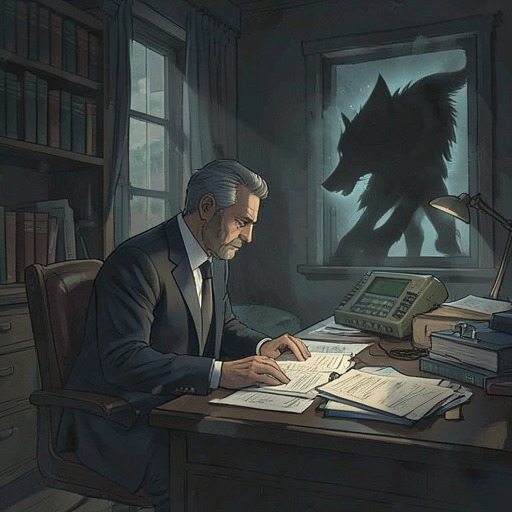
His objective was therefore documentation rather than ordinary burglary. Parker says he was attempting to record evidence and had to discard it in the woods before the police apprehended him. The account is incomplete: he admits that the recording was poor and that he did not obtain a clear view of what it showed. Yet its central image is impossible to dismiss within the wider narrative. Parker had been looking through security footage and saw what appeared to be a man changing directly into a real wolf—a werewolf. Andy Olson and Wren Longwood exchange a look because, unlike Parker, they already have no difficulty accepting that such a transformation is possible.
The break-in also gains significance from the surrounding security evidence. Kelly Shaw recalls that Silver Sky’s servers crashed on the same day as the incident, despite the company’s insistence that the failure was unrelated. Shortly afterward, one file share became password-protected without public explanation; when Kelly Shaw accidentally opened the wrong folder, an information-technology employee came to her computer, and the folder later vanished from her system. These details give Parker’s testimony a technological counterpart: the missing recording and hidden files are part of a broader pattern in which information is obstructed, sealed, or removed.
Legal Defense and Investigation
Andy Olson and Wren Longwood interview Parker in a secure prison meeting room after reminding him that their conversation is private and privileged. Parker initially worries that admitting what he did will damage his defense, but Wren Longwood explains that they are his attorneys rather than police or prosecutors and need the fullest account possible. His hesitation emphasizes his precarious position: he is both an accused criminal seeking protection under the law and a witness describing conduct that powerful institutions would prefer to remain undisclosed.
The attorneys’ questions gradually separate the visible offense from the concealed motive. The missing painkillers make Parker look like a thief, while his explanation points toward surveillance and evidence-gathering. His story about animal experimentation, internal footage, and a wolf transformation supplies Andy Olson and Wren Longwood with the information they need to tell Max that Silver Sky Research may be concealing human and supernatural experiments. Parker does not understand the entire structure behind what he saw, but his partial, uncertain testimony is enough to connect the Silver Sky security breach with the larger investigation.
His account also links to the institution’s pattern of control. Silver Sky Research later appears as a facility capable of confining employees and conducting unauthorized human testing, including the experimentation that affected Abigail McKinney and involved Damien Greggs. Parker’s evidence does not by itself establish every detail of that program, but it opens the path by which the attorneys recognize that the official explanation of Silver Sky is false. In this sense, Parker functions less as an investigator who solves the mystery than as the accidental point through which hidden systems become visible.
Dismissal and Containment
The prosecution abruptly drops the case against Parker. Marina Trent, an assistant prosecutor, personally visits Andy Olson and Wren Longwood to announce that the prosecutor’s office has decided to dismiss it. When Wren Longwood asks why the decision was delivered in person, Marina Trent says that Mrs. Delgado instructed her to come by. The explanation is deliberately thin, and Andy Olson immediately understands that the dismissal is connected to what Parker disclosed.
Max confirms the connection without openly admitting it. He tells Andy Olson that he will have people examine Silver Sky Research more closely, then refuses to confirm whether that scrutiny has anything to do with the prosecution’s decision. Andy Olson accuses him of bribing prosecutors, insisting that their community is governed by law rather than by Max’s personal authority. Max denies the accusation and declares that Andy Olson’s problem has been handled. The exchange reveals two overlapping systems of power: the formal legal process that holds Parker, and the hidden supernatural network capable of making the case disappear.
Parker’s release does not make his knowledge harmless. Andy Olson and Wren Longwood conclude that Parker must be kept quiet because it would be dangerous for an ordinary person to speak publicly about living werewolves at a research facility in Idaho. The story acknowledges that many people would not believe him, but secrecy is maintained through excessive caution rather than through reliance on public disbelief. Parker’s legal vulnerability is consequently resolved by an informal intervention, while the underlying danger is displaced onto the obligation to control his story.
Narrative Function and Significance
Parker Griffith is a threshold character. He begins on the conventional side of the plot, where burglary, stolen drugs, evidence, prison, bail, and privileged attorney-client communication appear to define the situation. His testimony then pushes the narrative across the boundary into Silver Sky Research’s hidden world, where laboratory secrecy, werewolf transformations, and human experimentation alter the meaning of every earlier clue. The ordinary criminal case becomes an entry point into a much larger conspiracy.
His role is especially important because he sees the supernatural indirectly. He does not possess the confidence of Max or the lived experience of the werewolves; he has only a damaged recording and a glimpse through security footage. That uncertainty preserves the contrast between a witness who sounds potentially unbelievable and attorneys who know that the impossible event is real. Parker’s limited perspective makes his testimony narratively useful: he supplies a concrete observation without possessing enough knowledge to explain it.
The circumstances of the break-in also mirror later infiltrations of Silver Sky Research. Parker’s attempt to enter the facility and record evidence precedes Jacob Pitman’s more deliberate rescue operation, in which Jacob uses a stolen identification card, disables cameras and sensors, loops a dummy video feed, and triggers a false alarm. Later, after Jacob Pitman’s escape, Silver Sky’s security response intensifies, with black SUVs on the roads and doubled guard forces. Against that sequence, Parker’s failed intrusion appears as an early breach in the institution’s protective shell. His discarded recording may be lost, but the information he carries survives long enough to redirect the lawyers, provoke scrutiny of Silver Sky, and expose the vulnerability of the system that tried to contain him.