University of Oregon
The Werewolf Mates Anthology (Erotic Romance)The University of Oregon is the academic foundation of Kelly Shaw’s identity as a wildlife researcher and the point of departure for her move west. Her connection to the university places her within a legitimate scientific project devoted to wolves, while the surrounding plot gradually contrasts that open, field-oriented research with the secrecy, bodily danger, and institutional suspicion associated with Silver Sky Research.
Academic Background and Departure
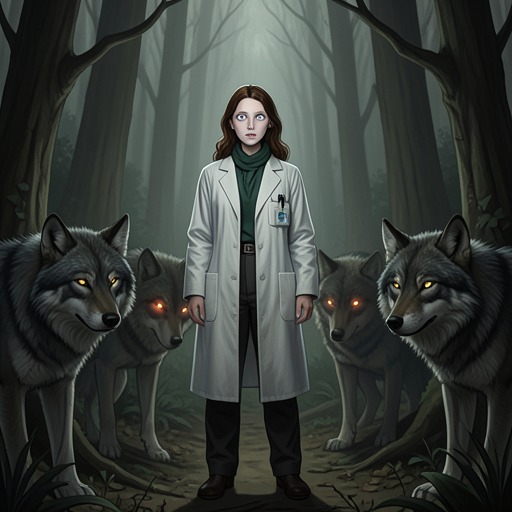
Kelly Shaw is twenty-nine when she has just finished her PhD at the University of Oregon. Her next step is a post-doctoral position with an animal research project based outside Boise, Idaho, a transition that turns her long-standing attraction to the American West into a professional reality. The university therefore marks both an achievement and a threshold: Kelly leaves it with advanced scientific training and enters a new phase in which research will shape her daily life and expose her to forces she does not yet understand.
Kelly’s choice of work is tied to a particular interest in wild wolves. She has always expected to live in the West because of its mountains, lakes, extensive wilderness, and remaining populations of wild wolves. The reintroduction of wolves over the preceding several years has strengthened her hope of studying them in the field, so her post-doctoral opportunity represents more than ordinary employment. It is the fulfillment of a research ambition formed around the relationship between wildlife and modern human life.
Research Ambition and Silver Sky Research
The project Kelly joins studies wolf migration patterns and assesses whether expanding wolf reintroduction would benefit modern life. That description presents the work as an ecological and public-minded inquiry: it concerns animal movement, conservation policy, and the practical consequences of restoring a predator to the wild. Kelly is scheduled to begin at Silver Sky Research the day after her arrival in Boise, making the University of Oregon the immediate institutional predecessor to the facility that will later dominate her understanding of scientific research.
The apparent continuity between the university and Silver Sky Research becomes increasingly unstable. Silver Sky is not limited to studying wolf migration, and information later disclosed to Kelly indicates that the organization brings animals into its facility rather than observing them only in the wild. The facility includes an animal-rehabilitation wing, but that legitimate function exists beside suspicions of more troubling animal testing. Kelly’s academic preparation gives her a credible reason to enter this environment, while the revelations about Silver Sky expose how scientific language can conceal a far more coercive system.
Contrast with Hidden Experimentation
The University of Oregon is associated in the evidence with research pursued through observation, migration studies, and debate over the ecological value of wolf reintroduction. Silver Sky Research, by contrast, is eventually described as doing more than its public-facing wolf studies suggest. The distinction matters because Kelly’s original professional goal is not to control or exploit wolves; it is to understand them and evaluate their place in the wild. Her education thus becomes part of the story’s central contrast between conservation research and experimentation that crosses the boundary between animal study and human harm.
That boundary is further blurred when Abigail McKinney, a researcher connected to Silver Sky, attempts to understand and control her own wolf form through focused visualization. Her effort to picture a gray, winter-adapted wolf draws on the language of animal knowledge, yet the result is a bodily transformation rather than a conventional scientific observation. The University of Oregon’s role is not to cause this development, but its academic and ecological framework makes the later collapse of the human-animal distinction especially significant.
Institutional and Narrative Significance
The university also helps define the social legitimacy Kelly possesses before her transformation. She arrives in Boise as a newly qualified scientist, motivated by fieldwork and conservation rather than by the clandestine interests later associated with Silver Sky. The attack that changes her, the illness that leaves her nearly comatose for two days, and the enhanced speed, sight, and hearing that follow all disrupt the rational professional identity she carried from the University of Oregon.
As the plot develops, Silver Sky’s activities become a matter of secrecy and collective protection. Max warns that the organization is studying more than wolf migration, while Andy Olson recognizes that ordinary people must be kept from publicly discussing real werewolves connected to an Idaho research facility. Against this background, the University of Oregon functions as a marker of transparent expertise and conventional scientific authority, even though the evidence does not show the university itself participating in Silver Sky’s conduct. Its importance lies in the academic expectations Kelly brings with her—and in the distance between those expectations and the hidden world she encounters after leaving it.